


77621-31 Netwok, RF/PA iC
77621-31 Netwok, RF/PA iC
Regular price
Rs.220.00 PKR
Regular price
Sale price
Rs.220.00 PKR
Shipping calculated at checkout.
Quantity
Couldn't load pickup availability
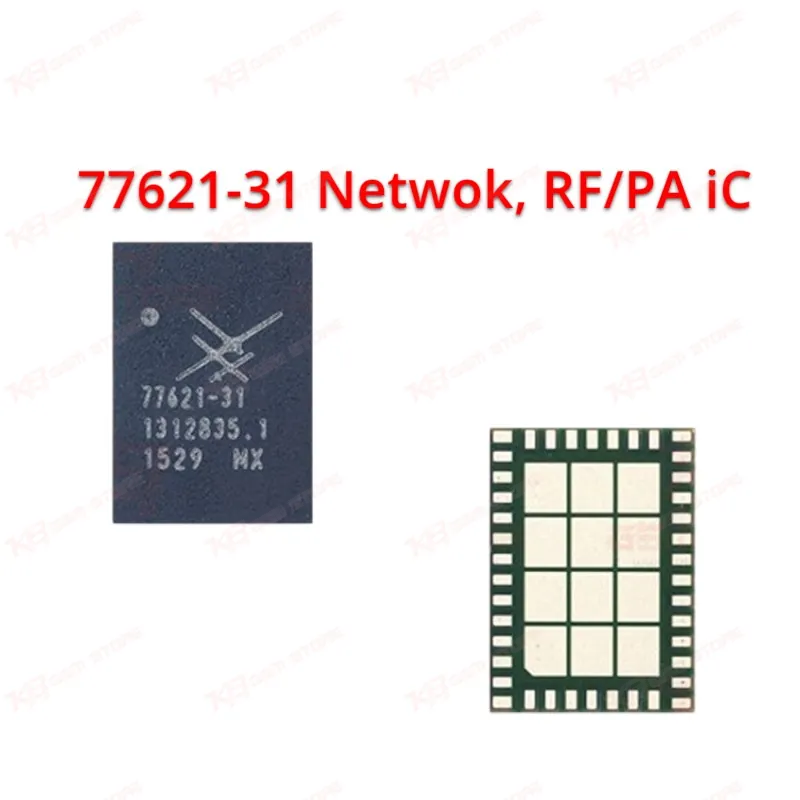
The 77621-31 (SKY77621-31) is a Skyworks multimode multiband power amplifier module used as the network/RF PA IC in a wide range of Android handsets. It handles GSM850/900, DCS1800/1900, and WCDMA/LTE transmit paths through a single MIPI-controlled package. Technicians commonly reach for this IC when a phone shows network issue, weak signal, or no network after software marna, especially on Samsung J-series and Redmi Note boards. Its compact 5 x 7 x 0.9 mm MCM package makes it a direct-fit replacement on affected boards without major rework.
⚖️ Weight: 0.01 kg
SKU:MST-IC-359
- Safe & Secure Payment
- Fast Delivery
- WhatsApp Support


Description
FAQ
What is the product name?
The product name is the SKY77621-31 Network RF/PA IC.
What is the brand of this product?
The brand of this product is Skyworks.
What is the model of this product?
The model of this product is SKY77621-31, also marked as 77621-31 on the board.
What is this product used for?
This product is used as the RF power amplifier module handling GSM, WCDMA, and LTE transmit signals in a mobile phone's network circuit.
Which devices are compatible with this product?
This IC is reported compatible with Samsung J and A-series models, Redmi Note 2/3/5, and select Huawei and other Android devices — confirm against the original board marking before fitting.
Who should use this product?
This product is suitable for mobile repair technicians, GSM software technicians, repair shop owners, and service centers handling network-fault repairs.
Does this IC support both 2G and 3G/4G bands on its own?
Yes, it integrates a GSM850/EGSM900 block, a DCS1800/PCS1900 block, and a WCDMA/LTE block for low and high bands in a single MCM package.
Is this IC still in production, or only available as a repair stock item?
Skyworks has marked the SKY77621-31 as obsolete and not recommended for new designs, so it is now sourced as genuine repair/replacement stock rather than fresh manufacturer production.