


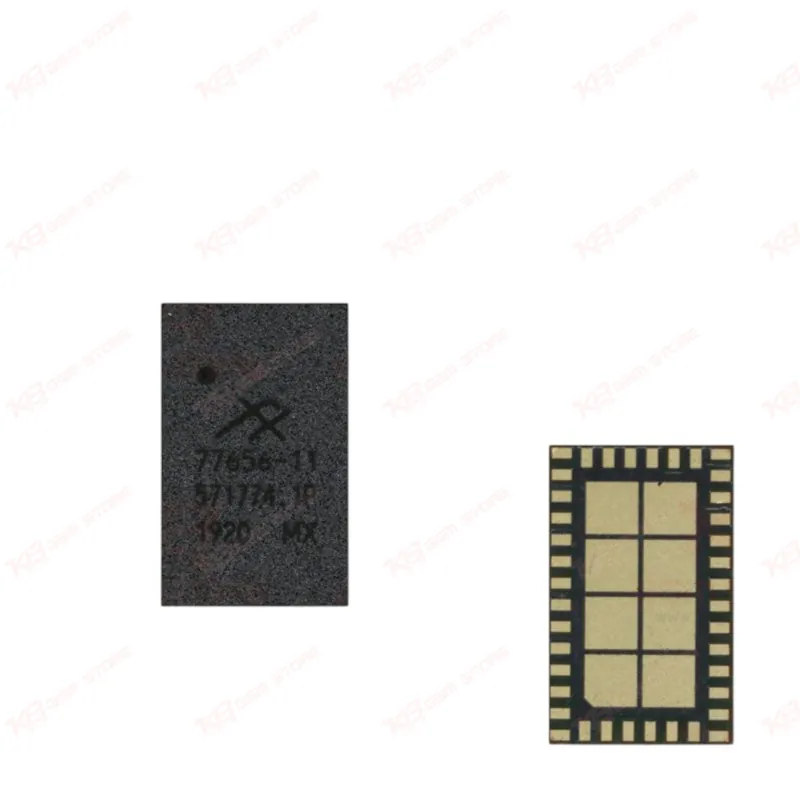
77656-11 Power Amplifier IC for J6, Note 8,S9
77656-11 Power Amplifier IC for J6, Note 8,S9
Regular price
Rs.400.00 PKR
Regular price
Sale price
Rs.400.00 PKR
Shipping calculated at checkout.
Quantity
Couldn't load pickup availability
The 77656-11 power amplifier IC, also marked SKY77656-11, is a multimode multiband PA module built for Samsung GSM/EDGE and WCDMA/LTE handsets. Technicians reach for this IC when a phone shows network issue, no signal, or dead network after flash. Fits Samsung J6, Note 8, S9, A30, A50 and several other Galaxy models on the same platform. Supplied as a genuine replacement part for your repair bench, ready for reballing and reflow with a hot air station or BGA rework machine. Test before final assembly to confirm the fault clears.
⚖️ Weight: 0.01 kg
SKU:MST-IC-86
- Safe & Secure Payment
- Fast Delivery
- WhatsApp Support


Description
FAQ
What is the product name?
The product name is the 77656-11 Power Amplifier IC, also marked SKY77656-11.
What is the brand of this product?
The brand of this product is Skyworks Solutions.
What is the model of this product?
The model of this product is 77656-11 (SKY77656-11).
What is this product used for?
This product is used to repair network issue, weak signal, and dead network after flash faults on Samsung boards by replacing the faulty power amplifier module.
Which devices are compatible with this product?
This IC fits Samsung Galaxy J6, Note 8, S9, A30, A50, A20, and other boards reported to use this PA module including J330F, J600F, J720F, J737A, J810G, A102U, A202F, A405F, A505F, A705F, A707F, and M405F.
Who should use this product?
This product is suitable for mobile repair technicians, repair shops, service centers, and professional users.
Does this IC support both GSM and LTE bands?
Yes, it covers Quad-Band GSM/EDGE along with WCDMA and LTE bands 1-5, 8, 12, 13, 17, 20, 26, 28, 34, and 39.
Can this IC be reballed with a normal hot air station?
Yes, technicians reball and reflow this 49-pad module using a hot air rework station with a matching stencil, following standard laminate-package profiles.