


AD1 Charging IC
AD1 Charging IC
Regular price
Rs.350.00 PKR
Regular price
Sale price
Rs.350.00 PKR
Shipping calculated at checkout.
Quantity
Couldn't load pickup availability
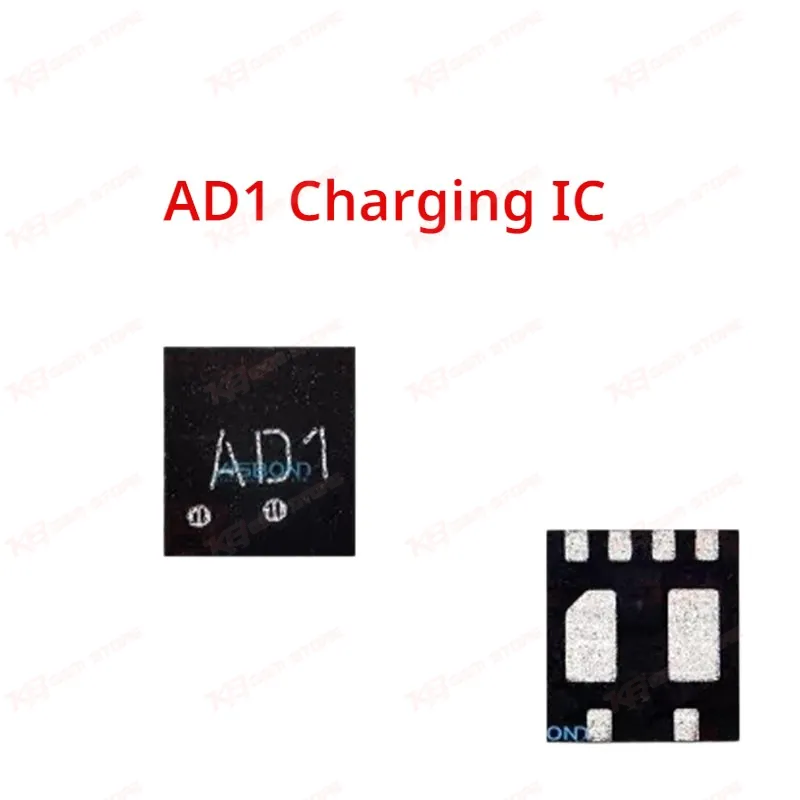
The AD1 charging IC replaces the faulty power chip on Huawei Honor 4X and Mate 7 (MT7) boards when the phone shows no charging response, a dead charging port, or a charging issue despite a good cable and adapter. This 8-pin surface-mount chip sits directly in the charging circuit and controls how the board pulls current from the charger and feeds it to the battery. Technicians reach for this IC when board-level diagnostics point to the charging line rather than the port or flex cable. KB GSM Store stocks the AD1 for repair shops across Pakistan handling Honor 4X and Mate 7 charging faults on a regular basis.
⚖️ Weight: 0.01 kg
SKU:MST-IC-103
- Safe & Secure Payment
- Fast Delivery
- WhatsApp Support


Description
FAQ
What is the product name?
The product name is the AD1 Charging IC.
What is the brand of this product?
This is sold as a standalone replacement part identified by its part code, AD1 — the original chip manufacturer branding isn't published for this component.
What is the model of this product?
The model is AD1.
What is this product used for?
It's used to replace the faulty charging IC on a board that shows no charging response or a dead charging port.
Which devices are compatible with this product?
This IC is compatible with the Huawei Honor 4X and Huawei Mate 7 (MT7).
Who should use this product?
This product is suitable for mobile repair technicians, repair shops, service centers, and professional users.
Does the AD1 IC fix a phone that shows completely dead at the charging port on Honor 4X?
Yes, when bench diagnostics trace the fault to the charging IC rather than the port or flex, replacing the AD1 typically restores charge detection.
Is the AD1 chip a drop-in replacement, or does it need reballing?
It needs standard hot air reballing — remove the old chip, clean the pads, and reflow the new AD1 into the original footprint.