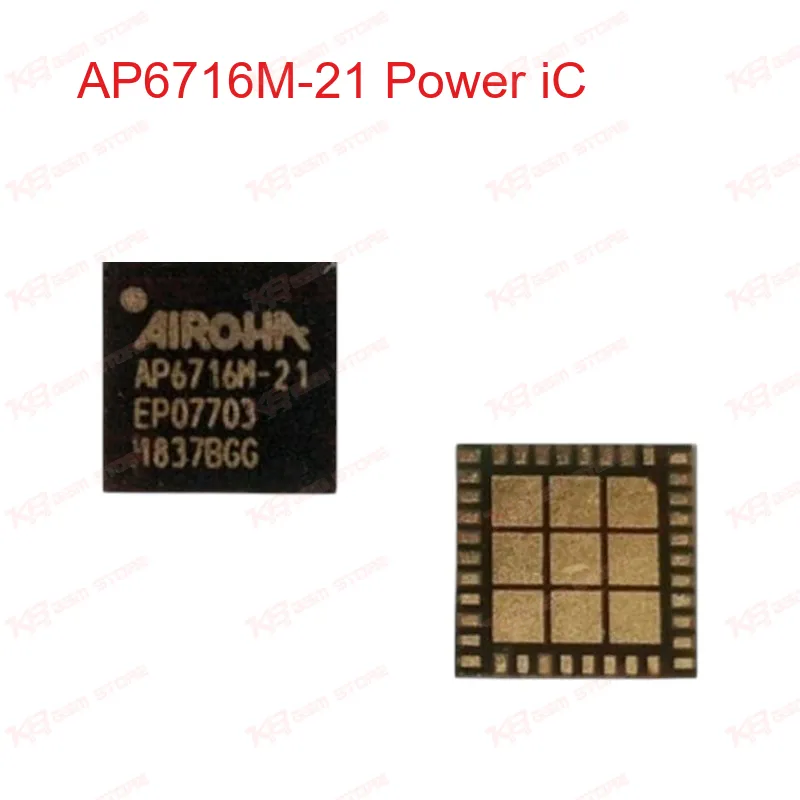
Network and signal-related complaints are among the most common board-level faults GSM technicians face, and the RF power amplifier is frequently the root cause when a phone shows full network settings but weak or dropped signal. The AP6716M-21 sits in this exact position on Samsung Galaxy boards. It takes the low-power RF signal generated by the transceiver and amplifies it to the level needed for transmission through the antenna, directly affecting how well the phone talks to the cellular network. Many suppliers list this part simply as a "Power IC," which causes confusion on the repair bench. It is not a battery charging controller or a PMIC that manages voltage rails. It is an RF amplifier stage, and treating it as a general power management chip during diagnosis leads technicians down the wrong troubleshooting path. Knowing this distinction matters when you are chasing a network fault versus a charging fault — they are different circuits entirely, and confusing the two wastes bench time. On your repair bench, this IC becomes relevant when a Samsung device shows symptoms like no signal bars despite a valid SIM, intermittent network drop, weak reception compared to a known-good unit, or "searching" that never resolves to a carrier. Before reaching for the AP6716M-21, rule out SIM tray oxidation, antenna connector damage, and coax cable faults, since these mimic the same symptoms and are far cheaper to fix. Once you've confirmed the fault sits on the RF PA stage itself — through signal tracing, thermal imaging, or comparison against a known-good board — this part replaces the damaged original. Reballing and reflow work on QFN packages like this one demands a steady hand. The package sits close to other RF components, so use a fine-tip hot air nozzle, moderate airflow, and no-clean flux to avoid disturbing neighboring passives. Preheat the board to reduce thermal shock, and confirm ground shield continuity after reflow, since a poor ground connection on an RF amplifier reintroduces the same signal weakness you were trying to fix. A hot air rework station with adjustable temperature and airflow, paired with a decent microscope for placement accuracy, makes this job manageable even on tightly packed boards. This part is sourced new and genuine, not pulled or recycled from scrap boards, which matters directly for RF work — a used PA with hidden thermal stress often causes intermittent signal issues that resurface weeks after a repair, sending the customer back to your shop. Stocking verified new stock protects both your repair success rate and your reputation with regular customers. Keep this IC in your parts box alongside other RF front-end components you handle regularly — AFEM modules, transceiver ICs, and antenna switch ICs — since RF faults on Samsung boards often involve more than one component in the chain. A technician who understands the full RF signal path, from baseband through PA to antenna, diagnoses these faults faster and avoids unnecessary part swaps. Whether you run a full-service mobile repair shop or specialize in board-level Samsung repair, having a reliable source for RF components like the AP6716M-21 keeps network and signal jobs moving instead of stalling your bench waiting on parts.