


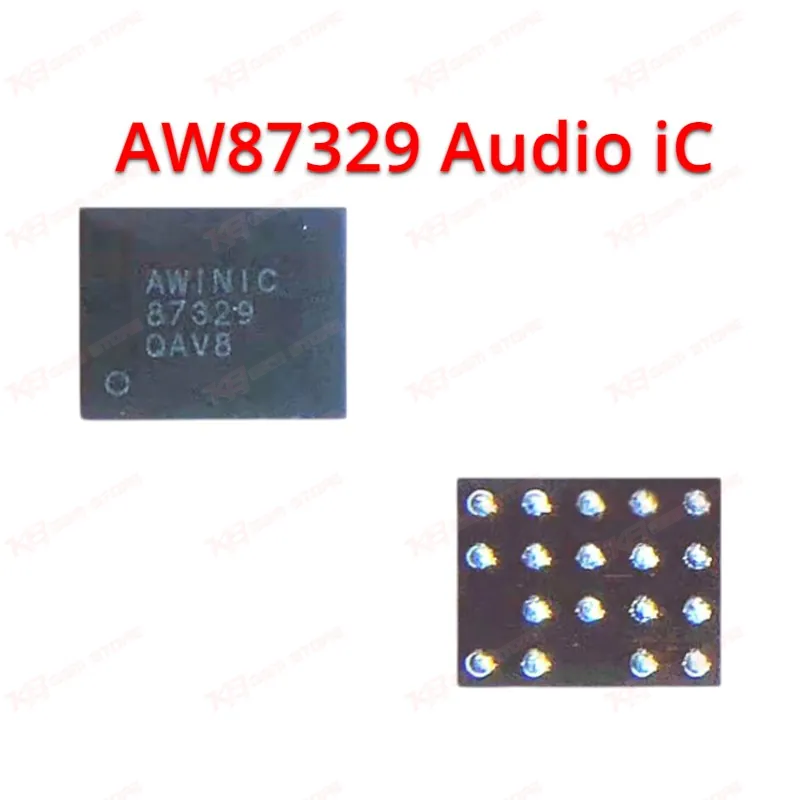
AW87329 Audio iC
AW87329 Audio iC
Regular price
Rs.220.00 PKR
Regular price
Sale price
Rs.220.00 PKR
Shipping calculated at checkout.
Quantity
Couldn't load pickup availability
The AW87329 is Awinic's third-generation Smart K audio amplifier IC, built for speaker and receiver 2-in-1 applications in smartphones. You get Class D amplification with DO-Chargepump technology, Triple-Level Triple-Rate AGC, and I2C register control for gain and power settings. Technicians reach for this chip on Redmi 7 boards when a phone shows no sound, distorted speaker output, or dead receiver after a drop or flash. Its CSP-18 package fits directly on your reballing station, and the built-in over-current, over-temperature, and short-circuit protection keeps your repair reliable on the bench.
⚖️ Weight: 0.01 kg
SKU:MST-IC-358
- Safe & Secure Payment
- Fast Delivery
- WhatsApp Support


Description
FAQ
What is the product name?
The product name is AW87329 Audio IC.
What is the brand of this product?
The brand of this product is Awinic (Shanghai Awinic Technology).
What is the model of this product?
The model of this product is AW87329.
What is this product used for?
This product is used to restore speaker and receiver audio function on boards where the original audio amplifier IC has failed.
Which devices are compatible with this product?
This product is confirmed for use on Xiaomi Redmi 7 audio boards.
Who should use this product?
This product is suitable for mobile repair technicians, repair shops, service centers, and professional GSM technicians.
Does the AW87329 handle both speaker and receiver, or only one?
The AW87329 supports speaker and receiver 2-in-1 operation with AB/Class D receiver mode, so one chip drives both audio paths.
Can a "no sound after flash" issue be an AW87329 problem, or is it always hardware?
Since the AW87329 is I2C-controlled and its gain/AGC settings are set by firmware, sound issues after flashing can be a configuration problem rather than a failed chip — check register settings before reballing.