


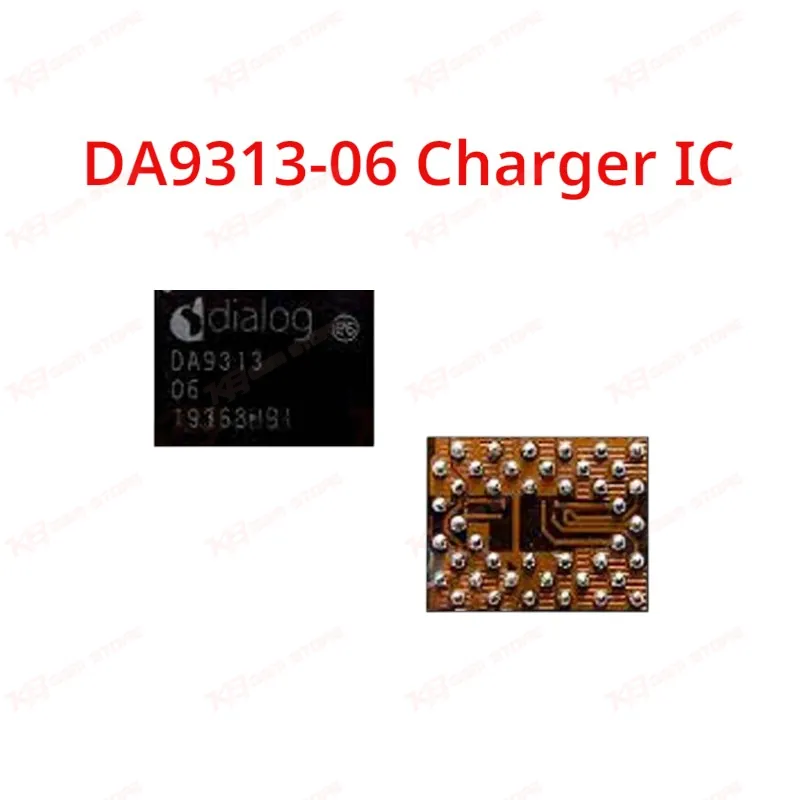
DA9313-06 Charger IC
DA9313-06 Charger IC
Regular price
Rs.150.00 PKR
Regular price
Sale price
Rs.150.00 PKR
Shipping calculated at checkout.
Quantity
Couldn't load pickup availability
The DA9313-06 is a Dialog Semiconductor charging IC built for OPPO R17 Pro, Reno4 Pro, Find X3, and Vivo IQOO7 boards. When a phone shows dead after flash, slow charging, or charging drop issues, this IC is often the root cause on these boards. It handles the power conversion stage between the charging port and the battery, so a faulty unit typically shows up as no charging, hang on logo during charge, or a battery that drains fast even while plugged in. GSM technicians keep this IC on the bench for direct board-level replacement work on OPPO and Vivo charging faults.
⚖️ Weight: 0.01 kg
SKU:MST-IC-241
- Safe & Secure Payment
- Fast Delivery
- WhatsApp Support


Description
FAQ
What is the product name?
The product name is DA9313-06 Charger IC.
What is the brand of this product?
The brand of this product is Dialog Semiconductor.
What is the model of this product?
The model of this product is DA9313-06.
What is this product used for?
This product is used for replacing a faulty charging IC on supported OPPO and Vivo motherboards to fix charging faults.
Which devices are compatible with this product?
This IC is compatible with OPPO R17 Pro, OPPO Reno4 Pro, OPPO Find X3, and Vivo IQOO7.
Who should use this product?
This product is suitable for mobile repair technicians, repair shops, service centers, and professional GSM technicians.
Can the DA9313-06 be used on any OPPO or Vivo model?
No, it's board-specific to OPPO R17 Pro, Reno4 Pro, Find X3, and Vivo IQOO7 — other models use different power ICs even if boards look similar.
Does replacing this IC fix a dead-after-flash charging fault?
If the charging fault is confirmed as hardware-level and traced to this IC through voltage checks, replacing it resolves dead-after-flash charging failures on these specific boards.