


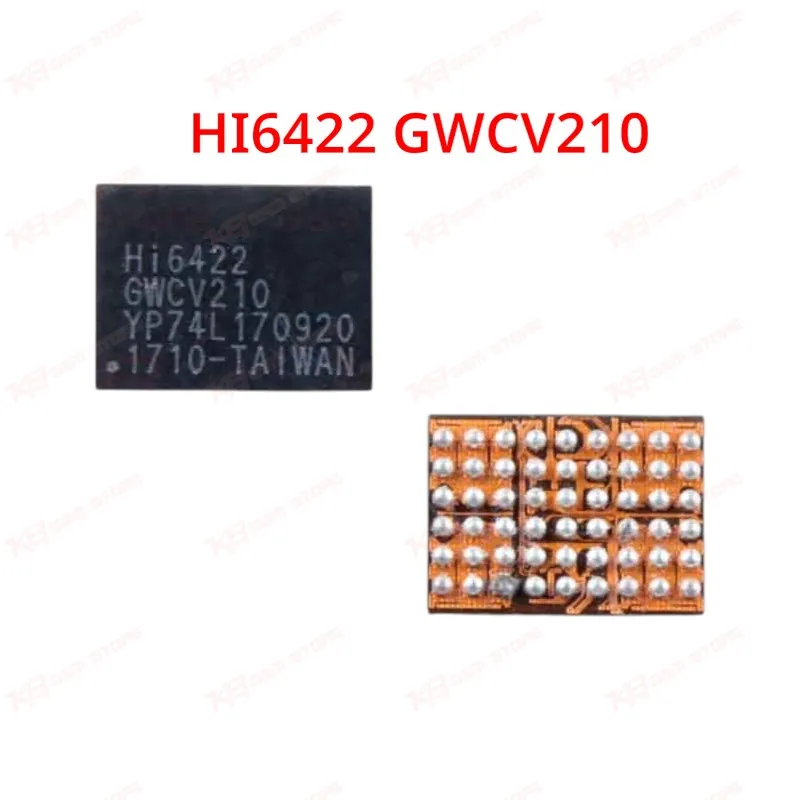
HI6422 GWCV210
HI6422 GWCV210
Regular price
Rs.350.00 PKR
Regular price
Sale price
Rs.350.00 PKR
Shipping calculated at checkout.
Quantity
Couldn't load pickup availability
The HI6422 GWCV210 is a power management IC (PMIC) used across a wide range of Huawei and Honor board generations, including the Mate 8, Mate 9, Mate 10, Mate 10 Pro, Mate 20, Mate 20 Pro, Mate S, P8, P9, P10, Honor 6, Honor 6 Plus, Honor 7, Honor 8, Honor V8, Honor Magic 2, and Nova 3. Technicians use this IC to resolve dead phone conditions, no-charging faults, and power rail failures at the board level. A reliable stock item for any GSM repair bench handling Huawei hardware, this chip supports both software-side and hardware-side fault isolation before reballing or replacement.
⚖️ Weight: 0.01 kg
SKU:MST-IC-118
- Safe & Secure Payment
- Fast Delivery
- WhatsApp Support


Description
FAQ
What is the product name?
The product name is HI6422 GWCV210 Power IC.
What is the brand of this product?
The brand of this product is HiSilicon, Huawei's chipset division.
What is the model of this product?
The model of this product is HI6422 GWCV210.
What is this product used for?
This product is used to repair dead phone and no-charging faults caused by a failed power management IC on Huawei and Honor boards.
Which devices are compatible with this product?
This product is compatible with Huawei Mate 8, Mate 9, Mate 10, Mate 10 Pro, Mate 20, Mate 20 Pro, Mate S, P8, P9, P10, and select Honor models including Honor 6, 7, 8, V8, Magic 2, and Nova 3.
Who should use this product?
This product is suitable for mobile repair technicians, repair shops, service centers, and professional users.
Does this IC solve dead phone issues caused by power faults?
Yes, this IC addresses dead phone conditions where the power management rail has failed, not firmware-related dead states.
What tools are needed to replace this IC?
You need a hot air rework station, a matching BGA stencil for reballing, flux, and ideally a microscope for accurate ball placement.