


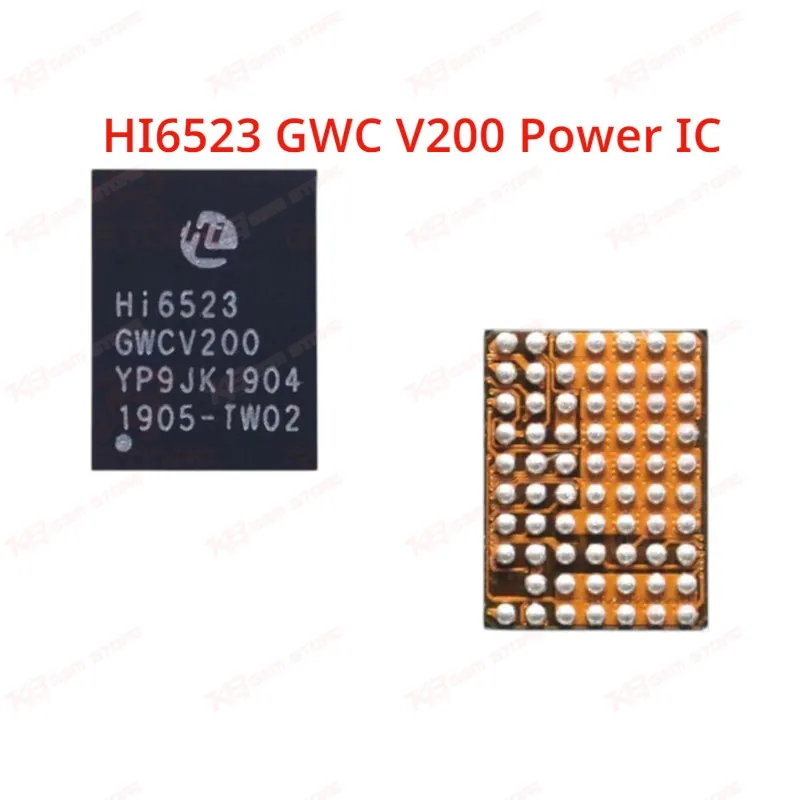
HI6523 GWC V200 Power IC
HI6523 GWC V200 Power IC
Regular price
Rs.600.00 PKR
Regular price
Sale price
Rs.600.00 PKR
Shipping calculated at checkout.
Quantity
Couldn't load pickup availability
The HI6523 GWC V200 Power IC handles power management and voltage regulation on Huawei and Honor motherboards built on the Kirin platform. Technicians pull this chip when a board shows dead phone symptoms, a charging issue, or dead after flash behavior once software checks come back clean. It controls the rails feeding the CPU, display driver, and charging path, so a faulty unit means zero power on the bench supply or a board stuck at hang on logo. Swapping in a fresh HI6523 GWCV200 restores normal charging response and brings the board back to a working state on your repair bench.
⚖️ Weight: 0.01 kg
SKU:MST-IC-100
- Safe & Secure Payment
- Fast Delivery
- WhatsApp Support


Description
FAQ
What is the product name?
The product name is HI6523 GWC V200 Power IC.
What is the brand of this product?
The brand of this product is HiSilicon.
What is the model of this product?
The model of this product is HI6523 GWCV200.
What is this product used for?
This product is used for power management and voltage regulation on Huawei and Honor motherboards.
Which devices are compatible with this product?
This product is compatible with the Huawei Mate, Nova, and P series along with the Honor series listed above, based on verified board-family compatibility.
Who should use this product?
This product is suitable for mobile repair technicians, repair shops, service centers, and professional users.
Does this power IC fix a Huawei phone that shows dead after flash with no charging response?
Yes, when the fault traces to the power rail rather than firmware, replacing the HI6523 GWCV200 restores the charging and boot behavior on affected boards.
Can the HI6523 GWCV200 be reballed and reused, or does it need a fresh chip every time?
Technicians can reball and reuse the chip if the die tests good after removal, but most repair shops fit a fresh IC to avoid a repeat failure on a board that already showed a hardware fault.