


HI6526 GWCV 100 Power IC
HI6526 GWCV 100 Power IC
Regular price
Rs.400.00 PKR
Regular price
Sale price
Rs.400.00 PKR
Shipping calculated at checkout.
Quantity
Couldn't load pickup availability
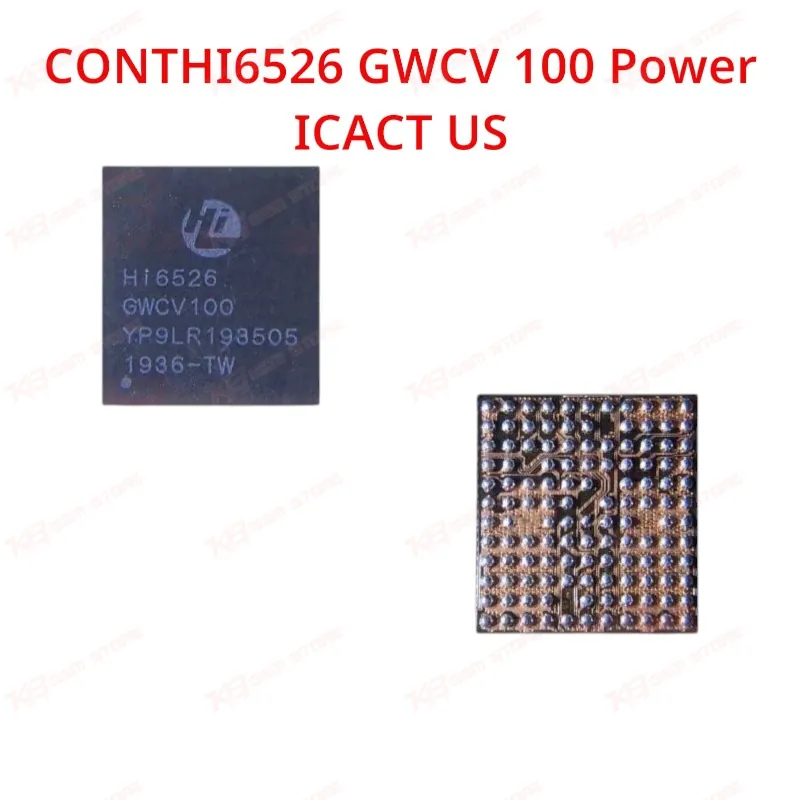
The HI6526 GWCV100 is a power management IC built for Huawei and Honor devices running on Kirin chipsets. It controls voltage regulation, charging current, and power distribution across the motherboard. Technicians use this chip to fix dead phone cases, no-charging faults, auto-restart loops, power drop, and fast battery drain. You get a stable power rail once this IC replaces a damaged original, restoring normal charging and boot behavior. Suited for board-level repair work where the power section shows heating, no backlight, or hang-on-logo symptoms tied to a faulty power controller rather than a software fault.
⚖️ Weight: 0.01 kg
SKU:MST-IC-104
- Safe & Secure Payment
- Fast Delivery
- WhatsApp Support


Description
FAQ
What is the product name?
The product name is HI6526 GWCV100 Power Management IC.
What is the brand of this product?
The brand of this product is HiSilicon, Huawei's chip design unit.
What is the model of this product?
The model of this product is HI6526 GWCV100.
What is this product used for?
This product is used to control voltage regulation and charging current on the motherboard, resolving dead phone, no-charging, and power instability faults.
Which devices are compatible with this product?
This product is compatible with Huawei Nova 3, Nova 3i, Mate 20, Mate 20 Pro, Mate 20X, Mate 30, Mate 30 Pro, P30, P30 Pro, P40 Pro, P40 Lite, Y9a, and Honor 20 Pro.
Who should use this product?
This product is suitable for mobile repair technicians, repair shops, service centers, and professional users.
Does this IC fix a Huawei phone stuck on the logo screen?
Yes, when the hang occurs due to failed power sequencing rather than a software fault, replacing this IC restores normal boot behavior.
Can this IC resolve intermittent charging on a Huawei board?
Yes, a compromised power IC or its solder joints commonly causes intermittent charging, and reballing or replacing the chip corrects current delivery to the battery.