


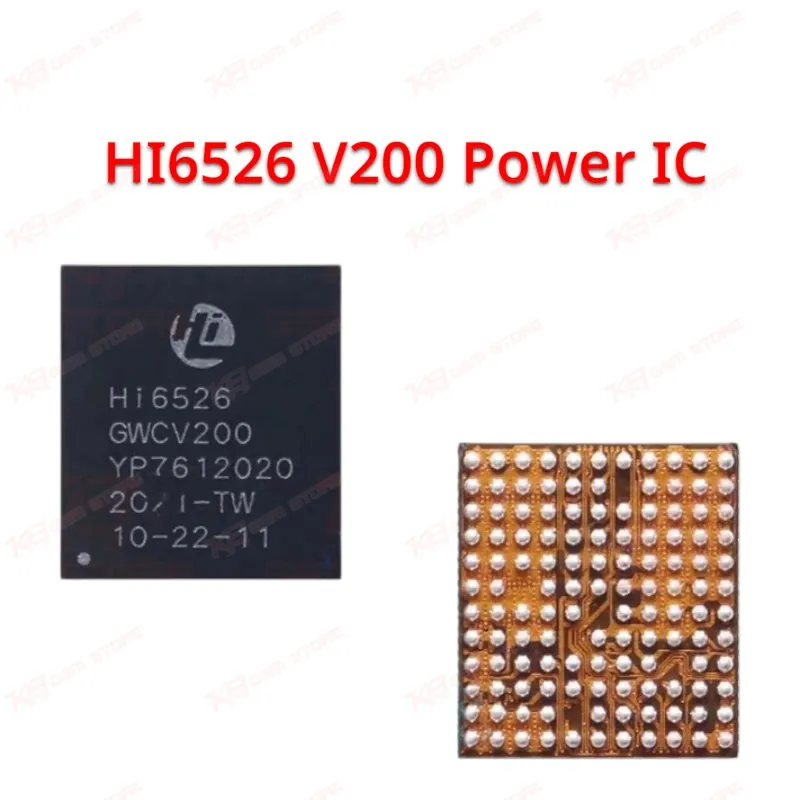
HI6526 V200 Power IC
HI6526 V200 Power IC
Regular price
Rs.580.00 PKR
Regular price
Sale price
Rs.580.00 PKR
Shipping calculated at checkout.
Quantity
Couldn't load pickup availability
The HI6526 V200 is a HiSilicon-designed power management IC used on Huawei's Kirin-based motherboards, including Honor 20, Mate 30 Pro, Nova 6, and P30. This chip controls the board's core power distribution, so a faulty unit is a common cause of dead phone, no power on, auto restart, or no charging complaints on your repair bench. Technicians reach for this IC when standard power-rail checks point to a PMU fault rather than a battery or charging port issue. Genuine, tested stock at KB GSM Store, ready for same-day dispatch to repair shops across Lahore, Karachi, and Islamabad.
⚖️ Weight: 0.01 kg
SKU:MST-IC-284
- Safe & Secure Payment
- Fast Delivery
- WhatsApp Support


Description
FAQ
What is the product name?
The product name is HI6526 V200 Power IC.
What is the brand of this product?
The brand of this product is Huawei (HiSilicon).
What is the model of this product?
The model of this product is HI6526 V200.
What is this product used for?
This product is used for restoring power management function on Kirin-based Huawei motherboards, resolving dead phone, no power on, and auto restart issues.
Which devices are compatible with this product?
This product is compatible with Huawei Honor 20 (Glory 20), Mate 30 Pro, Nova 6, and P30.
Who should use this product?
This product is suitable for mobile repair technicians, repair shops, service centers, and professional board-level repair users.
Does the HI6526 V200 require hot air rework to install?
Yes, this IC is in a BGA package and must be installed using a hot air rework station with reballing, not manual soldering.
How do I know if the power IC is the fault instead of the battery or charging port?
Check battery health and charging flex first; if the board still shows dead, no display, or abnormal current draw on a DC power supply after those checks, the HI6526 V200 is the next likely cause.