


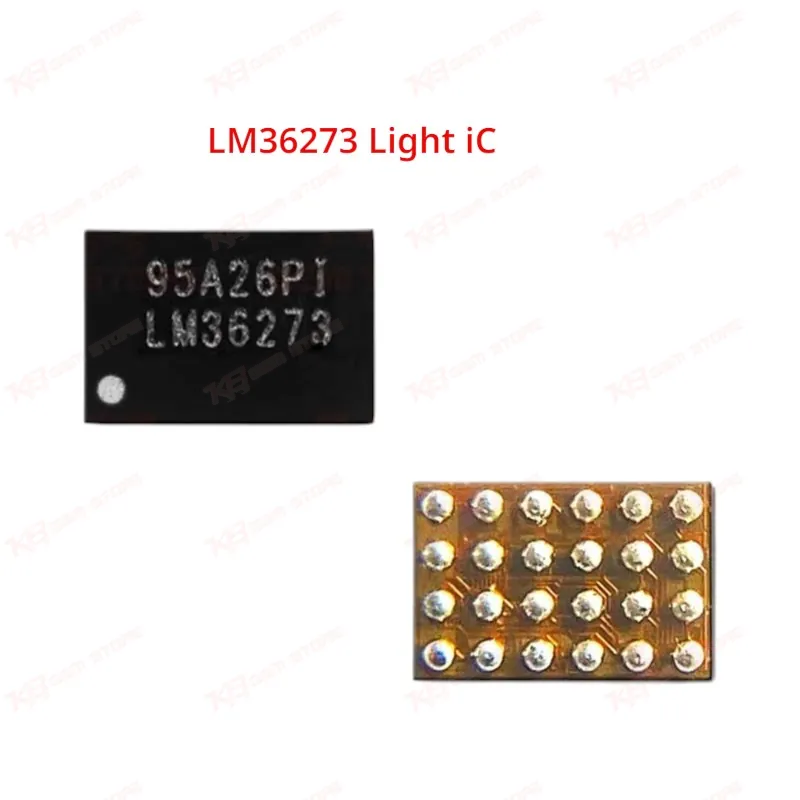
LM36273 Light iC
LM36273 Light iC
Regular price
Rs.450.00 PKR
Regular price
Sale price
Rs.450.00 PKR
Shipping calculated at checkout.
Quantity
Couldn't load pickup availability
The LM36273 is a Texas Instruments backlight and LCD bias driver IC used to control display brightness and screen power in Redmi Note 8 series boards. This light IC manages the boost converter that drives the backlight LED strings along with the VPOS and VNEG bias rails that power the LCD panel. Technicians reach for this IC when a phone shows a dim display, no backlight, or a display problem after liquid damage or a drop. Genuine LM36273YFFR pulls are tested for correct I2C response and boost output before listing, giving GSM technicians a reliable replacement part for backlight and display bias repair jobs on the workbench.
⚖️ Weight: 0.01 kg
SKU:MST-IC-177
- Safe & Secure Payment
- Fast Delivery
- WhatsApp Support


Description
FAQ
What is the product name?
The product name is LM36273 Light IC.
What is the brand of this product?
The brand of this product is Texas Instruments.
What is the model of this product?
The model of this product is LM36273YFFR.
What is this product used for?
This product is used for driving the phone backlight LED strings and generating the LCD bias voltages that power the display panel.
Which devices are compatible with this product?
This product is verified for the Redmi Note 8 series backlight and display bias circuit, and is also used on other boards built with the LM3627x backlight architecture.
Who should use this product?
This product is suitable for mobile repair technicians, repair shops, service centers, and professional users.
Does the LM36273 control backlight brightness through I2C or PWM?
The LM36273 supports both — an I2C bus gives 11-bit brightness control, and a separate PWM input handles content-adaptive backlight dimming.
Can a bad LM36273 cause a blank display with the backlight still on?
Yes, since the chip generates the VPOS and VNEG LCD bias rails separately from the backlight boost, a fault on the bias side can leave the backlight lit while the image stays blank or corrupted.