


LM36274 Display iC
LM36274 Display iC
Regular price
Rs.150.00 PKR
Regular price
Sale price
Rs.150.00 PKR
Shipping calculated at checkout.
Quantity
Couldn't load pickup availability
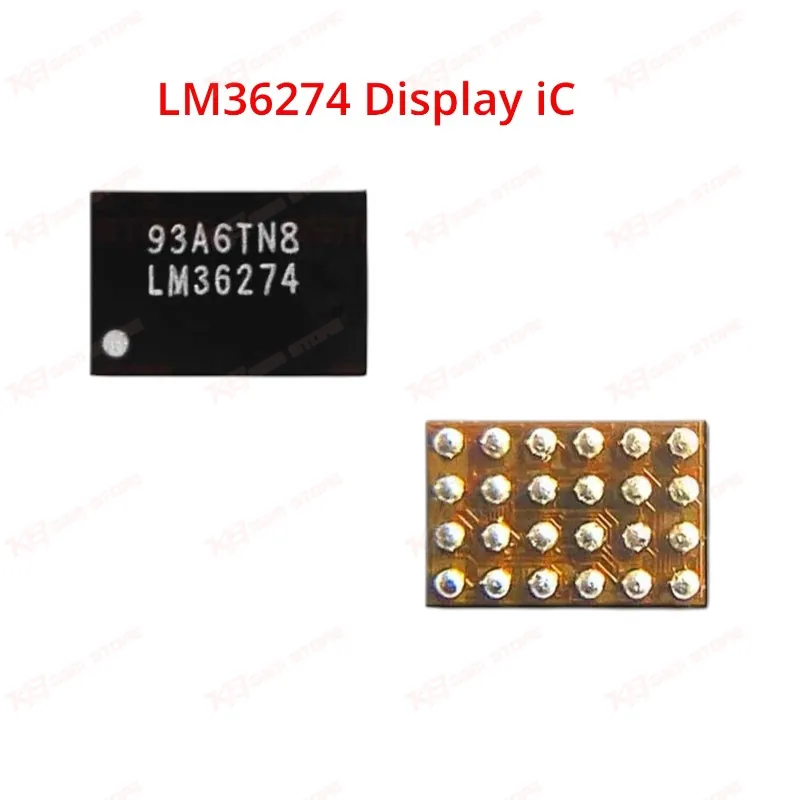
The LM36274 is a Texas Instruments integrated four-channel WLED backlight driver with built-in LCD bias supply, built for mobile display power circuits. It drives up to four parallel LED strings at up to 29V output, controls brightness through PWM or I2C with 11-bit dimming resolution, and generates the positive/negative LCD bias voltage a display panel needs to turn on. Housed in a compact 24-pin DSBGA package, this chip suits technicians repairing dead backlight, dim screen, or no-display faults on Android smartphone motherboards. Genuine TI silicon, verified specifications, ready for your repair bench.
⚖️ Weight: 0.01 kg
SKU:MST-IC-181
- Safe & Secure Payment
- Fast Delivery
- WhatsApp Support


Description
FAQ
What is the product name?
The product name is LM36274 Display IC.
What is the brand of this product?
The brand of this product is Texas Instruments.
What is the model of this product?
The model of this product is LM36274 (LM36274YFFR).
What is this product used for?
This product drives the phone's backlight LED strings and generates the LCD bias voltage the display panel needs to power on.
Which devices are compatible with this product?
This IC is used on Android smartphone display power circuits across various brands and board revisions — verify the pinout against your board's schematic before reflow.
Who should use this product?
This product is suitable for mobile repair technicians, repair shops, service centers, and professional users.
Does the LM36274 handle both backlight and LCD bias in one chip?
Yes, it integrates a four-channel WLED backlight driver with a separate positive/negative LCD bias supply on the same die.
Can brightness on the LM36274 be controlled through I2C?
Yes, the chip supports 11-bit brightness control over I2C as well as a logic-level PWM input.