


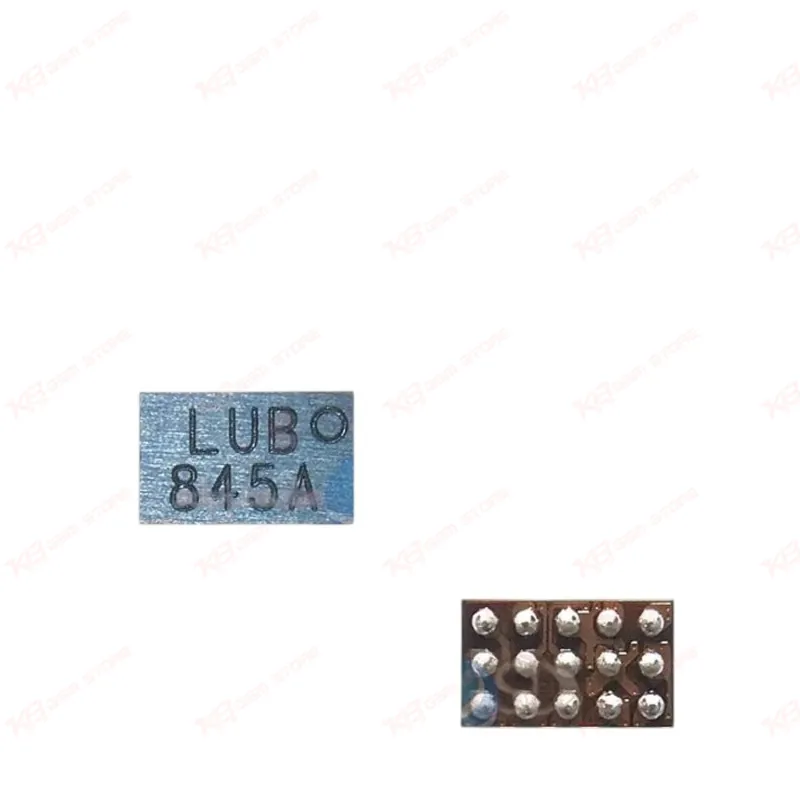
LUBO 15 pin LCD Display IC for Huawei, Xiaomi, OPPO
LUBO 15 pin LCD Display IC for Huawei, Xiaomi, OPPO
Regular price
Rs.80.00 PKR
Regular price
Sale price
Rs.80.00 PKR
Shipping calculated at checkout.
Quantity
Couldn't load pickup availability
The LUBO 15 pin LCD Display IC handles display driving on Huawei 9A, Xiaomi Redmi Note 5, Redmi 5A, and OPPO A8/A9 boards. Technicians reach for this IC when a phone shows a dead display, backlight failure, or hang on logo after a drop or short. The SMD package fits directly onto the original pad layout, so you skip modification work on the board. This chip suits repair shops and service centers handling display-side faults where the panel itself tests fine but the board isn't driving it. Keep a few of these on your bench for common display IC change jobs on these specific models.
⚖️ Weight: 0.01 kg
SKU:MST-IC-63
- Safe & Secure Payment
- Fast Delivery
- WhatsApp Support


Description
FAQ
What is the product name?
The product name is LUBO 15 Pin LCD Display IC.
What is the brand of this product?
The brand of this product is LUBO.
What is the model of this product?
The model of this product is LUBo (15-pin).
What is this product used for?
This product is used for replacing the LCD display driver IC on boards with a dead display, backlight-only fault, or hang on logo issue.
Which devices are compatible with this product?
This product is compatible with Huawei 9A, Xiaomi Redmi Note 5, Redmi 5A, OPPO A8, and OPPO A9.
Who should use this product?
This product is suitable for mobile repair technicians, repair shops, service centers, and professional users.
Does this IC need a specific hot air temperature for installation?
Yes, a controlled hot air station with a moderate temperature setting and steady airflow works best to avoid pad lift during reflow on this 15-pin SMD package.
Will this IC fix a display that stays blank even with a known-good panel installed?
If a known-good panel still shows no display and the flex connector tests clean, this IC addresses the display driver fault on the compatible board models listed above.