


Brand:
MECHANIC
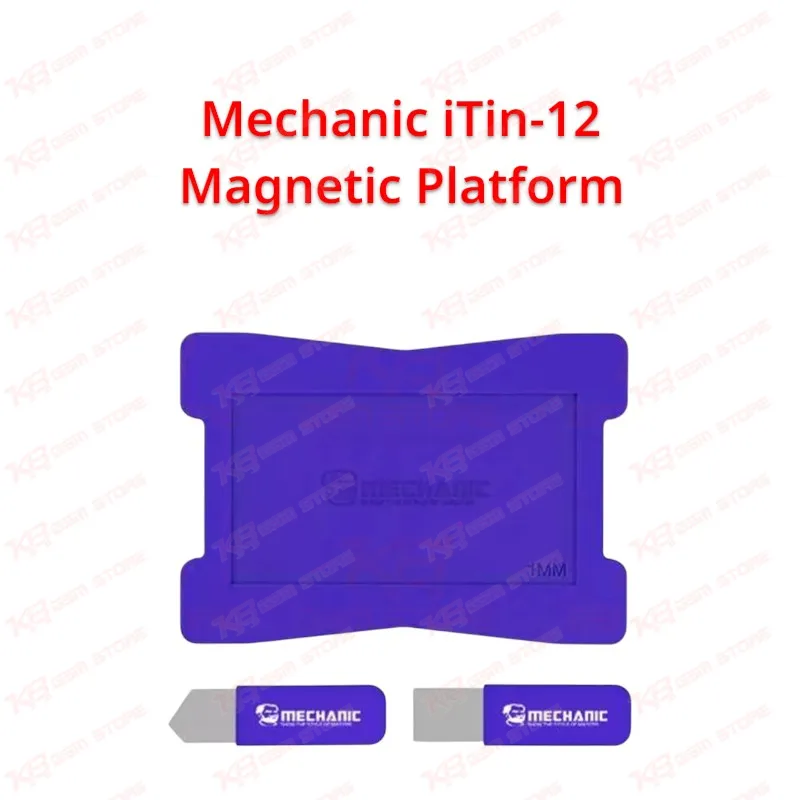
Mechanic iTin-12 Magnetic Platform
Mechanic iTin-12 Magnetic Platform
Regular price
Rs.1,800.00 PKR
Regular price
Rs.2,500.00 PKR
Sale price
Rs.1,800.00 PKR
Shipping calculated at checkout.
Quantity
Couldn't load pickup availability
Mechanic iTin-12 Magnetic Platform gives your repair bench a steady base for BGA tin planting on mobile phone motherboards. The magnetic design holds the stencil and chip in position while you spread solder paste, so you stop chasing a sliding stencil and start getting clean, even solder balls. You use it for CPU, NAND and other BGA chip reballing after IC change karna jobs, dead phone repairs and hardware fault work. Pair it with your hot air station, microscope and PCB holder to build a faster reballing workflow in your shop. KB GSM Store supplies it to technicians and service centers across Pakistan.
SKU:MST-SOLDERING-TOOLS-1082
⚖️ Weight: 0.3 kg
- Safe & Secure Payment
- Fast Delivery
- WhatsApp Support


Description
FAQ
What is the product name?
The product name is Mechanic iTin-12 Magnetic Platform.
What is the brand of this product?
The brand of this product is Mechanic.
What is the model of this product?
The model of this product is iTin-12.
What is this product used for?
This product is used for BGA tin planting and reballing on mobile phone motherboards.
Which devices are compatible with this product?
This product suits mobile phone motherboards with BGA chips, depending on the stencil you use with it.
Who should use this product?
This product is suitable for mobile repair technicians, repair shops, service centers, and professional users.
Does this platform work without a stencil?
No. You need a stencil that matches your chip, because the stencil defines the ball layout while the platform holds it steady.
Can I use this platform with my hot air station?
Yes. You spread solder paste through the stencil, then heat the chip with your hot air station to form the balls, following your paste and stencil supplier's temperature guidance.