


MT6169V Power IC
MT6169V Power IC
Regular price
Rs.250.00 PKR
Regular price
Sale price
Rs.250.00 PKR
Shipping calculated at checkout.
Quantity
Couldn't load pickup availability
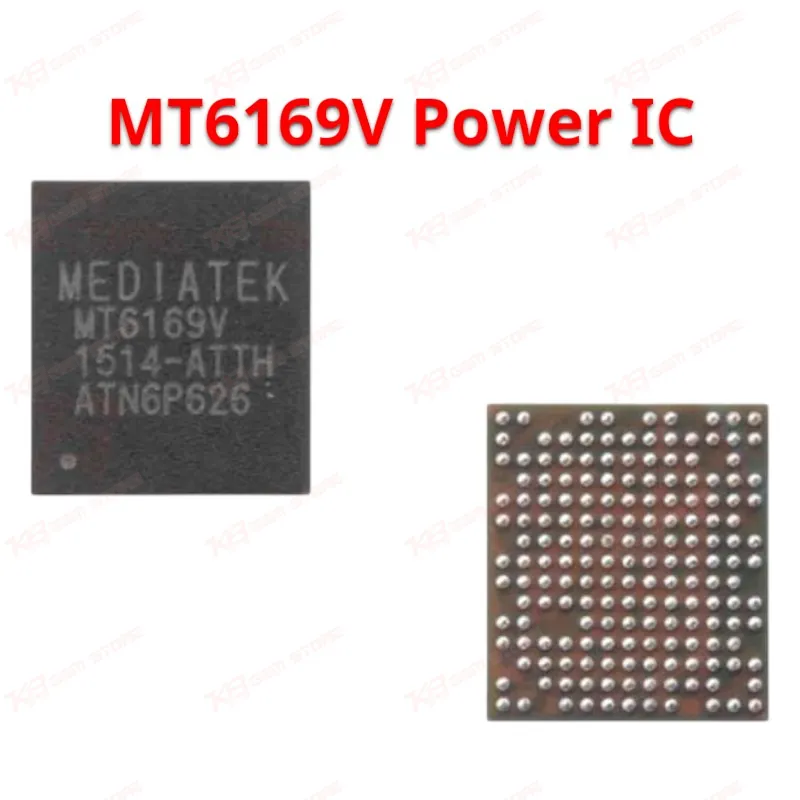
The MT6169V is a MediaTek power management IC used on MediaTek-based smartphone motherboards to control voltage distribution, charging, and power protection. Technicians reach for this chip when a board shows dead phone symptoms, no charging response, or hang on logo after a power fault. It comes in BGA package form, built for direct reballing and soldering onto the original footprint. If your bench sees MTK-based Chinese and budget-brand phones regularly, this IC belongs in your parts drawer. Test the board properly, confirm the fault sits on the power rail, then swap the chip instead of guessing at random components.
⚖️ Weight: 0.01 kg
SKU:MST-IC-133
- Safe & Secure Payment
- Fast Delivery
- WhatsApp Support


Description
FAQ
What is the product name?
The product name is MT6169V Power IC.
What is the brand of this product?
The brand of this product is MediaTek (MTK).
What is the model of this product?
The model of this product is MT6169V.
What is this product used for?
This product is used to replace a faulty power management IC on MediaTek-based phone motherboards, fixing power-related dead phone and boot faults.
Which devices are compatible with this product?
This IC is compatible with Meizu MX5, Sony Xperia E4g and C4 Dual, Huawei Honor 4C Pro, LG K8, ZTE Blade X3, Lenovo A2010, A7000, and K3 Note, Oukitel K10000, and Xiaomi Redmi Note 4 and Mi 4.
Who should use this product?
This product is suitable for mobile repair technicians, repair shops, service centers, and professional users.
Does this IC need reballing before installation?
Yes, the MT6169V comes as a bare BGA chip and requires reballing with solder balls matched to the original footprint before mounting.
How do I confirm a dead board fault is the MT6169V and not another component?
Check current draw and short-circuit points near the power IC footprint first; if the fault isolates there and not at the charging IC or battery connector, the MT6169V is the likely point of failure.