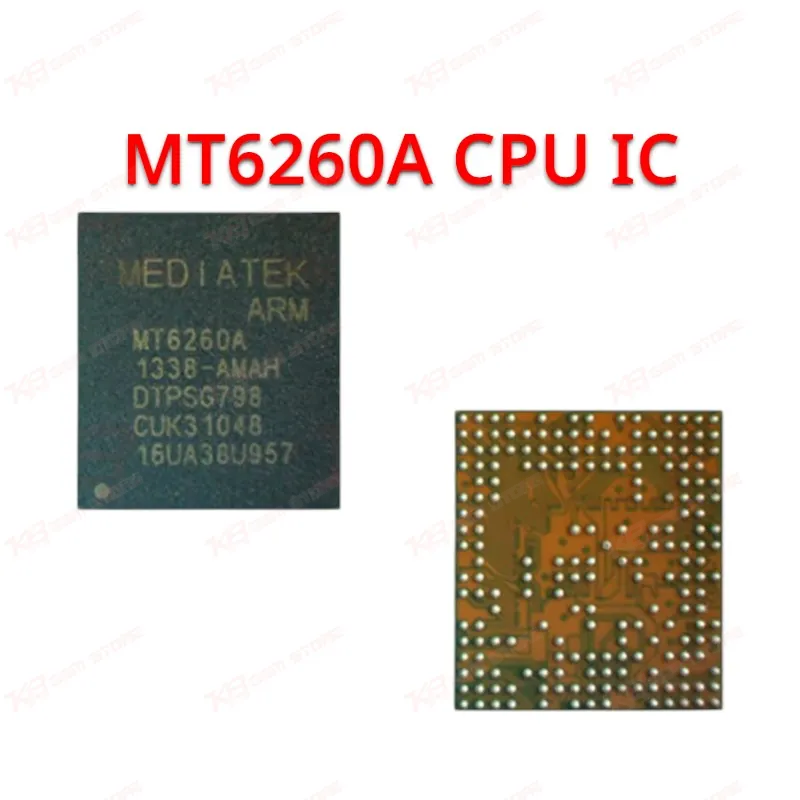
The MediaTek MT6260A is a GSM/GPRS/EDGE-RX system-on-chip processor that combines the CPU, power management unit, analog baseband, and RF circuitry into a single monolithic die. Built on a low-power CMOS process, it functions as the central baseband processor in a large number of MT62xx-platform feature phones sold across Pakistan and other emerging markets. For technicians doing board-level repair, this IC is one of the most commonly replaced components on dead or malfunctioning feature phone motherboards. At the core of the MT6260A sits a 32-bit ARM7EJ-S RISC processor. This core handles the microcontroller subsystem along with its memory management and interrupt handling logic, working alongside a dedicated digital signal processor subsystem. The MCU and DSP communicate through a dedicated interface, splitting the processing load between general application handling and GPRS/EDGE channel codec acceleration. This architecture gives the MT6260A the processing headroom needed for GPRS/EDGE Class 12 modem operation while keeping power draw low, which matters directly for feature phone standby time. The chip ships in a TFBGA package measuring 8.6mm x 9.6mm with 199 balls on a 0.5mm pitch. This ball pitch is tight, so reballing this IC requires a proper stencil, controlled hot air profile, and a steady hand under the microscope. Getting the reflow temperature and preheat stage right prevents bridging between balls, which is the most common failure point technicians run into when reworking this chip on a repair bench. On the connectivity side, the MT6260A supports UART, USB 1.1 FS/LS, SDIO, and an HIF interface, along with MMC/SD card storage. High-performance DMA with hardware flow control moves data between these interfaces without loading down the MCU, which keeps flashing and data transfer operations responsive during software recovery work. This matters when you're running a box tool or flash software after an IC change, since a stable data path directly affects flash success rate. Power management is handled on-chip through an integrated PMU offering 14 LDOs that supply the memory card, camera, Bluetooth, RF section, SIM card, and other peripheral blocks. A built-in Li-ion battery charger, thermal overload protection, under-voltage lockout, and over-voltage protection round out the power safety features. This integration is a big reason charging issue and no-power complaints on MT6260A-based phones often trace back to this single IC rather than a separate PMIC. The chip also brings a 5-row by 5-column keypad controller with hardware key-press scanning that supports multiple simultaneous key presses, along with a real-time clock running on a low-quiescent-current supply. Bluetooth 3.0+EDR support is built in through an embedded protocol processor, covering wireless connectivity without needing a separate combo chip on simpler feature phone designs. For a Pakistani repair workshop, the MT6260A shows up regularly in cases involving dead phone after flash, boot loop issue, hang on logo, and charging issue complaints on the feature phones it powers. Since the PMU, baseband, and RF sections all live on this one die, a fault here can present as several symptoms at once — network issue, no display, or no charging — which is why isolating this IC through voltage and continuity checks before committing to a full IC change saves rework time. Sourcing a verified, correctly marked MT6260A and following proper reballing procedure is what separates a clean repair from a repeat comeback.