


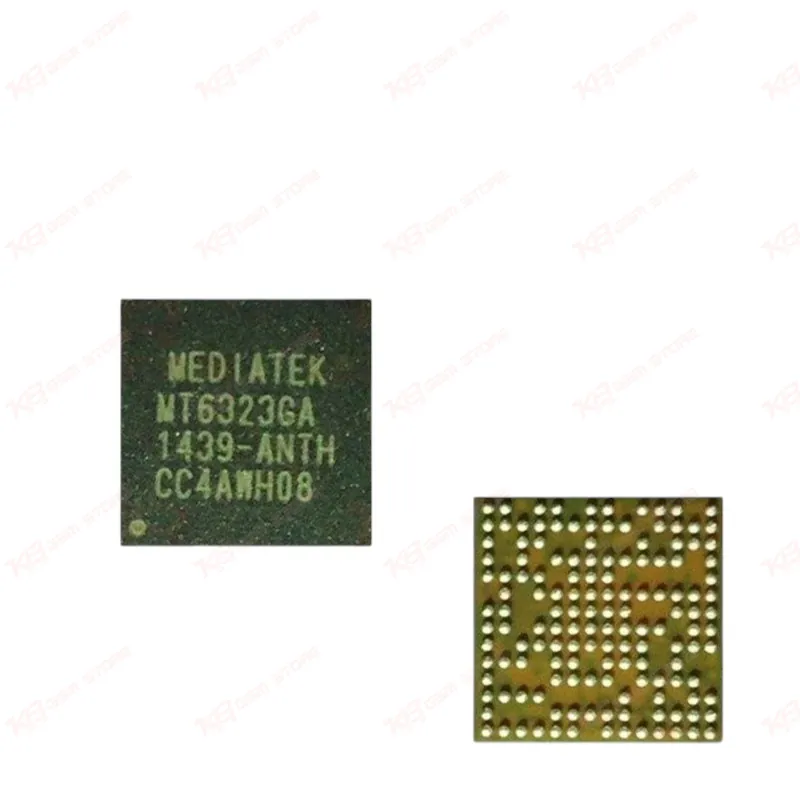
MT6323GA Power IC
MT6323GA Power IC
Regular price
Rs.150.00 PKR
Regular price
Sale price
Rs.150.00 PKR
Shipping calculated at checkout.
Quantity
Couldn't load pickup availability
MT6323GA is a MediaTek power management system chip (PMIC) built for 2G/3G smartphone baseband platforms, particularly boards running on the MT6572 solution. It packs 3 buck converters and 23 LDOs into a single VFBGA-145L package, handling everything from core voltage regulation to battery charging and LED indicator control. Pakistani technicians reach for this IC when a phone shows dead phone symptoms, boot loop, hang on logo, or charging issue after a short circuit or liquid damage. A clean IC change here often restores power sequencing without needing a full motherboard swap.
⚖️ Weight: 0.01 kg
SKU:MST-IC-60
- Safe & Secure Payment
- Fast Delivery
- WhatsApp Support


Description
FAQ
What is the product name?
The product name is MT6323GA Power Management IC.
What is the brand of this product?
The brand of this product is MediaTek.
What is the model of this product?
The model of this product is MT6323GA.
What is this product used for?
This product is used for regulating and distributing power across the baseband, memory, RF, and audio sections of MTK-based smartphones.
Which devices are compatible with this product?
This product is compatible with MediaTek MT6572-based smartphone platforms, commonly used on Xiaomi, Samsung, Oppo, and Vivo MTK boards.
Who should use this product?
This product is suitable for mobile repair technicians, repair shops, service centers, and professional PCB repair engineers.
Does the MT6323GA handle battery charging on its own?
Yes, it includes integrated battery charger management alongside its buck converters and LDO regulators.
What input voltage range does the MT6323GA support?
It operates within a 3.4V to 4.5V input range, matching standard single-cell Li-ion battery output.