


MT6350V Power IC
MT6350V Power IC
Regular price
Rs.250.00 PKR
Regular price
Sale price
Rs.250.00 PKR
Shipping calculated at checkout.
Quantity
Couldn't load pickup availability
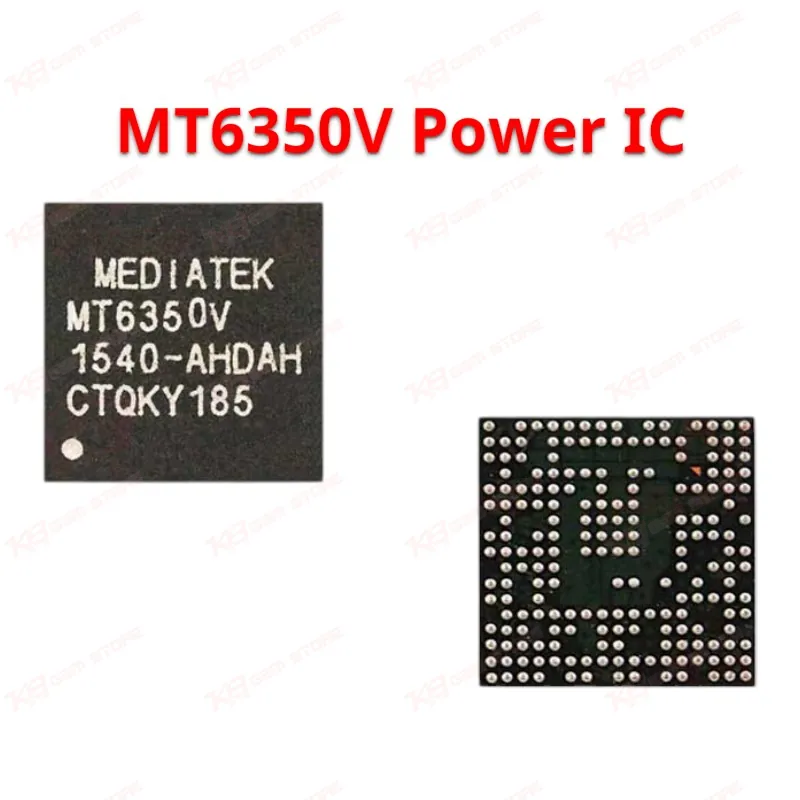
The MT6350V Power IC is a MediaTek power management chip built for MT67xx-series mobile boards. Technicians reach for it when a phone shows dead symptoms, charging issue, or hang on logo after a board short. It comes in a BGA package designed for direct reballing onto the motherboard, so you get a clean swap without rerouting tracks. Use it on your repair bench for dead-after-flash boards, no-power faults, or charging IC failures where the original power section has burned out.
⚖️ Weight: 0.01 kg
SKU:MST-IC-139
- Safe & Secure Payment
- Fast Delivery
- WhatsApp Support


Description
FAQ
What is the product name?
The product name is MediaTek MT6350V Power IC.
What is the brand of this product?
The brand of this product is MediaTek (MTK).
What is the model of this product?
The model of this product is MT6350V.
What is this product used for?
This product is used for restoring power management function on dead phones, boards with charging issues, and boards stuck at hang-on-logo after a PMIC failure.
Which devices are compatible with this product?
This product fits MediaTek MT67xx-series boards, commonly used for Xiaomi Redmi 3 and Meizu M3 Note repairs.
Who should use this product?
This product suits mobile repair technicians, repair shops, service centers, and professional GSM hardware technicians.
Does this IC need a stencil for reballing, or does it come pre-balled?
The MT6350V ships as a bare BGA chip, so you reball it using a matching stencil before reflow onto the board.
Can this IC fix a phone that charges but doesn't power on?
Yes, a failing power rail on the PMIC often causes a phone to draw charging current without powering on, and replacing the MT6350V resolves that fault when the chip itself is confirmed as the failure point.