


MT6353V Power IC
MT6353V Power IC
Regular price
Rs.450.00 PKR
Regular price
Sale price
Rs.450.00 PKR
Shipping calculated at checkout.
Quantity
Couldn't load pickup availability
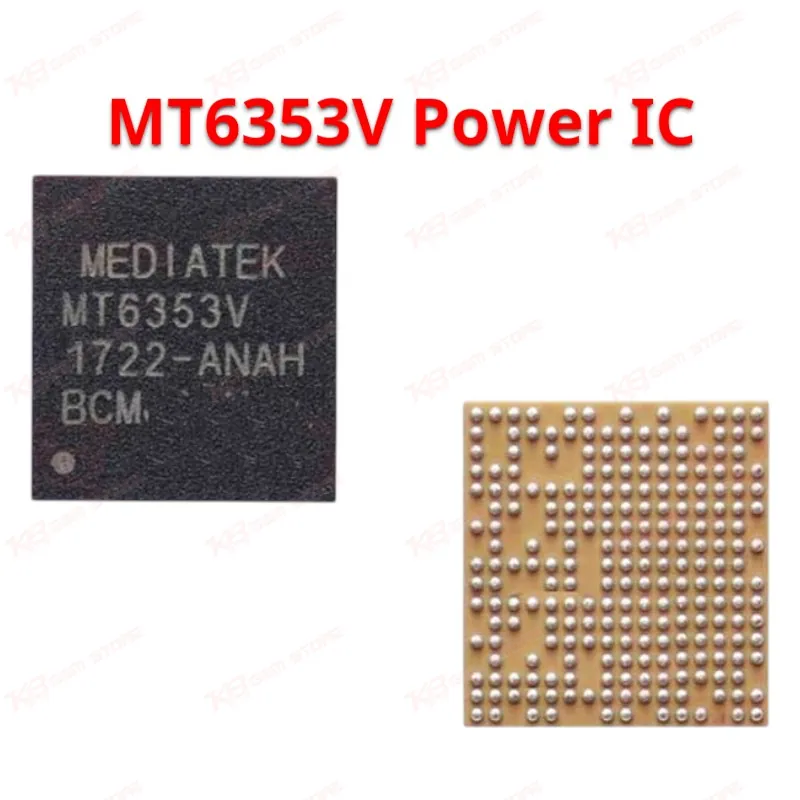
The MT6353V is a MediaTek power management IC built for smartphones and tablets running on MTK chipset platforms. Packaged in a dense BGA format, it handles voltage regulation, power sequencing, and current delivery across multiple rails on the board. Technicians reach for this IC when a device shows dead phone symptoms, charging issue behavior, or won't power on despite a good battery and charging port. It's lead-free and RoHS compliant, matching original factory build standards. Stock this chip if you handle board-level repair on MediaTek-based devices — it's a common replacement part for power rail faults traced back to the PMIC stage.
⚖️ Weight: 0.01 kg
SKU:MST-IC-132
- Safe & Secure Payment
- Fast Delivery
- WhatsApp Support


Description
FAQ
What is the product name?
The product name is MT6353V Power IC.
What is the brand of this product?
The brand of this product is MediaTek (MTK).
What is the model of this product?
The model of this product is MT6353V.
What is this product used for?
This product is used for regulating and delivering power across multiple voltage rails on MediaTek-based mobile device boards.
Which devices are compatible with this product?
This product is compatible with MediaTek chipset-based smartphones and tablets, matched by chipset platform rather than a fixed phone model list.
Who should use this product?
This product is suitable for mobile repair technicians, repair shops, service centers, and professional users.
Does the MT6353V require a specific BGA reballing stencil size?
Yes, since it uses an 869-ball BGA package, you need a stencil matched to that ball pitch for a clean reflow.
Can the MT6353V cause dead phone symptoms after liquid damage?
Yes, corrosion under the PMIC ball grid is a common cause of no-power faults after liquid exposure, since this chip supplies the board's core voltage rails.