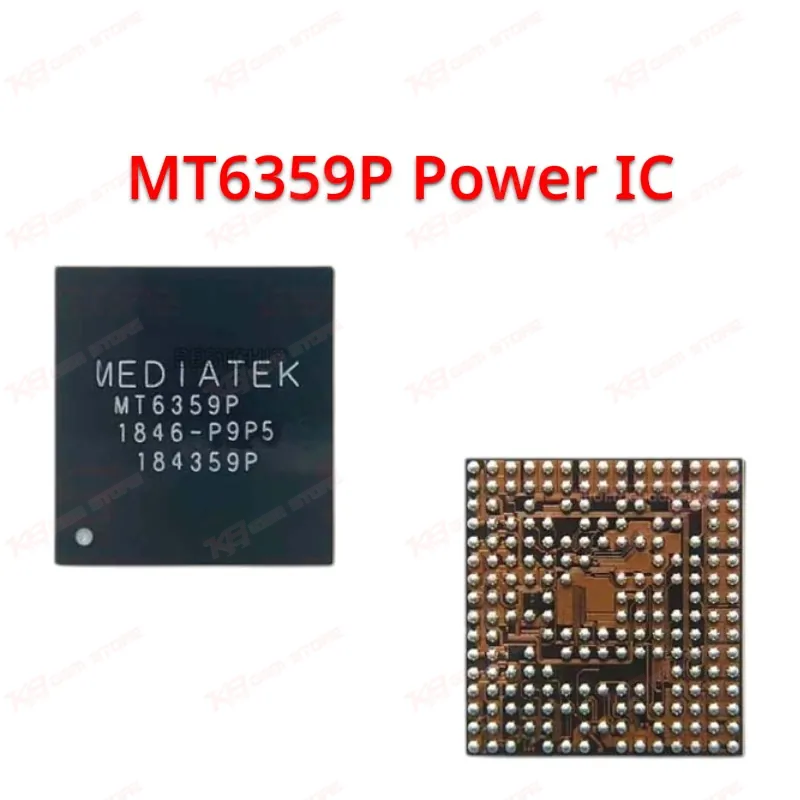
The MT6359P is a power management IC (PMIC) manufactured by MediaTek specifically for devices built on the MT6779 platform, known commercially as the Helio P90 chipset. In any smartphone using this chipset, the PMIC sits at the center of the power delivery network, converting battery voltage into the multiple regulated rail voltages that the application processor, GPU, modem, camera module, and RAM/storage components each need to function. When a technician sees a phone with a hang on logo, dead after flash symptom, or a board that draws no current at all, the MT6359P is one of the first components worth checking, since a fault here directly stops the rest of the board from powering up.On the repair bench, PMIC-related failures on MT6779 boards typically show up in a few recognizable patterns. A board that pulls zero current on the power supply usually points to a dead short somewhere downstream, but if the short clears and the phone still refuses to boot, the PMIC itself becomes a prime suspect. Boards that power on but hang before reaching the logo, or that reboot in a loop, often trace back to a PMIC that has stopped delivering a stable output on one of its rails. Liquid damage cases are another common trigger, since the MT6359P sits close to the charging circuit and battery connector, both frequent entry points for moisture and corrosion.Because the MT6359P uses a WLCSP (Wafer Level Chip Scale Package) design, replacement work demands more discipline than a standard BGA IC change. The chip-scale package has fine-pitch solder balls formed directly on the die, so your hot air station temperature profile, nozzle size, and preheat settings all need to stay controlled to avoid damaging neighboring components or lifting adjacent pads. A quality stencil matched to the MT6359P footprint, fresh solder paste, and a stable microscope setup for alignment all make a real difference in first-attempt success rate. Rushing the reballing step or using an oversized nozzle is the most common reason technicians end up with a board that still won't power on after the IC change.Before jumping straight to an IC change, it pays to isolate the fault properly. Start with a DC power supply and check current draw at 3.8V–4V; a board pulling excessive current suggests a short on one of the rails feeding off the PMIC, while zero draw after clearing shorts can point to the PMIC not receiving its enable signal or failing internally. A thermal camera or freeze spray test can help you localize heat on the specific PMIC pin cluster before you commit to removing the chip. Since a MT6779 board carries several other MediaTek ICs sharing power rails with the PMIC, confirming that the fault genuinely sits at the MT6359P — rather than the CPU or a downstream regulator — saves you from an unnecessary and costly component swap.Software-side symptoms matter too. A board stuck in a boot loop or unable to complete a flash cycle isn't always a software marna fix; if the PMIC can't hold a stable voltage during the boot sequence, no amount of flashing will resolve it, and the board keeps resetting at the same stage every time. Technicians who track this pattern across several boards learn to treat repeated flash failures on MT6779 devices as a hardware flag worth checking at the PMIC level rather than repeating the same software attempt.KB GSM Store stocks the MT6359P as a standalone replacement IC for technicians working on Oppo Reno Z, Oppo Reno2, and other MT6779-based boards. Each unit is supplied for direct reballing and mounting using standard hot air rework equipment, fitting into your existing PCB repair, IC change, and board-level diagnostics workflow without requiring any additional adapters or fixtures beyond your normal reballing stencil and jig setup.