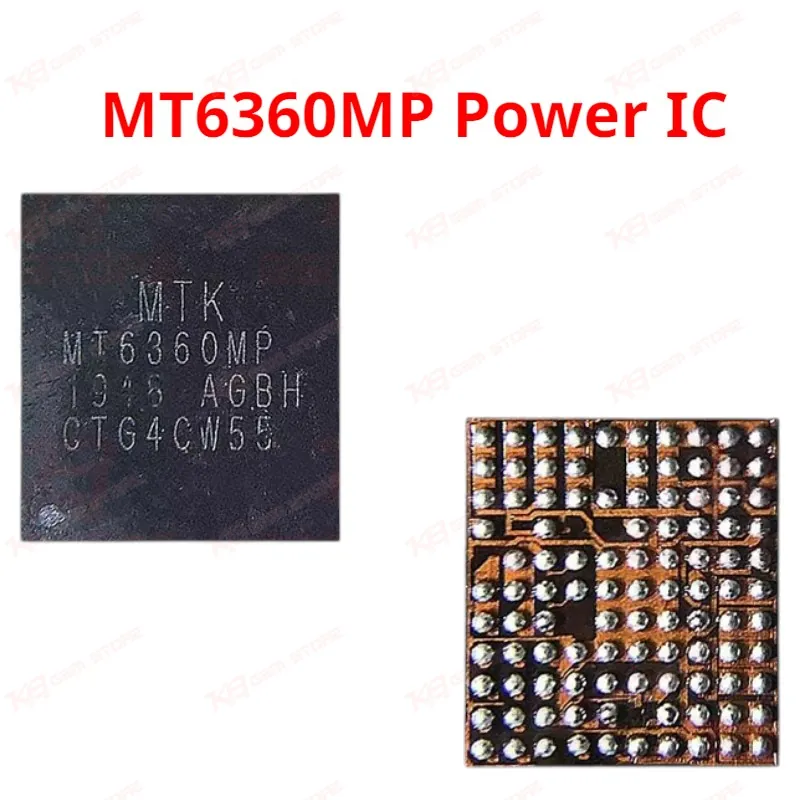
The MT6360MP carries MediaTek's part-number designation for the MT6360 PMIC family assigned specifically to 5G-A platform boards. MediaTek's own part-number notice lists three platform-specific markings under the same MT6360 core: MT6360P for MT6799-based boards, MT6360PP for MT6883-based boards, and MT6360MP for 5G-A platforms. In practice, this means the MT6360MP shares the same integrated architecture as its P-series siblings, but you'll find it soldered onto newer Dimensity-based 5G-A motherboards rather than older 4G designs. On the board, the MT6360MP sits next to the MT6359 main PMIC and MT6315 buck IC as part of a coordinated power plan. While MT6359 handles the bulk of system rail distribution, the MT6360MP takes on a dedicated set of jobs: battery charging, Type-C PD handling, dual buck output, LDO supply for peripheral modules, and camera flash LED drive. This division of labor is exactly why a dead-after-flash or no-charging fault on a 5G-A board doesn't always point back to the main PMIC — it often traces to this IC instead. The charger block inside the MT6360MP runs a synchronous switching architecture with high-accuracy voltage and current regulation, automatic input current regulation (AICR), thermal protection, and BATFET control for ship mode and full system reset. This is the circuitry technicians interact with most often, since a faulty charger stage on this IC produces classic symptoms: phone shows charging icon but battery percentage doesn't rise, phone gets warm near the charging port under load, or the device won't power on at all after a failed flash attempt. Alongside the charger, the IC integrates a full USB Type-C and Power Delivery controller. It manages CC-pin attach/detach detection, cable orientation, VCONN power, and PD3.0 negotiation. When a board can't recognize a USB-C cable properly, doesn't trigger fast-charge negotiation, or fails USB data detection despite a good port and cable, this PD block is a realistic point of failure alongside the port itself. The IC's two buck converters deliver programmable output down to sub-1V rails for processor and memory-adjacent circuitry, while its six-channel LDO bank supplies fingerprint, touch panel, storage (SD/UFS), and DRAM rails. A dead fingerprint sensor, unresponsive touch panel, or board that won't boot past logo can sometimes trace back to one of these LDO channels losing regulation rather than the connected component itself — worth checking with a multimeter against known-good rail voltages before condemning the touch IC or fingerprint module outright. Rounding out the design, the MT6360MP drives dual independently-programmable flash LED channels for the camera flash, plus a separate RGB LED driver and a moonlight LED driver for notification or ambient lighting functions where the board design uses them. Because this IC handles charging, PD, buck rails, and LDO output together, a reballing or replacement job touches several functional domains at once. Technicians should confirm the fault with I2C communication checks and voltage rail testing before committing to an IC swap, since symptoms from this chip can overlap with charging port damage, battery connector faults, or a failing MT6359 companion PMIC on the same board. Preheating and reballing WLCSP-packaged PMICs also demands tighter thermal control than larger QFN parts, since the fine-pitch ball grid is more prone to bridging or tombstoning under uneven hot air. For repair shops stocking parts for MediaTek 5G-A board work, keeping genuine MT6360MP units on hand alongside a hot air station capable of controlled WLCSP profiles and a decent microscope for post-reflow inspection makes this a dependable fix for charging, PD, and LDO-related faults on compatible boards.