


MT6366W Power iC
MT6366W Power iC
Regular price
Rs.1.00 PKR
Regular price
Sale price
Rs.1.00 PKR
Shipping calculated at checkout.
Quantity
Couldn't load pickup availability
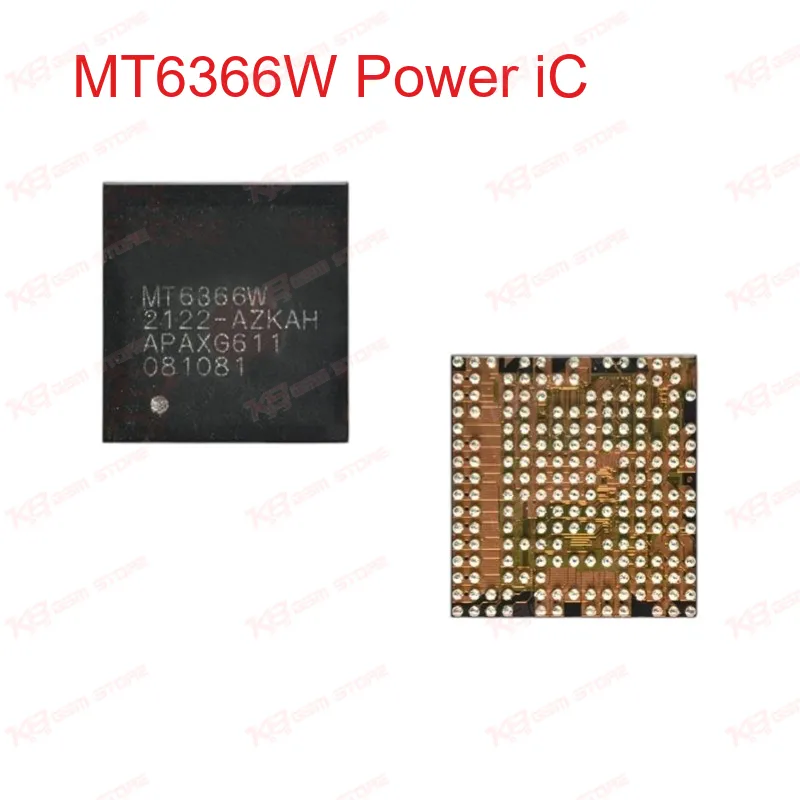
The MT6366W Power IC is a MediaTek PMIC chip used in mobile phones running on MediaTek platforms. It handles voltage regulation, battery charging control, and power distribution to the processor, modem, DRAM, and other board components. Technicians use this IC to fix dead phone issues, charging faults, and no-power symptoms linked to the power management section of the PCB. Reliable for reballing, IC replacement, and board-level repair work on your repair bench.
⚖️ Weight: 0.01 kg
SKU:MST-IC-370
- Safe & Secure Payment
- Fast Delivery
- WhatsApp Support


Description
FAQ
What is the product name?
The product name is MT6366W Power IC.
What is the brand of this product?
The brand of this product is MediaTek.
What is the model of this product?
The model of this product is MT6366W.
What is this product used for?
This product is used for managing power distribution, voltage regulation, and battery charging control on MediaTek-based mobile phone boards.
Which devices are compatible with this product?
This product is compatible with smartphones built on the MediaTek MT6366 power management platform.
Who should use this product?
This product is suitable for mobile repair technicians, repair shops, service centers, and professional users.
Does the MT6366W control battery charging directly?
Yes, the MT6366W manages Lithium-ion and Lithium-polymer battery charging, including fast charging support and overvoltage/overcurrent protection.
Can a faulty MT6366W cause a dead phone with no boot?
Yes, since this IC feeds the boot-up voltage rails for the processor and modem, a fault here can stop the board from powering on even when the battery and charging port test fine.