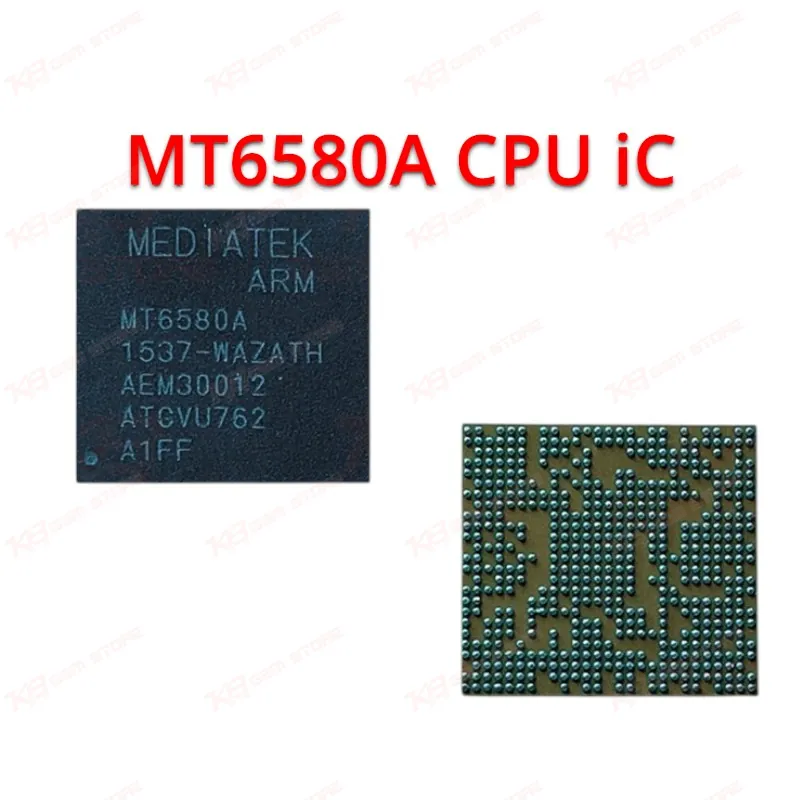
The MT6580A is a quad-core application processor manufactured by MediaTek, built around ARM Cortex-A7 CPU cores paired with an ARM Mali-400 MP2 graphics unit. On the repair bench, this IC sits at the center of the board's processing function, controlling everything from boot sequence execution to display output and memory communication. When a device stops powering on, hangs at the logo screen, or shows signs of CPU-level board damage, this chip is often the first suspect a technician checks after ruling out power rail and PMIC faults. This CPU IC is built for boards designed around the MT6580 platform, a chipset family that MediaTek positioned for entry-level and budget Android devices. You'll find it across a wide range of low-cost smartphones that shipped with Android 5.0 through later Go Edition builds, since the MT6580 architecture stayed in production use across several years of budget device releases. Because of how widely this chipset spread through the low-cost device market, MT6580A CPU faults are one of the more common jobs that come through a GSM repair workshop, particularly with dead phone complaints, boot loop issues, and hang on logo symptoms that don't resolve after a software flash. Inside the chip, the Cortex-A7 cores run at speeds up to 1.3GHz, giving enough headroom for basic multitasking, calling functions, and standard app use without overheating on a 28nm process. The integrated Mali-400 MP2 handles graphics rendering for the display, working alongside the chip's support for LPDDR2 and LPDDR3 memory to manage RAM read/write operations. On the display side, the IC drives output for boards built around qHD and HD resolution panels, and it supports video decode and encode functions needed for camera and playback operations on these devices. This makes it a true system-on-chip replacement rather than a narrow single-function part — swapping this IC affects display driving, memory access, and processing simultaneously, which is why board-level diagnosis before replacement matters. For your workflow, this IC is typically pulled and reballed rather than installed as new-boxed silicon, since CPU-level ICs at this tier are almost always handled through hot air rework. Before jumper lagana or IC change karna on a suspected CPU fault, most experienced technicians confirm the issue isn't a power IC or PMIC problem first — dead after flash symptoms can come from either a corrupted software state or genuine CPU-level hardware fault, and mixing the two up wastes time on the bench. Once you've confirmed a hardware fault sits at the processor, this IC gives you a direct path to board-level repair instead of scrapping the unit. Handling requires standard ESD precautions and a controlled hot air rework station, since ARM Cortex-A7-based CPU ICs at this pin density are sensitive to thermal profile mistakes during reballing. A stencil matched to the MT6580A's ball pattern, quality solder paste, and a stable preheat stage all matter for a clean reflow. KB GSM Store stocks this MT6580A CPU IC as a tested component for technicians working MT6580-platform boards, giving Pakistani repair shops a dependable source for CPU-level parts without relying on unverified or mismatched substitutes pulled from unrelated board families.