


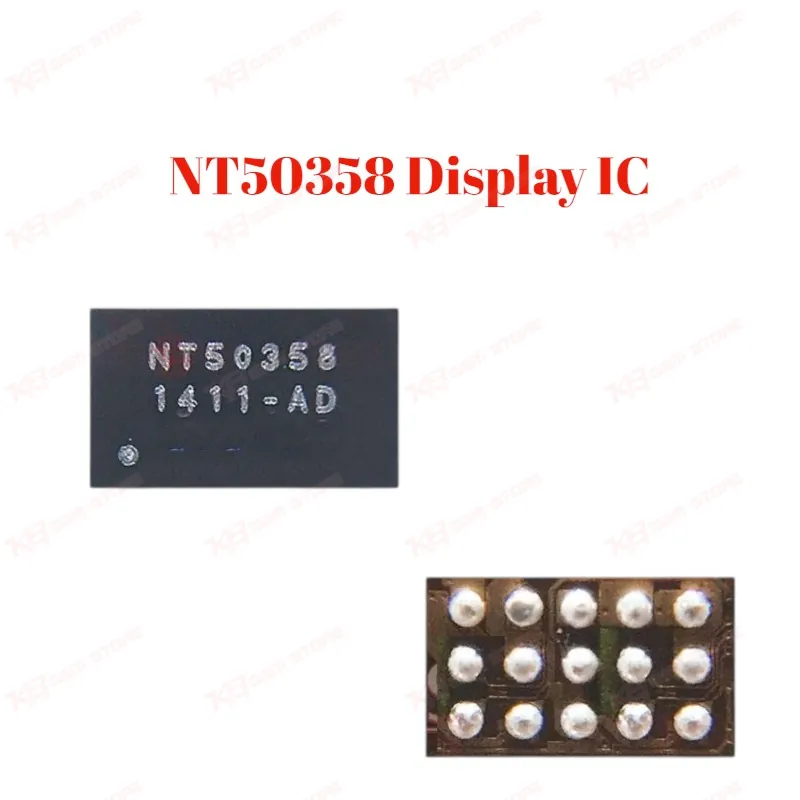
NT50358 Display IC
NT50358 Display IC
Regular price
Rs.150.00 PKR
Regular price
Sale price
Rs.150.00 PKR
Shipping calculated at checkout.
Quantity
Couldn't load pickup availability
The NT50358 is a 15-pin backlight control IC used on Android motherboards to regulate LCD display brightness. Technicians pull this chip when a phone shows dead display, dim screen, or no backlight after a drop, liquid damage, or short circuit. It fits directly onto the original IC footprint, so you don't need to modify the board layout. Stock this chip on your repair bench for fast turnaround on light-related display faults, and pair it with a hot air station for clean reballing and placement.
⚖️ Weight: 0.01 kg
SKU:MST-IC-98
- Safe & Secure Payment
- Fast Delivery
- WhatsApp Support


Description
FAQ
What is the product name?
The product name is NT50358 15 Pin LCD Backlight Control IC.
What is the brand of this product?
The brand of this product is Novatek.
What is the model of this product?
The model of this product is NT50358, also marked as NT50358M.
What is this product used for?
This product regulates LCD backlight voltage and is used to repair no-backlight and dim-display faults on Android motherboards.
Which devices are compatible with this product?
This IC is used on LeEco Le 1S (X500/X501) light control circuits, Huawei Honor 8 series boards, and Xiaomi/Meizu Android motherboards that use this Novatek backlight IC position.
Who should use this product?
This product is suitable for mobile repair technicians, repair shops, service centers, and professional users.
Does this IC control backlight brightness or full display output?
The NT50358 controls the backlight power circuit only — it does not drive pixel data, so it won't fix touch, LCD picture, or digitizer faults.
Can I confirm a bad NT50358 before removing it?
Apply direct voltage to the backlight line and check if the display lights up; if it does, the fault points to this IC or its surrounding boost components rather than the display panel itself.