


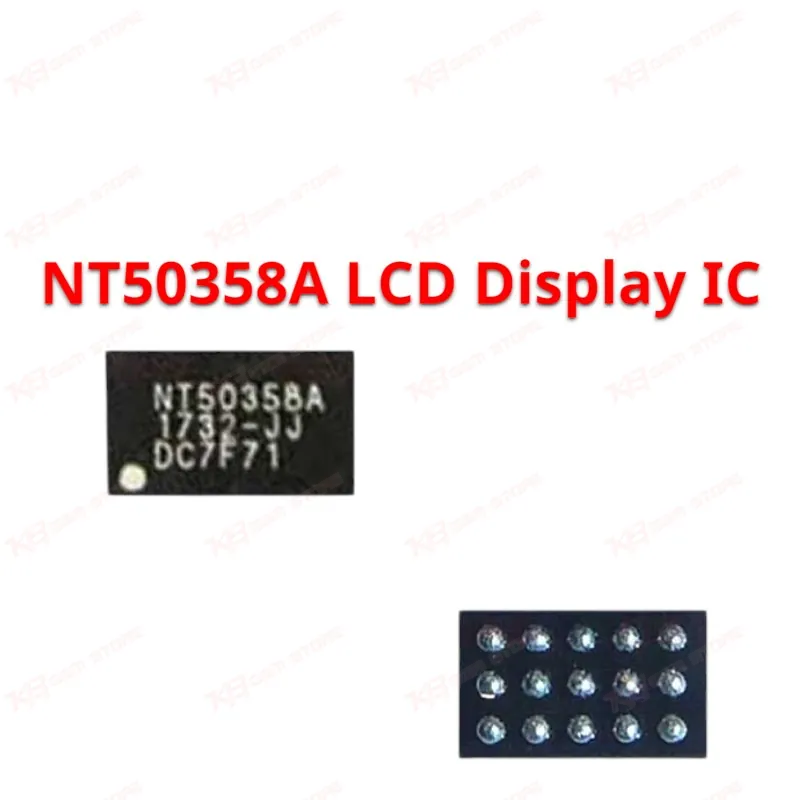
NT50358A LCD Display IC
NT50358A LCD Display IC
Regular price
Rs.200.00 PKR
Regular price
Sale price
Rs.200.00 PKR
Shipping calculated at checkout.
Quantity
Couldn't load pickup availability
The NT50358A is a Novatek LCD display power supply driver IC used on the mainboards of several Android phones, including Xiaomi, Meizu, Oppo, Vivo, Redmi, and Huawei Honor series devices. Technicians reach for this chip when a phone shows a dead display, white screen, no backlight, or display flickering after a fall, liquid damage, or a bad flash. Swap it in at the bench with hot air or a preheater and confirm the display supply lines before reflow. Every unit at KB GSM Store ships new and unused, ready to drop straight into your reballing or board-repair workflow without extra sourcing delays.
⚖️ Weight: 0.01 kg
SKU:MST-IC-134
- Safe & Secure Payment
- Fast Delivery
- WhatsApp Support


Description
FAQ
What is the product name?
The product name is NT50358A LCD Display Driver IC.
What is the brand of this product?
The brand of this product is Novatek.
What is the model of this product?
The model of this product is NT50358A.
What is this product used for?
This product is used to restore the display power supply rail on a phone's mainboard when the panel shows a black screen, white screen, no backlight, or flickering fault.
Which devices are compatible with this product?
This IC is used on boards from Xiaomi, Redmi, Meizu, Oppo, Vivo, Lenovo, and Huawei Honor series phones — confirm the IC marking on your specific board before ordering.
Who should use this product?
This product is suitable for mobile repair technicians, repair shops, service centers, and professional users.
Does the NT50358A require a BGA reballing machine to replace?
No, it's a leaded SMD package, so a standard hot air station with a fine nozzle and flux handles the reflow without a dedicated BGA rig.
How do I confirm a dead display is actually an NT50358A fault before replacing it?
Check the display power rail with a bench power supply and multimeter for current draw or a missing rail voltage at the display connector, and rule out a cracked flex or connector short first.