


PM439 Power IC
PM439 Power IC
Regular price
Rs.250.00 PKR
Regular price
Sale price
Rs.250.00 PKR
Shipping calculated at checkout.
Quantity
Couldn't load pickup availability
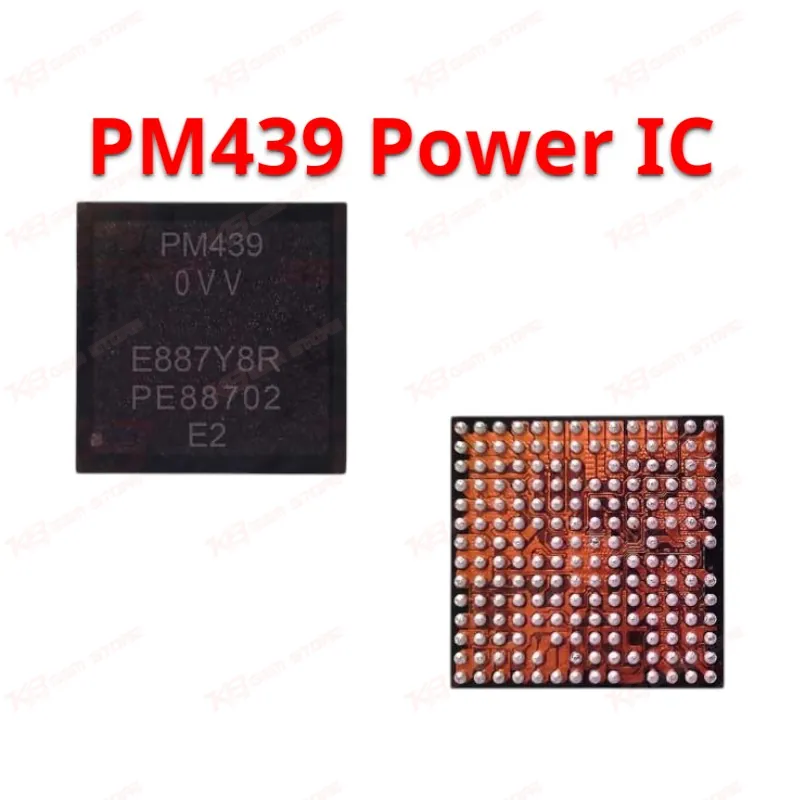
The PM439 is a Qualcomm PM-series power management IC used to control charging, voltage regulation, and power distribution across a wide range of Vivo, Redmi, Samsung, and Nokia handsets. Technicians reach for this IC when a device shows dead phone symptoms, no charging response, or unstable power rails after a board-level fault. Also marked PM439-0VV or PMI439-0VV on the chip surface, this part restores stable power sequencing on affected boards. Built for repair shop workflows where board-level accuracy matters, the PM439 gives your bench a reliable replacement option instead of gambling on a used-pulled chip of unknown health.
⚖️ Weight: 0.01 kg
SKU:MST-IC-161
- Safe & Secure Payment
- Fast Delivery
- WhatsApp Support


Description
FAQ
What is the product name?
The product name is PM439 Power IC.
What is the brand of this product?
The brand of this product is Qualcomm.
What is the model of this product?
The model of this product is PM439, also marked PM439-0VV or PMI439-0VV.
What is this product used for?
This IC handles power management and voltage regulation on the motherboard, and technicians use it to resolve dead phone, no-charging, and boot loop faults tied to power failure.
Which devices are compatible with this product?
This IC is compatible with Vivo Y91, Y93, Y95, Y73, Y11, Y12i, Y12A, Y12S, Y20A; Xiaomi Redmi 7A, 8, 8A, 8A Pro; Samsung A015, A025; and Nokia 3.2, 4.2.
Who should use this product?
This product is suitable for mobile repair technicians, repair shops, service centers, and professional users.
Does the PM439 come as a new IC or a pulled/used chip?
This PM439 ships as a brand-new replacement IC, not a pulled or recycled unit.
Can the PM439 be reballed on a standard hot air rework station?
Yes, the PM439 uses a standard BGA footprint and reballs with a properly matched stencil and a controlled hot air rework station.