


PM6125 001 IC FOR REDMI NOTE 8
PM6125 001 IC FOR REDMI NOTE 8
Regular price
Rs.550.00 PKR
Regular price
Sale price
Rs.550.00 PKR
Shipping calculated at checkout.
Quantity
Couldn't load pickup availability
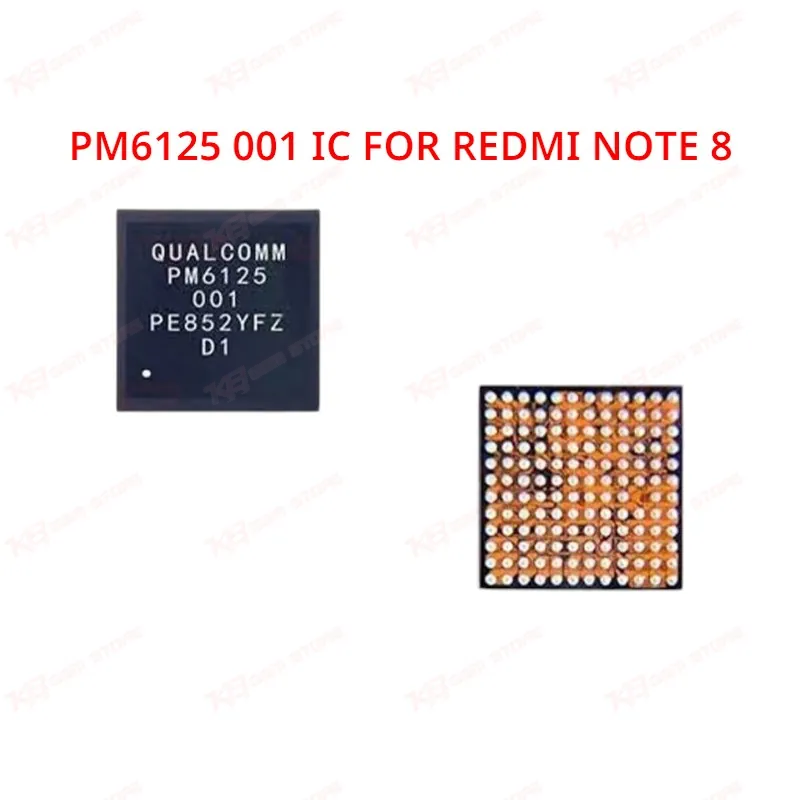
The PM6125-001 is the Qualcomm power management IC responsible for regulating processor, memory, display, and charging voltages on the Redmi Note 8 platform. When a phone won't power on, stays dead after flash, or shows unstable charging behavior, this IC is one of the first suspects on the board. This replacement chip is built for technicians doing board-level repair on Redmi Note 8, Redmi Note 8 Pro, Mi A3, and related Qualcomm-platform devices. Suitable for reballing and direct IC change on your repair bench.
⚖️ Weight: 0.01 kg
SKU:MST-IC-109
- Safe & Secure Payment
- Fast Delivery
- WhatsApp Support


Description
FAQ
What is the product name?
The product name is PM6125-001 Power Management IC for Redmi Note 8.
What is the brand of this product?
The brand of this product is Qualcomm.
What is the model of this product?
The model of this product is PM6125-001.
What is this product used for?
This product regulates power delivery, voltage scaling, and battery management on Qualcomm-platform mobile boards.
Which devices are compatible with this product?
This product is compatible with Xiaomi Redmi Note 8, Redmi Note 8 Pro, Mi A3, Mi CC9e, and shared-platform Oppo A11x and Realme 5 series boards.
Who should use this product?
This product is suitable for mobile repair technicians, repair shops, service centers, and professional users.
Does this IC fix a Redmi Note 8 that's dead after flashing?
If the board draws power but stays dead after a failed flash, the PM6125-001 is a common suspect worth testing and replacing after ruling out shorts and the charging IC.
Can this PMIC be reballed with standard hot air rework tools?
Yes, the PM6125-001 can be reballed and reflowed using a standard hot air station and BGA stencil on your existing repair bench.