


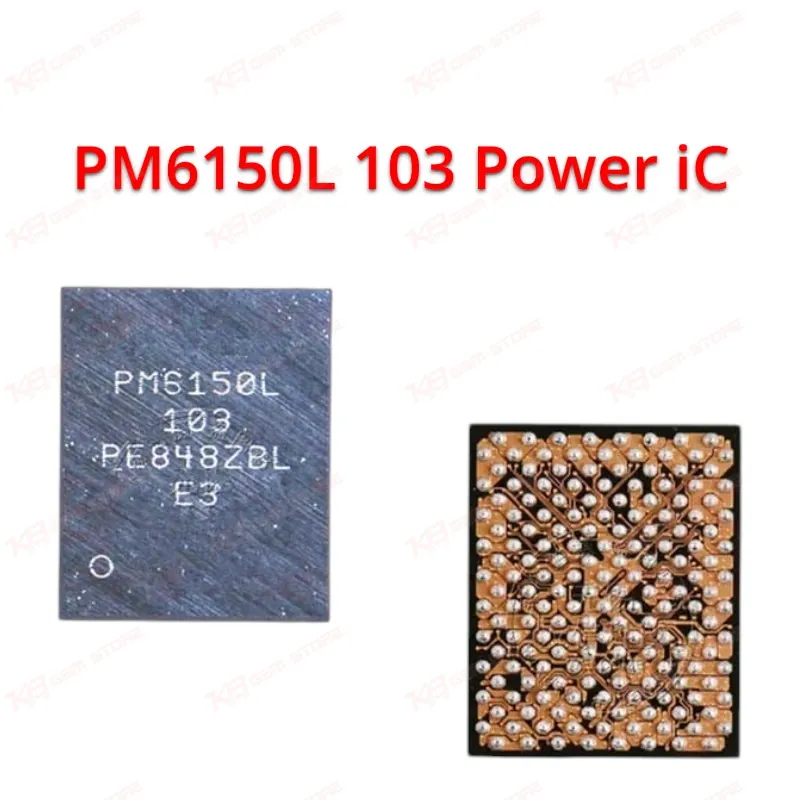
PM6150L 103 Power iC
PM6150L 103 Power iC
Regular price
Rs.350.00 PKR
Regular price
Sale price
Rs.350.00 PKR
Shipping calculated at checkout.
Quantity
Couldn't load pickup availability
The PM6150L-103 is a Qualcomm power management IC (PMIC) used on the motherboards of Samsung Galaxy A50, A30, Note 7, and Redmi Note 7 series devices. It regulates voltage rails and power delivery across the board, keeping the phone stable during boot, charging, and normal operation. Technicians reach for this chip when a device shows dead phone symptoms, hangs on logo, or develops a hardware fault traced back to the power section. This is a BGA-soldered component built for board-level micro-soldering work, not a plug-and-play part. Order it when your diagnosis confirms a faulty power IC rather than a software fault.
⚖️ Weight: 0.01 kg
SKU:MST-IC-287
- Safe & Secure Payment
- Fast Delivery
- WhatsApp Support


Description
FAQ
What is the product name?
The product name is the PM6150L-103 Power Management IC.
What is the brand of this product?
The brand of this product is Qualcomm.
What is the model of this product?
The model of this product is PM6150L-103.
What is this product used for?
This product is used to regulate voltage rails and power delivery on the motherboard of supported devices.
Which devices are compatible with this product?
This product is compatible with Samsung Galaxy A50, A30, Note 7, Redmi Note 7, Note 7 Pro, Note 9 Pro, Note 10, and Motorola G Stylish 5G and One Hyper.
Who should use this product?
This product is suitable for mobile repair technicians, repair shops, service centers, and professional board-level repair users.
Does the PM6150L-103 fix a dead phone that won't power on at all?
Yes, if diagnosis confirms the fault sits on this IC's power rail rather than the battery, charging circuit, or a separate hardware fault.
Can this IC be replaced without a hot air rework station?
No, it's a BGA-soldered chip and needs a hot air station along with proper reflow and reballing technique to install correctly.