Skip to product information
1 of 5

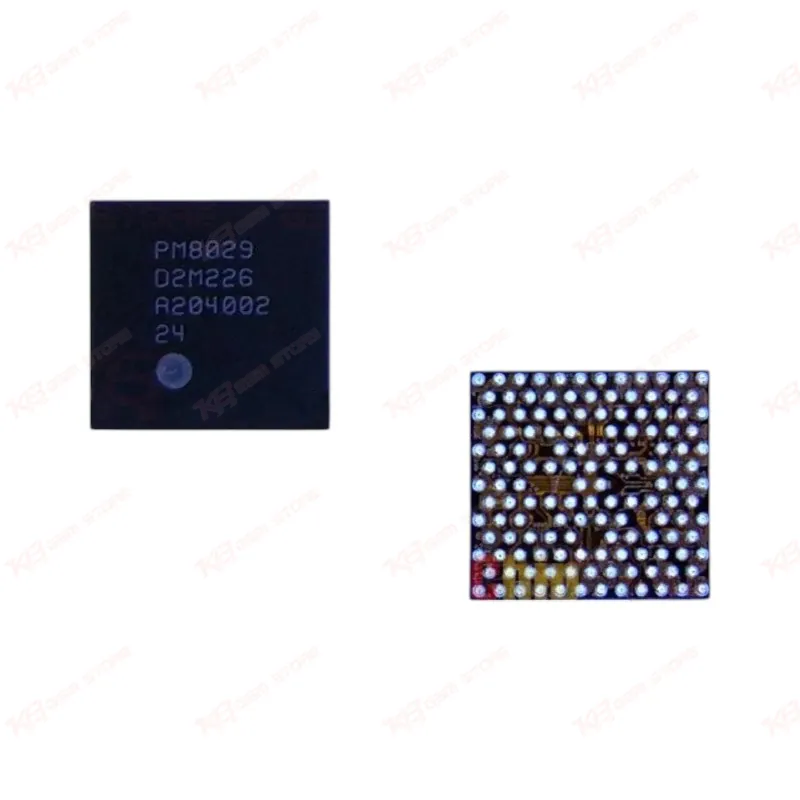
PM8029 Power IC

PM8029 Power IC

Regular price Rs.500.00 PKR
Regular price Sale price Rs.500.00 PKR
Sale Sold out
Shipping calculated at checkout.
Quantity

The PM8029 is a genuine Qualcomm power supervisor PMIC used across a wide range of Samsung, HTC, Motorola, Huawei, and Nokia handsets built on Qualcomm chipsets. This IC manages the voltage sequencing and power delivery inside the device, and it's one of the most commonly reballed ICs on GSM repair benches for dead phone and no-power complaints. If your board shows a dead after flash condition, hang on logo, or the phone draws no current at all, checking this IC early in your diagnosis saves bench time. Supplied new and unused, ready for reballing and direct placement.

⚖️ Weight: 0.01 kg

SKU:MST-IC-48

  • Safe & Secure Payment
  • Fast Delivery
  • WhatsApp Support
View full details

Description

Power supervisor ICs sit at the core of a phone's board — they don't just supply voltage, they control the sequence in which every other IC on the board wakes up. The PM8029 is Qualcomm's power supervisor PMIC, and on the phones it was designed for, nothing else on the board powers on until this chip does its job correctly. That's why a faulty PM8029 almost always presents as a completely dead phone rather than a partial fault.You'll recognize this IC on boards for the Samsung Galaxy S Duos S7562, GT-S7500, GT-S6312, GT-S5570, GT-S6500, GT-I8262, GT-I8262D, GT-I8552, and I879, as well as the HTC A310e and HTC 608T (T328W), Motorola XT557 and XT615, Huawei U8825D and C8812, and the Nokia XL. Across this range, the PM8029 handles the same core job: regulating and sequencing the rail voltages that feed the baseband, RF, and application sections of the board.On your repair bench, this IC comes up in a specific set of complaints. A dead phone that shows zero current draw on the power supply is the classic symptom — no LED, no logo, nothing. A board that was working before a flash and goes dead after flash also points here, since a disrupted power sequence during flashing can damage or destabilize this IC. You'll also see it linked to hang on logo faults where the phone powers partway up and stalls, and to intermittent charging issue complaints where the power rails aren't stable enough to sustain a charge cycle.Diagnosing before you commit to IC change karna matters here. Start with a current draw test on your power supply box — a short or dead short reading usually rules the PM8029 in as a suspect, but always check for physical damage, corrosion, or a lifted pad first. If the board was liquid damaged, clean and inspect the area under the IC before assuming the chip itself has failed; sometimes it's a bridged pad or a hairline crack in the board rather than the IC. Once you've isolated the fault to this component, reballing is the standard fix — jumper lagana as a temporary workaround isn't practical on a power supervisor IC because of the pin count and the precision the power sequencing needs.For the reballing process itself, this WLNSP-packaged IC needs a proper stencil match, controlled hot air temperature, and clean pad prep — rushing the reflow on a power IC is one of the more common reasons technicians see the same dead phone symptom return a week later. If you're running diagnostics with a UFI box or similar tool before committing to an IC change, confirm the current draw pattern matches a power IC fault rather than a baseband or PMIC-adjacent component fault, since several ICs on these boards can present with a similar dead symptom.This listing is for the IC only — reballing service, stencils, and flux are sold separately in our tools and accessories sections. Every unit is new, untested-on-board (as is standard for supervisor ICs, since bench testing requires board placement), and sourced for accuracy against the verified part number.

Key Features

Genuine Qualcomm part number, verified against manufacturer and distributor documentation

140WLNSP pb-free package for standard reballing workflows on your repair bench

Manages voltage sequencing across Samsung, HTC, Motorola, Huawei, and Nokia boards using this power architecture

Supports 3.0V–4.4V input range matching the original board design

New, unused stock — not a pulled or recycled unit

Directly addresses dead phone and no-power complaints at the component level

Fits into standard ISP, UFS, and diagnostic workflows as a confirmed hardware-fault component

Suitable for single-repair technicians and bulk-stocking repair shops alike

Specifications

Brand Entity Qualcomm
Product Entity PM8029 Power Supervisor PMIC
Technology Entity Power Management IC / Power Sequencing
Compatible Device Entities Samsung Galaxy S Duos S7562, HTC A310e, Motorola XT615, Huawei U8825D, Nokia XL
Repair Process Entity IC Reballing, Power Rail Diagnosis
Industry Entity Mobile Phone Repair, GSM Technician Workshop

Compatible Devices

Samsung Galaxy S Duos (S7562), GT-S7500, GT-S6312, GT-S5570, GT-S6500, GT-I8262, GT-I8262D, GT-I8552, I879; HTC A310e, HTC 608T (T328W); Motorola XT557, XT615; Huawei U8825D, C8812; Nokia XL

Common Repair Uses

Dead phone / no power diagnosis, IC reballing after dead-after-flash faults, power rail short circuit repair, hang-on-logo troubleshooting, charging issue resolution linked to unstable power sequencing

FAQ

What is the product name?
The product name is PM8029 Power IC.
What is the brand of this product?
The brand of this product is Qualcomm.
What is the model of this product?
The model of this product is PM8029.
What is this product used for?
This product is used to replace a faulty power supervisor IC on boards that show dead phone, no-power, or hang-on-logo symptoms.
Which devices are compatible with this product?
This product is compatible with the Samsung Galaxy S Duos S7562, GT-I8262, GT-I8552, HTC A310e, Motorola XT615, Huawei U8825D, and Nokia XL, among other boards built on the same power architecture.
Who should use this product?
This product is suitable for mobile repair technicians, repair shops, service centers, and professional users.
Does the PM8029 need a specific stencil for reballing?
Yes, this IC requires a WLNSP-matched stencil for correct ball placement during reballing — using the wrong stencil size causes bridging or open connections after reflow.
Can a faulty PM8029 cause a dead-after-flash fault?
Yes, an unstable or damaged PM8029 can disrupt the power sequencing needed for the board to boot, which shows up as dead after flash even when the flash itself completed correctly.

Ask any Query