


PM8110 Power IC
PM8110 Power IC
Regular price
Rs.250.00 PKR
Regular price
Sale price
Rs.250.00 PKR
Shipping calculated at checkout.
Quantity
Couldn't load pickup availability
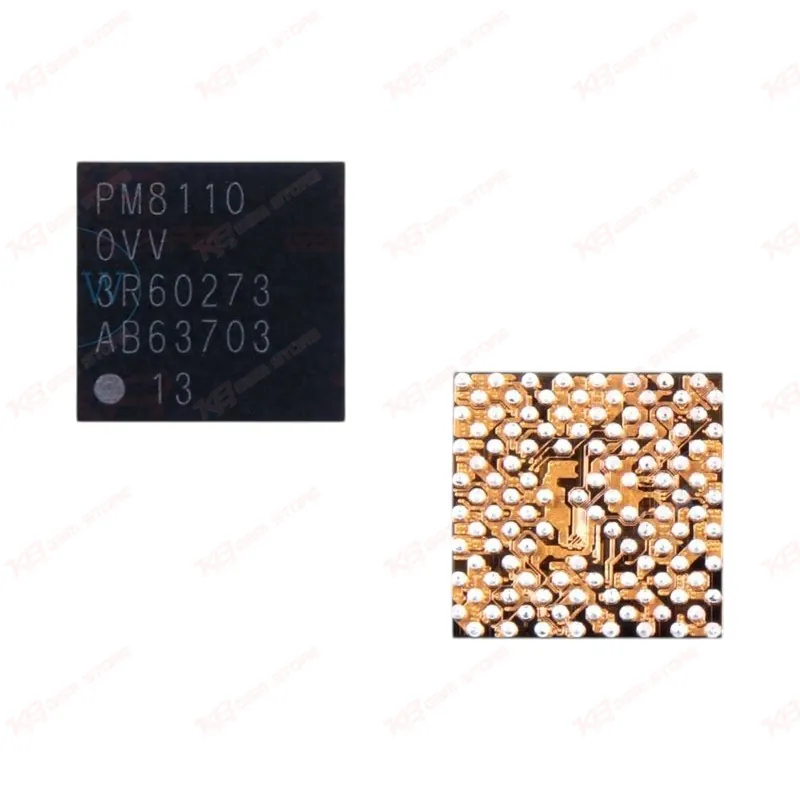
The PM8110 is a Qualcomm power management IC built in a BGA package. It regulates and distributes power on the mainboard, controlling the voltage rails, charging path, and power sequencing that keep a phone alive from the moment you plug in the charger. Technicians pull this chip on dead phone repairs, no-power boards, and charging faults traced back to the PMIC stage. Verified boards using this IC include the Huawei Y625-U32, Huawei Y530-U00, Alcatel 7040N, HTC Desire 516, and Huawei S7-721G tablet. This is a reballing and reflow job — you need a hot air station and a proper BGA setup on your bench, not a plug-in part.
⚖️ Weight: 0.01 kg
SKU:MST-IC-77
- Safe & Secure Payment
- Fast Delivery
- WhatsApp Support


Description
FAQ
What is the product name?
The product name is PM8110 Power Management IC.
What is the brand of this product?
The brand of this product is Qualcomm.
What is the model of this product?
The model of this product is PM8110.
What is this product used for?
This product regulates and distributes power on the mainboard and is installed to resolve dead phone, no-charging, and no-power faults traced to the PMIC stage.
Which devices are compatible with this product?
This product is verified compatible with the Huawei Y625-U32, Huawei Y530-U00, Alcatel 7040N, HTC Desire 516, and Huawei S7-721G tablet.
Who should use this product?
This product is suitable for mobile repair technicians, repair shops, service centers, and professional users.
Does the PM8110 need BGA reballing to install?
Yes, this chip ships in a BGA package, so installation requires desoldering, pad cleaning, reballing with a matching stencil, and hot air reflow — it cannot be soldered in with an iron alone.
What operating temperature range does the PM8110 support?
The PM8110 is rated for -40°C to 105°C, giving it enough thermal headroom for repeated bench rework cycles.