


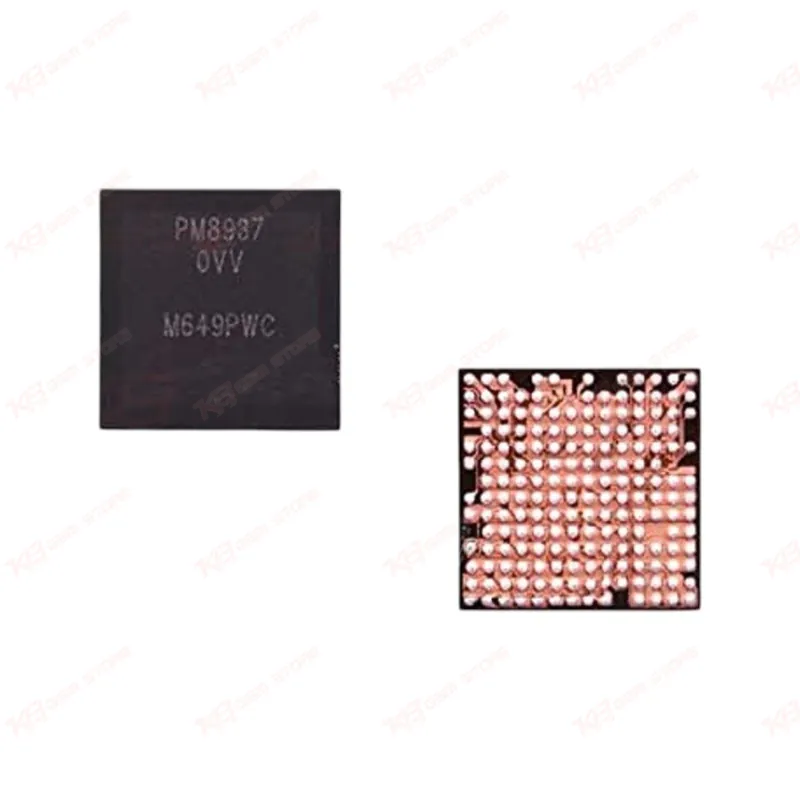
PM8937 Power IC
PM8937 Power IC
Regular price
Rs.200.00 PKR
Regular price
Sale price
Rs.200.00 PKR
Shipping calculated at checkout.
Quantity
Couldn't load pickup availability
The PM8937 handles voltage regulation and battery charging control on Snapdragon 425, 430, and 435 boards. You reach for this IC when a phone shows a dead board, hangs on logo after boot, or won't take charge even after ruling out the charging port and battery. It restores power sequencing on boards built around MSM8917, MSM8937, and MSM8940 platforms. Common on Samsung Galaxy J-series and select Huawei models, this power IC ships as an original BGA chip ready for reballing on your rework station.
⚖️ Weight: 0.01 kg
SKU:MST-IC-49
- Safe & Secure Payment
- Fast Delivery
- WhatsApp Support


Description
FAQ
What is the product name?
The product name is PM8937 Power IC.
What is the brand of this product?
The brand of this product is Qualcomm.
What is the model of this product?
The model of this product is PM8937.
What is this product used for?
This product is used for voltage regulation and battery charging control on mobile phone boards, and for repairing dead board or power sequencing faults.
Which devices are compatible with this product?
This product is compatible with boards built on Snapdragon 425 (MSM8917), Snapdragon 430 (MSM8937), and Snapdragon 435 (MSM8940) platforms, including Samsung Galaxy J-series and select Huawei models.
Who should use this product?
This product is suitable for mobile repair technicians, repair shops, service centers, and professional users.
Which Snapdragon chipsets pair with the PM8937 power IC?
The PM8937 pairs with Snapdragon 425 (MSM8917), Snapdragon 430 (MSM8937), and Snapdragon 435 (MSM8940) application processors.
Can the PM8937 fix a phone stuck on the logo after a failed flash?
Only if the logo hang traces to a power sequencing fault on this IC — check EDL mode and battery voltage first, since flash-related dead boards are often a software issue, not a PMIC fault.