Skip to product information
1 of 5

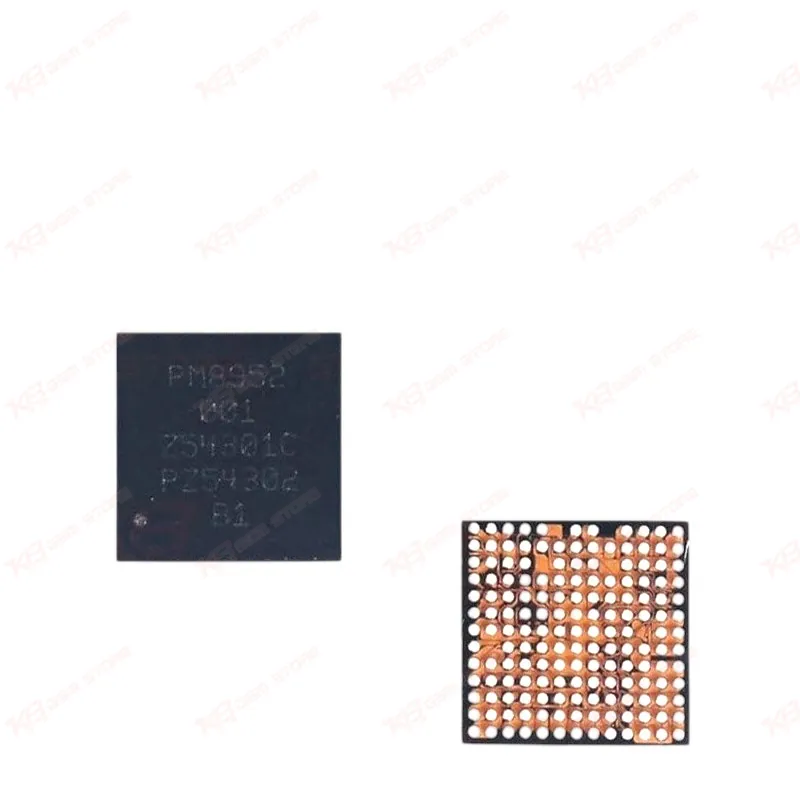
PM8952 Power IC

PM8952 Power IC

Regular price Rs.200.00 PKR
Regular price Sale price Rs.200.00 PKR
Sale Sold out
Shipping calculated at checkout.
Quantity

The PM8952 power IC is a genuine Qualcomm PMIC used on Redmi Note 3, Redmi 3, Redmi 3S, and Redmi Note 4/4X/4A boards. When your customer brings in a dead phone, no power, or hang on logo fault on these Snapdragon-based Xiaomi handsets, this chip is often the culprit. You use it to restore proper voltage sequencing to the main processor, memory, and modem. Every unit at KBGSMSTORE ships as a genuine replacement part, ready for your reballing station and hot air rework bench. Stock this IC and cut your board repair turnaround time on Xiaomi's most common repair cases.

⚖️ Weight: 0.01 kg

SKU:MST-IC-50

  • Safe & Secure Payment
  • Fast Delivery
  • WhatsApp Support
View full details

Description

Xiaomi's Redmi Note 3 and Redmi Note 4 series dominate repair shop counters across Pakistan, and a dead board on these phones almost always traces back to one component: the PM8952. This is Qualcomm's power management IC, sitting on the board as the first stage of the power-on sequence. When a technician gets a "dead after flash" phone, a board stuck on logo, or a unit that pulls current but never boots, the PM8952 is one of the first components you isolate on the bench.You are dealing with a PMIC here, not a simple regulator chip. The PM8952 controls the startup and shutdown sequence for the application processor, coordinates voltage rails feeding the modem and memory, and manages the handshake signals that tell the rest of the board it's safe to power up. A fault here doesn't always show up as a dead phone. Sometimes the symptom is a boot loop, sometimes it's a phone that charges but won't turn on, and sometimes it's random restarts that look like a software issue until you check current draw on the bench supply.Diagnosing a PM8952 fault starts on your bench power supply. Connect the board and watch the current draw pattern. A short on the PMIC rail, an open connection from age or moisture damage, or a cracked ball under the chip all point back to this IC. Before you commit to a reball or full replacement, check dry joints first — reflowing the existing chip with your hot air station resolves a good number of these cases without needing a new part. When the chip itself has failed internally, that's when you swap it out.Replacing this IC is a standard BGA rework job. Remove the old chip with your hot air station at a controlled temperature, clean the pads thoroughly, and reball using a matching stencil before reflow. Board prep matters more than the reflow itself — residue left on the pads after removal is the most common reason a reballed PM8952 still fails after replacement. Use flux generously during removal and inspect the pads under your microscope before placing the new IC.This part fits the same repair workflow you already run for other Qualcomm PMIC faults — the same isolation logic you use for PM660 or PM8953 issues on newer Xiaomi and other Qualcomm-platform phones applies here. Keep a few PM8952 units in stock alongside your reballing kit and stencils; on Redmi Note 3 and Note 4 series repairs, this is a part you'll reach for often enough that having it on hand saves a same-day turnaround.Every PM8952 IC at KBGSMSTORE is sourced as a genuine replacement part, tested for correct pin function before listing. We don't sell reworked or resurfaced chips relabeled as new — what you get is a clean part ready for your bench. For repair shops handling volume Xiaomi work, this is one of the components worth keeping stocked rather than ordering per job, since board-down Redmi units are a recurring ticket type in almost every GSM workshop.

Key Features

  • Genuine Qualcomm PMIC, tested before dispatch
  • Direct fit for Redmi Note 3 and Redmi Note 4 series boards
  • Restores power-on sequencing to processor, memory, and modem
  • Standard BGA package compatible with common reballing stencils
  • Suitable for hot air rework and reflow stations
  • Resolves dead-after-flash and boot loop faults tied to PMIC failure
  • Fits directly into existing ISP/UFS repair workflow for Xiaomi boards
  • Reliable choice for high-volume Redmi Note repair shops

Specifications

Brand Entity Qualcomm
Product Entity PM8952 Power Management IC
Technology Entity PMIC, BGA rework Compatible
Device Entities Xiaomi Redmi Note 3, Redmi Note 4, Redmi 3, Redmi 3S Repair
Process Entity BGA reballing, board-level power fault diagnosis
Industry Entity Mobile phone PCB repair, GSM technician workshop

Compatible Devices

Xiaomi Redmi Note 3, Redmi 3, Redmi 3S, Redmi Note 3 Pro, Redmi Note 4, Redmi Note 4X, Redmi Note 4A

Common Repair Uses

Dead phone / no power repair, hang on logo and boot loop troubleshooting, power sequencing fault diagnosis, BGA reballing and IC replacement, board-level fault isolation on Qualcomm PMIC rails

FAQ

What is the product name?
The product name is the PM8952 Power IC.
What is the brand of this product?
The brand of this product is Qualcomm.
What is the model of this product?
The model of this product is PM8952.
What is this product used for?
This product is used to replace a faulty power management IC on Redmi Note 3 and Redmi Note 4 series boards affected by dead phone, boot loop, or no-power faults.
Which devices are compatible with this product?
This product is compatible with Xiaomi Redmi Note 3, Redmi 3, Redmi 3S, Redmi Note 3 Pro, Redmi Note 4, Redmi Note 4X, and Redmi Note 4A.
Who should use this product?
This product is suitable for mobile repair technicians, repair shops, service centers, and professional users.
Does the PM8952 need a stencil for reballing, or can it be reused after reflow?
You need a matching BGA stencil for a clean reball; simply reflowing without proper ball placement often causes an unstable connection, so use the correct stencil size for this chip.
Is a dead board always a PM8952 fault, or should I check for dry joints first?
Check for dry joints first — reflowing the existing PM8952 with hot air resolves many dead board cases without needing a replacement chip, so isolate the fault before committing to a full swap.

Ask any Query