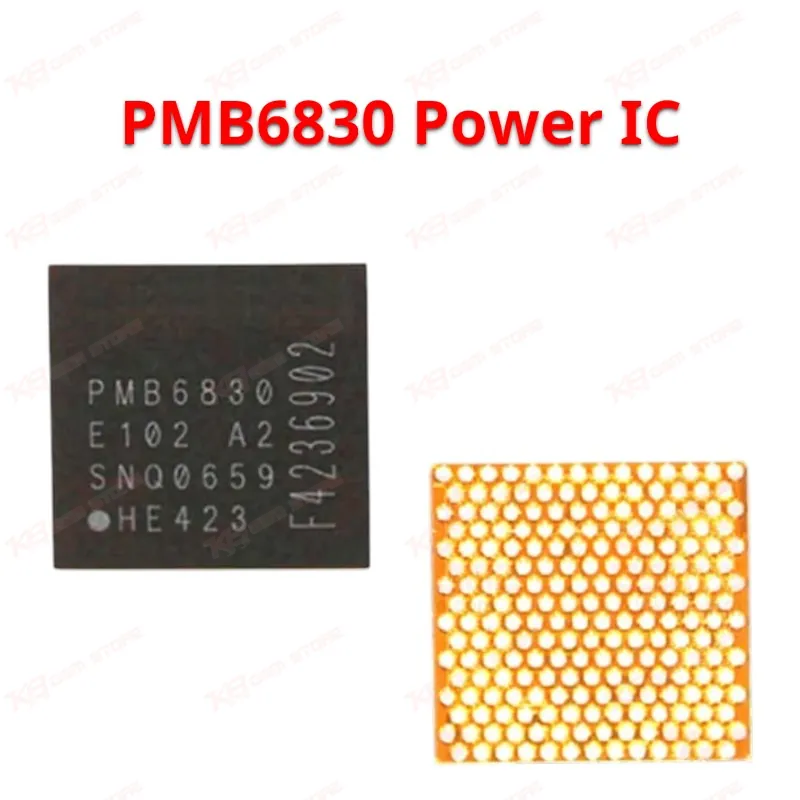
Baseband power management ICs sit at the center of a phone's power delivery chain, and the PMB6830 belongs to Infineon's PMB68xx family built for exactly this job. This chip takes input voltage from the main power rail and splits it into the multiple regulated outputs that baseband, RF, and related subsystems need to function. When a board comes into your workshop with baseband-related symptoms — network issue, no signal, or a board that won't wake up despite the main power IC testing fine — the baseband PMIC is one of the first suspects on your bench.You'll find the PMB6830 in BGA package, which means reballing and hot air rework are part of the job whenever you replace it. This isn't a chip you swap with a soldering iron alone — you need a proper hot air station with accurate temperature control, a stencil matched to the ball pitch, and flux to protect the pads during reflow. Board temperature control matters here: baseband PMICs sit close to other sensitive components, so shielding neighboring parts before you apply heat protects you from creating a second fault while fixing the first.Sourcing matters more than most technicians assume. The PMB6830 shows up under two brand markings in the supply chain — Infineon and Intel — because Infineon's wireless and modem business changed hands over the years. Both markings represent the same underlying part family, so don't discard stock just because the top marking doesn't match what you expected. What matters for your repair is functional compatibility with the board you're working on, which you confirm through board-level pinout testing and comparison against a known-good unit, not just the printed part number.Before you commit to an IC change, rule out the simpler causes. Cracked or lifted BGA balls from prior drops, cold joints from a previous repair attempt, or corrosion from liquid damage can all mimic PMIC failure symptoms. A continuity check on the power rails feeding into and out of the chip, combined with a current draw test on your DC power supply, tells you whether the IC itself is dead or whether the fault sits somewhere else on the board — a jumper wire fix or a cleaning job under a microscope might solve it without touching the chip at all.Once you've confirmed the PMIC is the fault, work methodically. Remove the old chip with hot air at a controlled temperature, clean the pads thoroughly, check for lifted pads under magnification, and reball before mounting the replacement. After reflow, let the board cool naturally before testing — thermal shock from rushing this step is a common cause of "dead after flash" boards that technicians see coming back to the bench.Stocking genuine PMB6830 units from a reliable supplier protects your repair success rate and your shop's reputation. A mismatched or counterfeit PMIC can pass a visual check but fail under load, sending a board back to your bench with the same complaint days later. For technicians running high repair volumes, keeping verified stock of this part alongside your other baseband-family ICs (PMB6826, PMB6829, PMB6840) means fewer delays when a board needs this specific fix.This chip fits into your broader baseband and power management workflow — the same skill set you apply to diagnostics, board cleaning, and reballing across your other PMIC repair jobs. Pair it with a quality hot air rework station and a reliable multimeter for consistent results on your repair bench.