


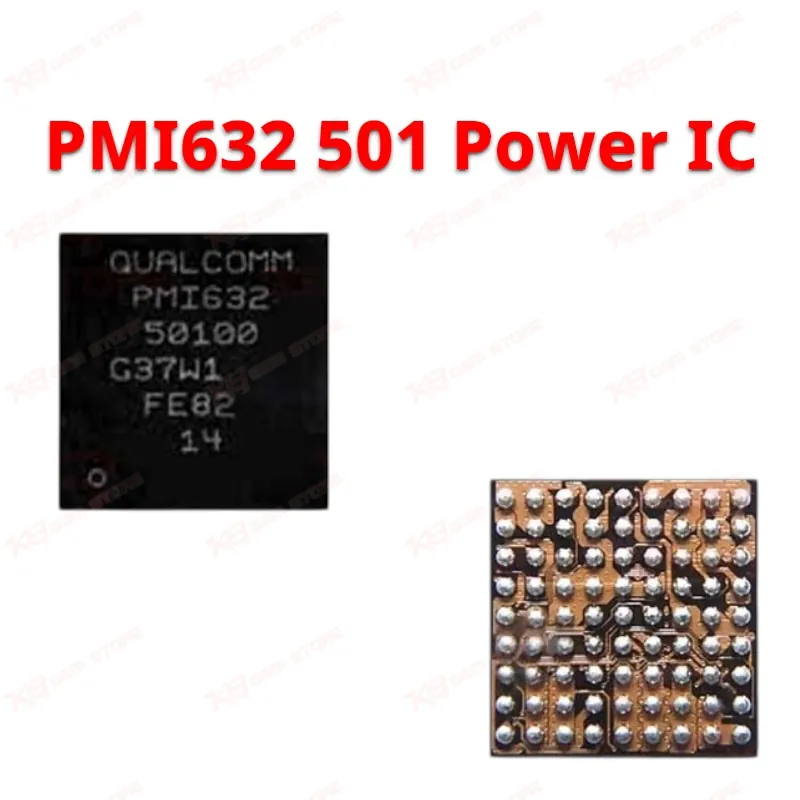
PMI632 501 Power IC
PMI632 501 Power IC
Regular price
Rs.450.00 PKR
Regular price
Sale price
Rs.450.00 PKR
Shipping calculated at checkout.
Quantity
Couldn't load pickup availability
The PMI632-501 is a Qualcomm power management IC (PMIC) built on a WLCSP/BGA package, used on motherboards powered by Qualcomm's mid-range Snapdragon platforms. This chip regulates battery charging, voltage output, and power sequencing for the main SoC and connected subsystems. Technicians use it for board-level replacement when a device shows dead phone symptoms, charging failure, or hang on logo after a short or physical damage. Genuine, tested stock — sourced for GSM repair workshops in Lahore, Karachi, and Islamabad handling PMI632-series board repairs.
⚖️ Weight: 0.01 kg
SKU:MST-IC-150
- Safe & Secure Payment
- Fast Delivery
- WhatsApp Support


Description
FAQ
What is the product name?
The product name is Qualcomm PMI632-501 Power Management IC.
What is the brand of this product?
The brand of this product is Qualcomm.
What is the model of this product?
The model of this product is PMI632-501.
What is this product used for?
This product is used for battery charging control and voltage regulation on Snapdragon-based mobile motherboards.
Which devices are compatible with this product?
This product is compatible with boards built on Snapdragon 630/632/636/660 platforms, with verified use on the Fairphone 3 and general use across PMI632-series Xiaomi, Samsung, Oppo, and Vivo devices.
Who should use this product?
This product is suitable for mobile repair technicians, repair shops, service centers, and professional board-level repair users.
Is the PMI632-501 interchangeable with the 502, 602, 802, or 902 variants?
Not always — these suffix variants often correspond to different OEM firmware or board configurations, so match the exact marking on your board before replacing.
Can this IC be replaced with a standard soldering iron?
No, replacement requires a hot air rework station with reballing, since this is a BGA/WLCSP package that needs controlled reflow rather than direct iron soldering.