


Brand:
RELIFE
Relife RL-073 Multi Purpose Shovel Knife
Relife RL-073 Multi Purpose Shovel Knife
Regular price
Rs.1.00 PKR
Regular price
Sale price
Rs.1.00 PKR
Shipping calculated at checkout.
Quantity
Couldn't load pickup availability
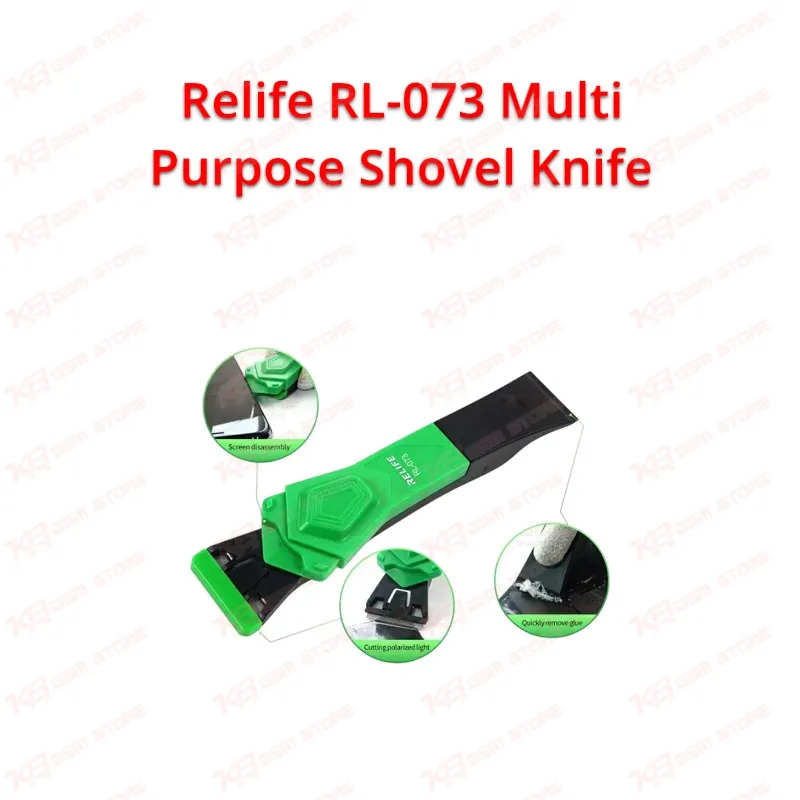
The RELIFE RL-073 is a double-head disassembly knife built for technicians who deal with stubborn OCA glue and frame adhesive every day. One side carries a thin steel blade for cutting through polarizing film and hardened glue, while the other carries a plastic blade for safer prying on delicate screen edges. You switch between the two heads instantly, so one tool covers cutting, shoveling, scraping, and prying without swapping instruments mid-job. At 180 mm long and only 30 grams, it sits comfortably in your hand during long disassembly sessions on your repair bench.
SKU:MST-SOLDERING-ACCESSORIES-166
⚖️ Weight: 0.09 kg
- Safe & Secure Payment
- Fast Delivery
- WhatsApp Support


Description
FAQ
What is the product name?
The product name is RELIFE RL-073 Multi-Purpose Shovel Knife.
What is the brand of this product?
The brand of this product is RELIFE.
What is the model of this product?
The model of this product is RL-073.
What is this product used for?
This product is used for cutting and shoveling OCA glue, separating frame glue, and prying screens during phone disassembly.
Which devices are compatible with this product?
This product is universal and works across smartphones, tablets, and other electronic devices during disassembly work.
Who should use this product?
This product is suitable for mobile repair technicians, repair shops, service centers, and professional users.
Can the RL-073 cut through hardened OCA glue on a dead phone screen?
Yes, the steel blade side is built specifically for cutting through hardened OCA glue and polarizing film during screen separation.
Does the plastic blade side scratch the phone frame during prying?
No, the plastic blade is designed for safer prying near the display edge and frame without scratching the housing.