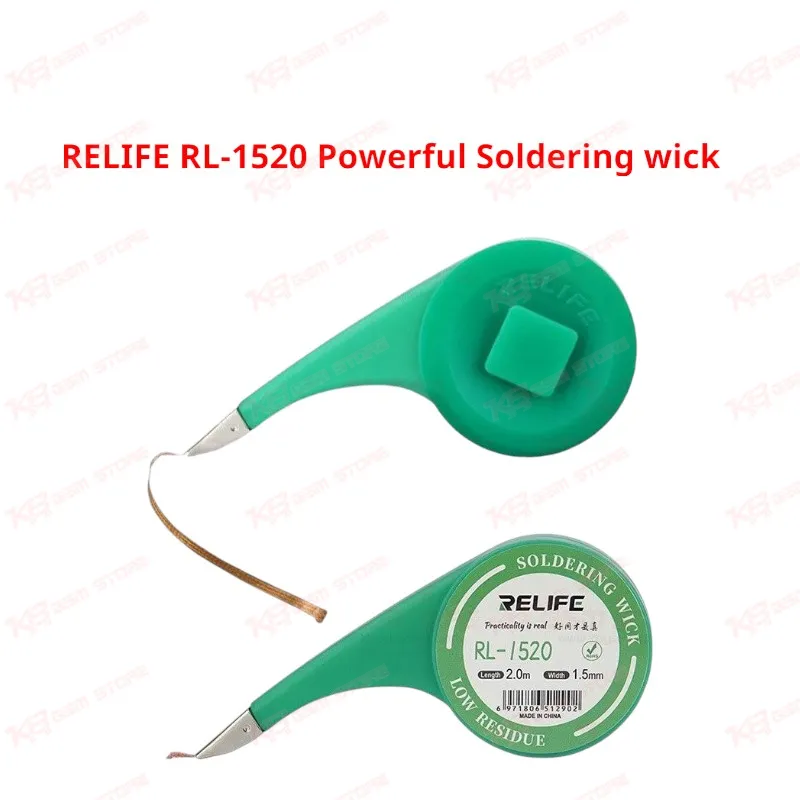
Every solder removal job starts the same way on the bench: you need the excess tin gone fast, without lifting a pad or leaving behind a residue mess that slows down the next step. The RELIFE RL-1520 handles that job with a 1.5mm pure copper braid designed specifically for the kind of tight, precision work mobile repair technicians deal with daily. The wick uses a geometric precision weave, which means the copper strands pack tightly enough to pull molten solder through capillary action without dragging or snagging on the board. When you're clearing solder from a charging port pad, prepping an IC pad for reballing, or cleaning up a connector before a jumper wire repair, that tight weave translates directly into faster work and fewer passes over the same spot. You get consistent absorption on the first pull instead of fighting a wick that clumps or breaks apart mid-job. Heat conduction is where this wick earns its place on a busy repair bench. The copper strands carry heat from your soldering iron into the solder joint almost instantly, so you spend less time holding the iron against the board and more time moving to the next joint. That matters when you're working through a dead phone board with multiple failed connections, or clearing old solder from a motherboard before installing a replacement PMIC or charging IC. Extended dwell time on a pad raises the risk of lifting it or damaging surrounding components, so a wick that heats and absorbs quickly directly protects your board. The anti-corrosion and oxidation-resistant coating on the RL-1520 keeps the copper performing the way it did on day one, even after the wick has sat in your toolbox for weeks. Wicks without this kind of coating oxidize over time, and oxidized copper absorbs solder poorly, forcing you to burn through more material to finish the same job. This coating also reduces flux residue left behind on the board, which matters when you're doing precision work near sensitive traces or preparing a pad for a fresh IC placement. The 2-meter length ships inside a sealed dispenser with an ergonomic housing, so you pull exactly the length you need and cut it off without unspooling loose coils across your workbench. That dispenser also protects the unused wick from moisture and dust between jobs, which keeps the copper in usable condition far longer than wick sold as loose coils. In practice, this wick fits into board-level repair work across the full range of scenarios GSM technicians handle: clearing solder before an IC change, cleaning a pad after a failed component removal, prepping a board for reballing, or tidying up a connector during a charging issue diagnosis. It works equally well on smartphone motherboards, tablet boards, and general PCB assemblies, making it a standard item to keep stocked alongside your soldering station and hot air gun rather than a specialty tool for one specific repair type. For a repair shop running multiple boards through the bench daily, a reliable desoldering wick isn't optional — it's part of the baseline toolkit that determines how clean and how fast your solder work turns out. The RL-1520 delivers that reliability at the 1.5mm width, which covers the majority of fine-pitch and general-purpose desoldering tasks technicians run into on modern mobile phone boards.