Skip to product information
1 of 4
Brand: RELIFE

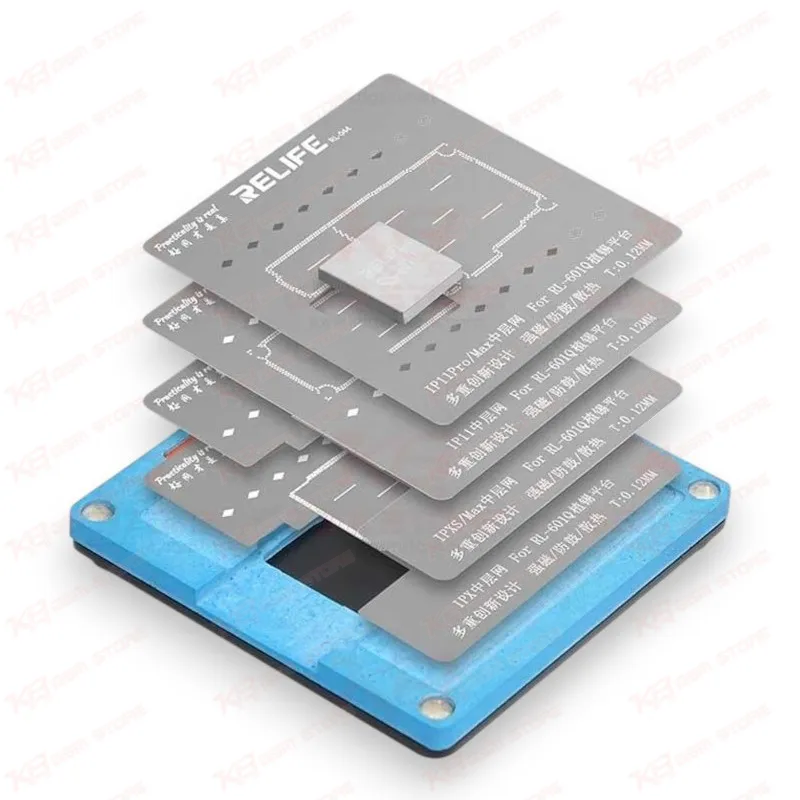
RELIFE RL-601Q BGA Reballing Stencil

RELIFE RL-601Q BGA Reballing Stencil

Regular price Rs.6,999.00 PKR
Regular price Sale price Rs.6,999.00 PKR
Sale Sold out
Shipping calculated at checkout.
Quantity

The RELIFE RL-601Q BGA Reballing Stencil puts six iPhone motherboards on one tin-planting base, covering X, XS, XS Max, 11, 11 Pro, and 11 Pro Max without swapping fixtures mid-job. Imported steel stencils with round and square precision holes shape every tin ball evenly and stop the mesh from jamming during reballing. A built-in high-temperature magnet holds the board flat so your alignment stays accurate through repeated reflow cycles, and the synthetic stone body pulls heat away fast instead of trapping it near your hands. Silicone feet keep the platform steady on the bench while a dedicated SIM tray cover stops solder from bridging onto the card slot while you plant tin.

SKU:MST-SOLDERING-TOOLS-109

⚖️ Weight: 0.9 kg

  • Safe & Secure Payment
  • Fast Delivery
  • WhatsApp Support
View full details

Description

Middle-frame reballing on iPhone boards fails more often from a shifting fixture than from bad solder, and the RELIFE RL-601Q BGA Reballing Stencil is built around that exact problem. Board Coverage: one platform switches across X, XS, XS Max, 11, 11 Pro, and 11 Pro Max middle-layer boards, so a shop running mixed iPhone repair jobs stops buying a separate stencil set for every model and instead keeps one fixture on the bench for the whole X-to-11 range. Build and Heat Handling: the stencils are cut from imported steel with round and square precision holes, which keeps every tin ball rounded and full instead of flattened or dragged sideways, and stops the mesh from sticking to half-formed balls mid-reflow — the difference between a clean reballing pass and a board you have to rework twice. The main platform body is molded from a synthetic stone compound rather than plain plastic, so it resists the direct heat of your hot air station or reballing preheater and sheds that heat fast instead of warping or softening after a few sessions, which matters when you're running back-to-back dead phone jobs after an IC change. Precision and Stability: a built-in high-temperature magnet grips the motherboard from underneath and holds it flat and centered against the stencil, so the board doesn't creep out of position while you're spreading paste or working the hot air gun — the magnetic pull stays consistent even after repeated heat cycles, which is where cheaper non-magnetic jigs usually start failing. A dedicated SIM tray cover sits over the card slot area specifically to block solder from bridging onto it while you're tin-planting the middle frame, so you're not stripping stray solder off the SIM tray afterward with a blade and risking a scratched contact. Workshop Fit: silicone anti-slip feet on the base keep the whole unit from sliding on a metal or laminate bench while you apply pressure, and they double as heat insulation so the underside of the platform doesn't scald the work surface or your hand when you set it down mid-job. The stencil sheets themselves run 0.12mm thick, thin enough to sit flush against fine-pitch board contacts without lifting solder unevenly, which keeps board-level reballing consistent instead of leaving high spots that cause a boot loop or hang-on-logo fault after reassembly. For a technician doing daily board-level work — IC reflow after a charging issue, chip reseating after a network fault, or middle-frame rework following liquid damage — having one fixture that handles six board generations without a tool swap cuts real time out of the workflow, and it fits directly into the ISP and eMMC reballing side of your bench alongside your hot air station, microscope, and BGA reballing kits. Package contents keep the setup complete out of the box: one fixture base, four stencil nets covering the supported models, and one SIM tin cover, so there's nothing extra to source before your next reballing job.

Key Features

6-in-1 single platform covers iPhone X through 11 Pro Max middle-layer boards

Imported steel stencils with round and square precision holes for even tin balls

Mesh design prevents sticking to tin balls during reballing

Built-in high-temperature magnet for secure, drift-free board positioning

Synthetic stone body resists heat and dissipates it quickly

Silicone anti-slip, anti-scald foot pads for bench stability

Dedicated SIM tray cover to block solder bridging during tin planting

0.12mm stencil thickness for flush, fine-pitch contact alignment

Specifications

Brand Entity RELIFE
Product Entity RL-601Q BGA Reballing Stencil / Middle Frame Tin Planting Platform
Technology Entity BGA Reballing, Tin Planting, Middle-Layer Board Rework
Compatible Device Entities iPhone X, XS, XS Max, 11, 11 Pro, 11 Pro Max
Repair Process Entity Motherboard Reballing, IC Reflow, Middle-Frame Board Repair
Industry Entity Mobile Repair Tools, PCB Repair Equipment

Compatible Devices

iPhone X

iPhone XS

iPhone XS Max

iPhone 11

iPhone 11 Pro

iPhone 11 Pro Max

Common Repair Uses

Middle-frame motherboard reballing after IC change

Tin planting following chip-level board repair

Board rework after charging port or charging IC faults

Reflow and reballing during boot loop or hang-on-logo troubleshooting

Protecting SIM tray contacts during middle-layer tin planting

FAQ

What is the product name?
The product name is RELIFE RL-601Q BGA Reballing Stencil.
What is the brand of this product?
The brand of this product is RELIFE.
What is the model of this product?
The model is RL-601Q.
What is this product used for?
This product is used for middle-frame motherboard reballing and tin planting on supported iPhone boards.
Which devices are compatible with this product?
This product is compatible with iPhone X, XS, XS Max, 11, 11 Pro, and 11 Pro Max.
Who should use this product?
This product is suitable for mobile repair technicians, repair shops, service centers, and professional users.
Does the magnet lose grip after repeated heating?
The built-in high-temperature magnet is designed to hold its magnetic strength through repeated reflow cycles without weakening.
What is the stencil thickness and why does it matter?
The stencils are 0.12mm thick, thin enough to sit flush against fine-pitch board contacts for even, consistent tin planting.

Ask any Query