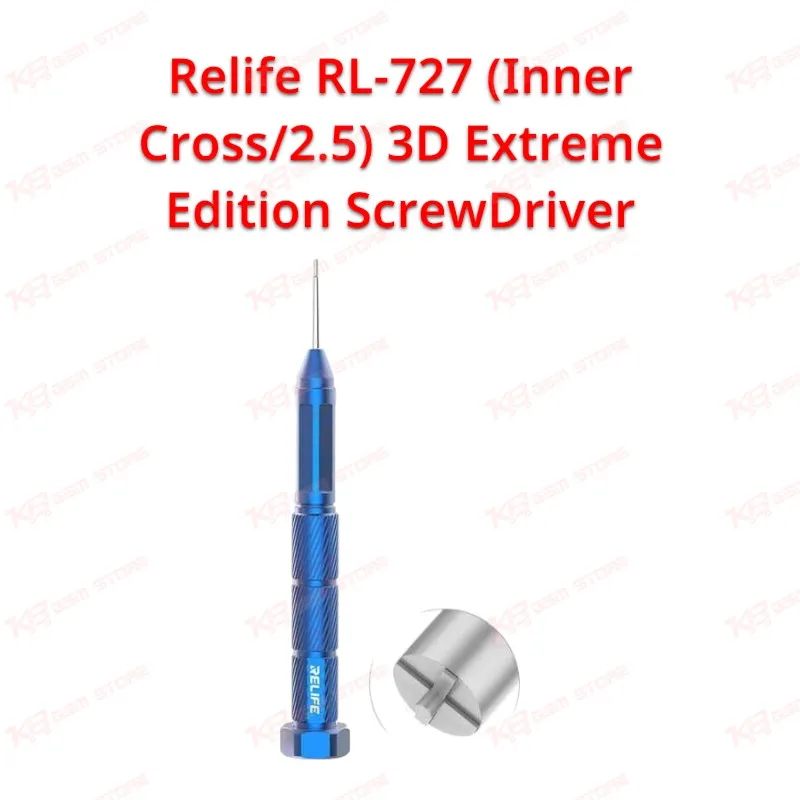
Every GSM technician knows a repair bench lives or dies by tool precision, and the screwdriver is the tool you reach for before anything else touches the board. The RELIFE RL-727 3D Extreme Edition in Inner Cross 2.5 size targets that exact need — a driver that fits the screw head fully instead of just skimming the surface. The 3D-ground tip profile matches the screw slot on multiple axes rather than a flat single-plane cut, so when you apply torque, the bit bites into the screw instead of camming out. That difference matters most on screws that have already been touched a few times during previous repairs, where the slot edges are softer and more prone to rounding.The cutter head uses imported S2 tool steel, a material chosen in the repair tool industry for its balance of hardness and toughness. S2 steel resists edge deformation under repeated torque cycles, which means the tip keeps its shape through hundreds of open-close cycles instead of dulling after a few dozen uses. For a shop running daily disassembly work on housings, back covers, motherboard shields, and connector brackets, that durability translates directly into fewer tool replacements and more consistent screw removal without slipping into the board and scratching pads or traces.Handle construction uses high-hardness aviation aluminum, giving the body enough rigidity to transmit torque efficiently while staying light in the hand during long repair sessions. Inside the handle sits a precision silent bearing that lets the top cap spin independently while you keep constant downward pressure with your palm. This two-hand technique — one hand pressing, one hand rotating — is standard practice for stubborn screws, and the bearing removes the friction that would otherwise fight your rotation. The result is smoother screw removal with less wrist strain, particularly useful when you are working through a stack of back covers or battery brackets in one sitting.A built-in magnetizing block runs through the shaft, creating permanent magnetic pull at the tip. Screws stick to the bit as soon as you touch them, which keeps loose hardware from falling into speaker grills, camera modules, or connector housings during teardown. On boards where a dropped screw can short a live circuit or lodge under a shield, this magnetic hold is a practical safety feature, not just a convenience.Ergonomic shaping on the grip includes anti-slip surface texture positioned where your fingers naturally rest during rotation. Combined with a large printed icon showing the bit type, you can identify the correct driver at a glance even when several similar-looking screwdrivers sit together in a tool roll or drawer. That visual sizing helps prevent the common bench mistake of grabbing the wrong bit size and forcing it into a screw head, which is one of the fastest ways to strip a slot.The Inner Cross 2.5 configuration on this RL-727 variant is sized for cross-recess screws commonly found on internal brackets, shields, and connector mounts across a wide range of phone and tablet models, as well as other small electronics that use standard cross-head fastening. Technicians working teardown and reassembly on a mixed device workload — not tied to one brand — get consistent performance without needing to switch tools for every board.Used correctly, a driver like the RL-727 becomes part of the muscle memory of a repair bench: pick it up, feel the magnetic pull grab the screw, apply the bearing-assisted rotation, and move to the next fastener without hesitation. That kind of tool reliability shortens repair time across dozens of jobs per week, which matters directly to shop throughput and technician fatigue over a full working day.