


Brand:
RELIFE
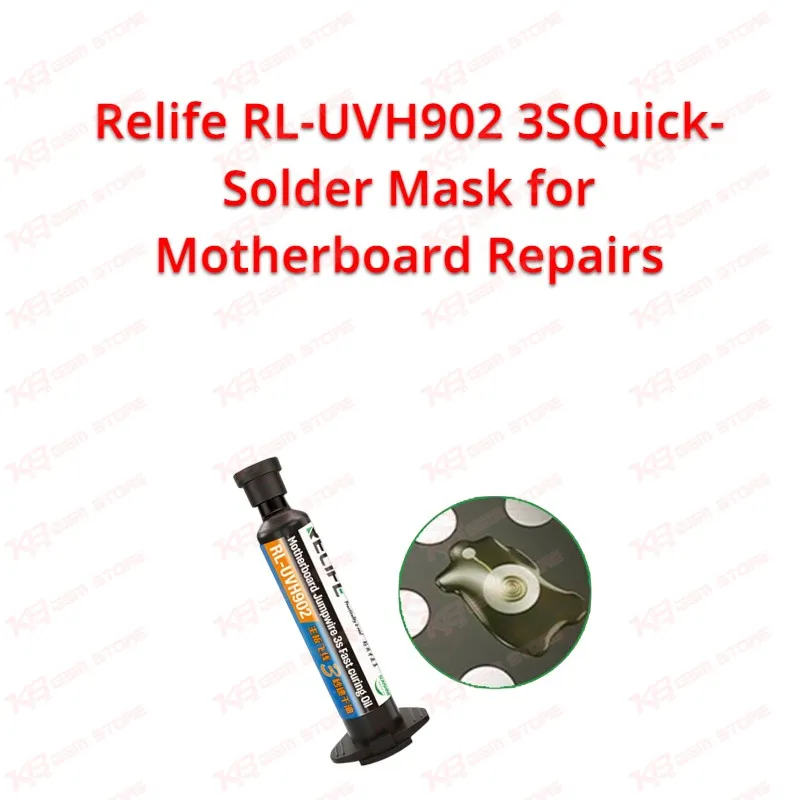
Relife RL-UVH902 3SQuick-Solder Mask for Motherboard Repairs
Relife RL-UVH902 3SQuick-Solder Mask for Motherboard Repairs
Regular price
Rs.1.00 PKR
Regular price
Sale price
Rs.1.00 PKR
Shipping calculated at checkout.
Quantity
Couldn't load pickup availability
The RELIFE RL-UVH902 is a UV-curable solder mask oil built for fast PCB repair work on your bench. You apply it, hit it with UV light, and it cures in just 3 seconds — no waiting, no rework. Technicians use it to fix peeling solder mask, insulate jumper wires after a jumper lagana job, and protect pads and tail plugs from further damage. The 10CC bottle covers dozens of repairs, and the cured layer holds up under heat without softening. It works on any mobile phone or computer motherboard, making it a standard item in every repair shop's soldering kit.
SKU:MST-SOLDERING-ACCESSORIES-177
⚖️ Weight: 0.09 kg
- Safe & Secure Payment
- Fast Delivery
- WhatsApp Support


Description
FAQ
What is the product name?
The product name is RELIFE RL-UVH902 3S Quick-Curing UV Solder Mask Oil.
What is the brand of this product?
The brand of this product is RELIFE.
What is the model of this product?
The model of this product is RL-UVH902.
What is this product used for?
This product is used for repairing peeled or damaged PCB solder mask, insulating jumper wires, and protecting pads and connectors after soldering.
Which devices are compatible with this product?
This product is universal and works on any mobile phone or computer PCB motherboard, regardless of brand or chipset.
Who should use this product?
This product is suitable for mobile repair technicians, repair shops, service centers, and professional PCB rework technicians.
How long does the RL-UVH902 take to cure under UV light?
It cures fully in about 3 seconds under UV light exposure.
Can this solder mask oil be used after a jumper wire repair to prevent the wire from lifting?
Yes, applying it over the jumper base and pad after soldering locks the wire in place and protects it from lifting during normal handling.