


S2DOS05 Power IC
S2DOS05 Power IC
Regular price
Rs.350.00 PKR
Regular price
Sale price
Rs.350.00 PKR
Shipping calculated at checkout.
Quantity
Couldn't load pickup availability
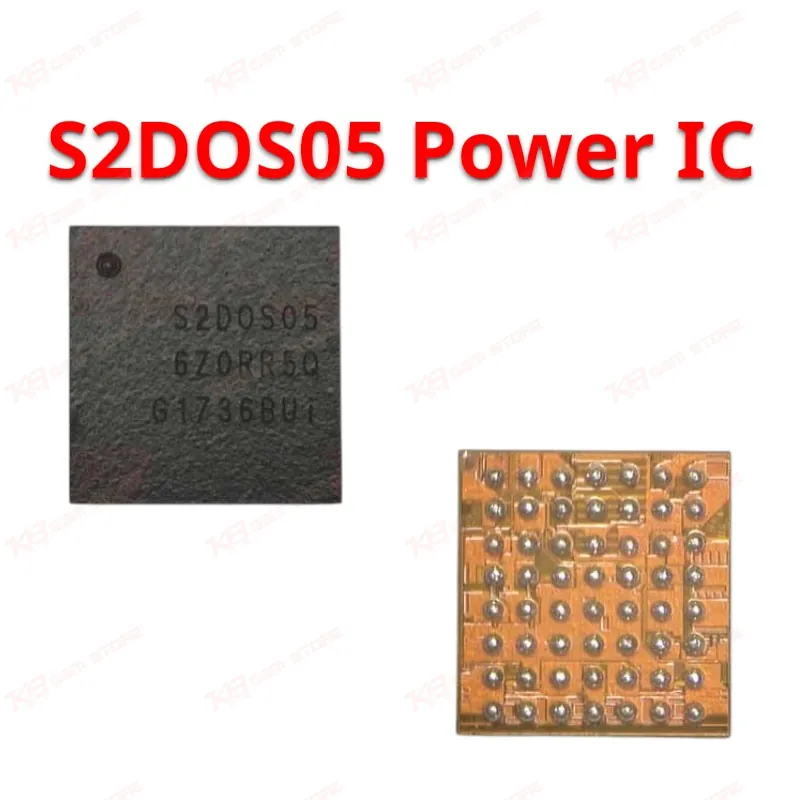
The S2DOS05 is a genuine Samsung power supervisor IC used on the motherboards of Galaxy S8, S8+, S9, S9+, S10, S10e, S10 Plus, S10 5G, Note 10, Galaxy Z Flip, and Z Flip4 5G. This BGA chip manages LCD power sequencing and supply regulation for the display circuit. Technicians reach for this IC when a Samsung device shows a dead display, backlight failure, or display power fault that survives a software reflash. Sourced for board-level micro soldering work, it fits directly into Samsung's original PMU power line for display-related repairs at the component level.
⚖️ Weight: 0.01 kg
SKU:MST-IC-145
- Safe & Secure Payment
- Fast Delivery
- WhatsApp Support


Description
FAQ
What is the product name?
The product name is S2DOS05 Power Supervisor IC.
What is the brand of this product?
The brand of this product is Samsung.
What is the model of this product?
The model of this product is S2DOS05.
What is this product used for?
This IC is used for display power regulation and LCD power sequencing on supported Samsung Galaxy motherboards.
Which devices are compatible with this product?
This IC is compatible with Samsung Galaxy S8, S8+, S9, S9+, S10, S10e, S10 Plus, S10 5G, Note 10, Z Flip, Z Flip4 5G, and A12 (A125F).
Who should use this product?
This product is suitable for mobile repair technicians, repair shops, service centers, and professional users.
Does the S2DOS05 fix a dead display or no-display fault?
It can resolve display power faults when the LCD circuit isn't receiving proper power, but connector, flex, and panel damage should be ruled out first.
Is this IC in BGA package and does it need a stencil for reballing?
Yes, it's a BGA package IC, and a matching stencil or precise manual balling is recommended given the small ball pitch.