Skip to product information
1 of 4

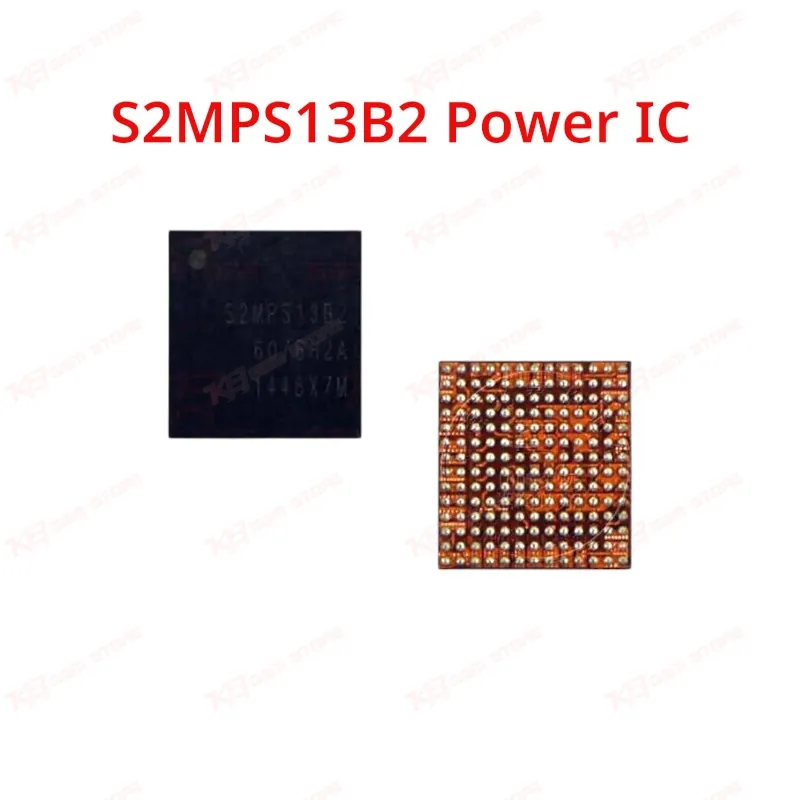
S2MPS13B2 Power IC

S2MPS13B2 Power IC

Regular price Rs.350.00 PKR
Regular price Sale price Rs.350.00 PKR
Sale Sold out
Shipping calculated at checkout.
Quantity

The S2MPS13B2 is the main power management IC (PMIC) used on the Samsung Galaxy Note 3 motherboard (SM-N900, N9005, N9000 series). This chip controls the voltage rails that feed the processor, memory, and other board-level components, and a fault here typically shows up as a dead phone, boot loop, or charging issue that basic troubleshooting cannot fix. Technicians reach for this IC when a Note 3 board shows no power at all after eliminating battery and charging port faults. Reworking this part requires hot air soldering skill, since it sits directly on the board and needs precise heat control during removal and reballing.

⚖️ Weight: 0.01 kg

SKU:MST-IC-260

  • Safe & Secure Payment
  • Fast Delivery
  • WhatsApp Support
View full details

Description

When a Samsung Galaxy Note 3 comes into your workshop completely dead — no charging light, no logo, nothing on the screen — and the battery, charging IC, and power button all test fine, the fault often traces back to the S2MPS13B2. This is the main power management IC on the Note 3 board, and its job is to take the raw battery voltage and split it into the multiple regulated rails that the processor, RAM, display driver, and other subsystems each need to boot correctly. When this IC fails, the board cannot bring up power in the correct sequence, so you get a phone that looks completely dead even though every other component is healthy.You will usually land on this IC after ruling out the easier faults first. Check the battery connector and charging port for continuity, confirm the power button circuit is intact, and measure the main battery input rail with your multimeter. If you get input voltage at the board but nothing downstream, or if you see a short on one of the PMIC output rails, the S2MPS13B2 becomes your prime suspect. Some technicians also see this fault after a phone has been dropped or exposed to moisture — a hardware fault on this IC's pins from corrosion or physical stress produces the same dead-phone symptom as a pure component failure.This is a direct-fit replacement chip, not a generic substitute, so you get the exact same pinout and functionality as the original IC that failed. That matters on a board like the Note 3's, where pad spacing is tight and a mismatched footprint costs you the board. Reworking this part means removing the old chip with your hot air station at a controlled temperature, cleaning the pads without lifting traces, reballing if you are working from a bare die, and reflowing the new IC with accurate alignment under a microscope. Rushing the reflow or using excessive heat is the most common way technicians damage adjacent components on this board, so patience during this step protects the rest of your work.After IC change karna, do not power the phone on immediately. Check the board for shorts across the main rails first, then apply power gradually if you have a bench power supply with current limiting. A clean reflow that still will not boot usually points to a cold joint rather than a bad chip — reheat the IC evenly and recheck before assuming the part itself is faulty. If the phone powers on but shows a boot loop or hang on logo afterward, that is more often a software or eMMC issue than a PMIC problem, since the power stage has already done its job of bringing the board up.Stock this IC if you handle Note 3 repairs regularly, since dead-board and no-power complaints are among the most common tickets that trace back to a failed PMIC on this model. Keeping a verified, correctly specified replacement on your bench saves you the delay of sourcing one mid-repair, and gives your customers a faster turnaround on a fault that otherwise looks unrepairable to anyone without board-level skills.

Key Features

  • Genuine Samsung S2MPS13B2 chip, exact factory pinout
  • Direct main power IC replacement for Galaxy Note 3 boards
  • Restores voltage rail sequencing across the entire board
  • Fixes dead-phone and no-power faults after component-level failure
  • SMD package suited to hot air rework and reballing
  • Compact footprint fits the Note 3's tight board layout
  • Checked before shipping to confirm physical condition
  • Intended for professional GSM technicians with soldering equipment

Specifications

Brand Entity Samsung
Product Entity S2MPS13B2 Power Management IC
Technology Entity I2C PMIC, Samsung S2MPS chip family
Compatible Device Entities Samsung Galaxy Note 3, SM-N900, SM-N9005, SM-N9000
Repair Process Entity Board-level IC reballing and reflow, dead-phone diagnostics
Industry Entity Mobile phone repair, GSM hardware repair, PCB rework

Compatible Devices

Samsung Galaxy Note 3 (SM-N900, SM-N9005, SM-N9000) — main board-level power management IC for this device family

Common Repair Uses

Dead phone / no-power fault diagnosis, board-level power rail repair, hardware fault after drop or liquid damage, charging issue troubleshooting when charging IC and port test normal, board revival after confirmed PMIC failure

FAQ

What is the product name?
The product name is S2MPS13B2 Power Management IC.
What is the brand of this product?
The brand of this product is Samsung.
What is the model of this product?
The model of this product is S2MPS13B2.
What is this product used for?
This product is used to replace a failed main power management IC on a Samsung Galaxy Note 3 board.
Which devices are compatible with this product?
This product is compatible with the Samsung Galaxy Note 3 series (SM-N900, SM-N9005, SM-N9000).
Who should use this product?
This product is suitable for mobile repair technicians, repair shops, service centers, and professional users.
Does a Note 3 with a dead S2MPS13B2 always show zero signs of life?
Yes, a full PMIC failure typically produces a completely dead board with no charging light and no boot activity, since the chip controls the rails every other component depends on.
Can this IC be replaced without a hot air rework station?
No, this IC requires hot air soldering equipment and reballing skill for safe removal and reflow, since it is a board-mounted SMD component with tight pad spacing.

Ask any Query