


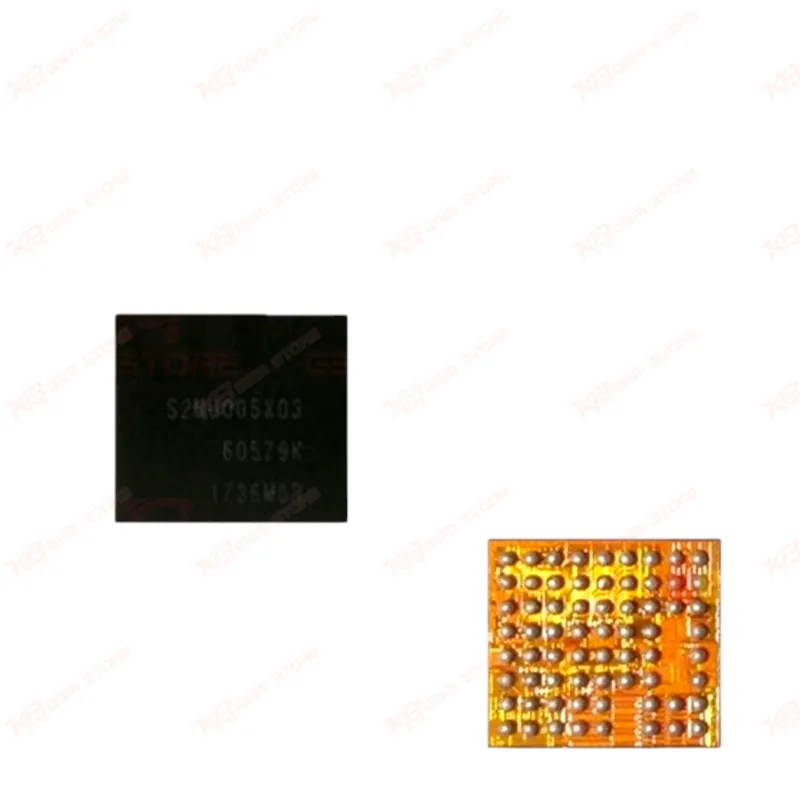
S2MU005X03 Charging IC
S2MU005X03 Charging IC
Regular price
Rs.350.00 PKR
Regular price
Sale price
Rs.350.00 PKR
Shipping calculated at checkout.
Quantity
Couldn't load pickup availability
The S2MU005X03 is a Power Management IC (PMIC) built for Samsung Galaxy J-series boards, handling charging input, voltage regulation, and power distribution across the motherboard. When a phone shows dead after flash, refuses to charge, or drains fast on a full battery, this IC is often the root cause. Technicians reach for this chip during charging port repair, dead board recovery, and power rail troubleshooting on J530, J730, and J610 boards. Supplied in BGA package, it drops into your reballing and rework workflow without modification. Stock this IC for your repair bench and cut diagnosis time on recurring Samsung charging complaints.
⚖️ Weight: 0.01 kg
SKU:MST-IC-82
- Safe & Secure Payment
- Fast Delivery
- WhatsApp Support


Description
FAQ
What is the product name?
The product name is S2MU005X03 Charging IC.
What is the brand of this product?
This is a Samsung-designed power IC used across J-series boards.
What is the model of this product?
The model number is S2MU005X03.
What is this product used for?
It is used to replace a faulty charging or power management IC on Samsung motherboards affected by no-charging or intermittent charging faults.
Which devices are compatible with this product?
It is compatible with Samsung Galaxy J530, J730, J610, J2 Prime, J4 Plus, J6 Plus, and T510.
Who should use this product?
This product is suitable for mobile repair technicians, repair shops, service centers, and professional users.
Does this IC support both charging input and power distribution, or only one function?
It handles both — it regulates supply voltage and manages the charging input path across the board, functioning as a full PMIC rather than a single-purpose charging chip.
What voltage range should I check before confirming a bad IC on the board?
Confirm the board is operating within the 1.0V–6V supply range the chip is rated for; readings outside that range alongside a charging fault usually confirm the IC needs replacement.