


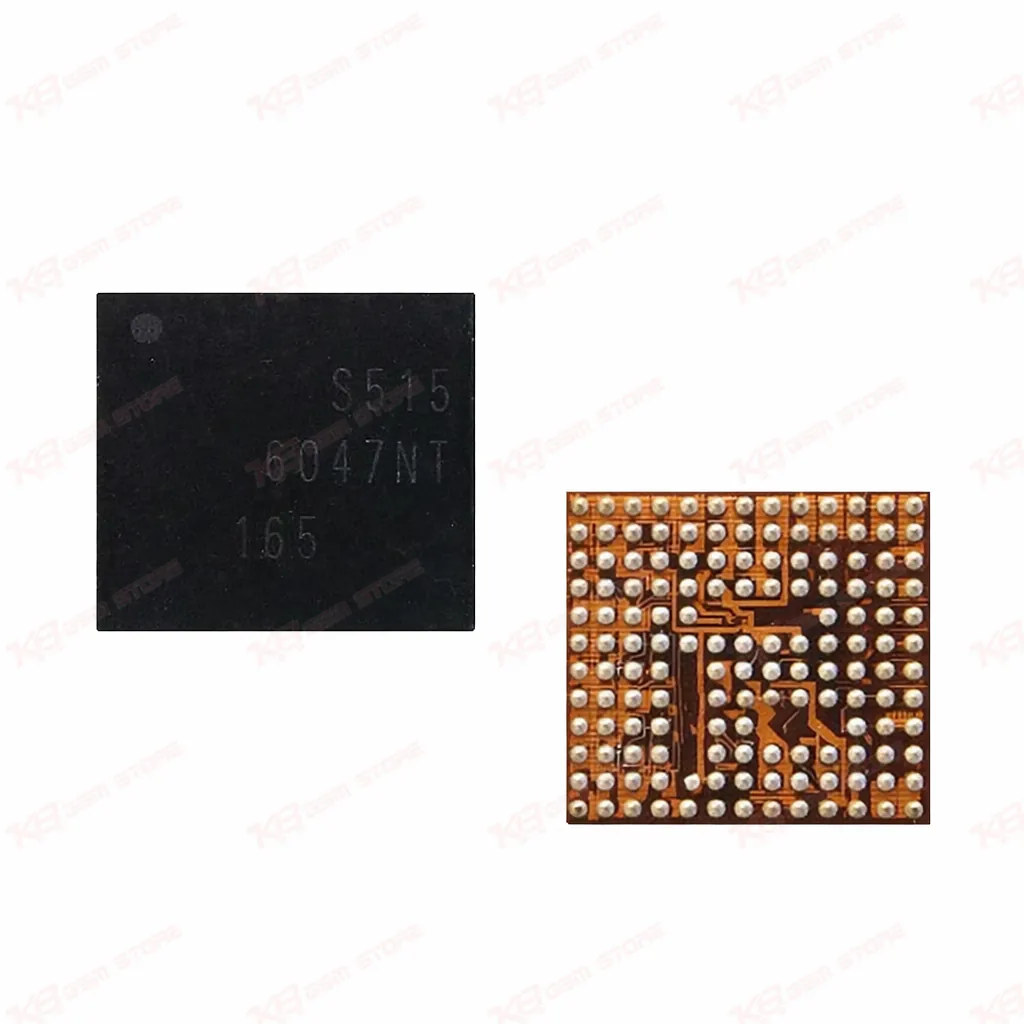
S515 Charging IC
S515 Charging IC
Regular price
Rs.350.00 PKR
Regular price
Sale price
Rs.350.00 PKR
Shipping calculated at checkout.
Quantity
Couldn't load pickup availability
The S515 power IC handles charging and USB control functions on several Samsung Galaxy boards, including the S7 series and select J-series models. When a phone shows a charging issue, dead charging port, or won't detect USB connection, this IC is often the root cause. Technicians reflow or replace this small BGA chip directly on the motherboard to restore charging function without swapping the entire board. Built for board-level repair work, the S515 gives you a fast, targeted fix instead of a full logic board replacement, saving both time and cost on your repair bench.
⚖️ Weight: 0.01 kg
SKU:MST-IC-97
- Safe & Secure Payment
- Fast Delivery
- WhatsApp Support


Description
FAQ
What is the product name?
The product name is S515 Power IC.
What is the brand of this product?
This IC is a compatible replacement part designed for Samsung device boards.
What is the model of this product?
The model is S515.
What is this product used for?
It's used to repair charging and USB detection faults on compatible Samsung boards.
Which devices are compatible with this product?
It's compatible with Samsung Galaxy S7, S7 Edge, J5 2017, J6, J7 Neo, J7 2016, and J7 2017 models listed above.
Who should use this product?
This product is suitable for mobile repair technicians, repair shops, service centers, and professional users.
Does the S515 IC fix a phone that shows charging but doesn't actually charge?
Yes — this is one of the most common S515 failure symptoms, where the port detects a cable but current doesn't reach the battery.
Can I use a hot air station to reball this IC myself, or does it need special tools?
You need proper BGA rework equipment — a hot air station, flux, and reballing tools — standard gear most repair benches already stock for board-level IC work.