


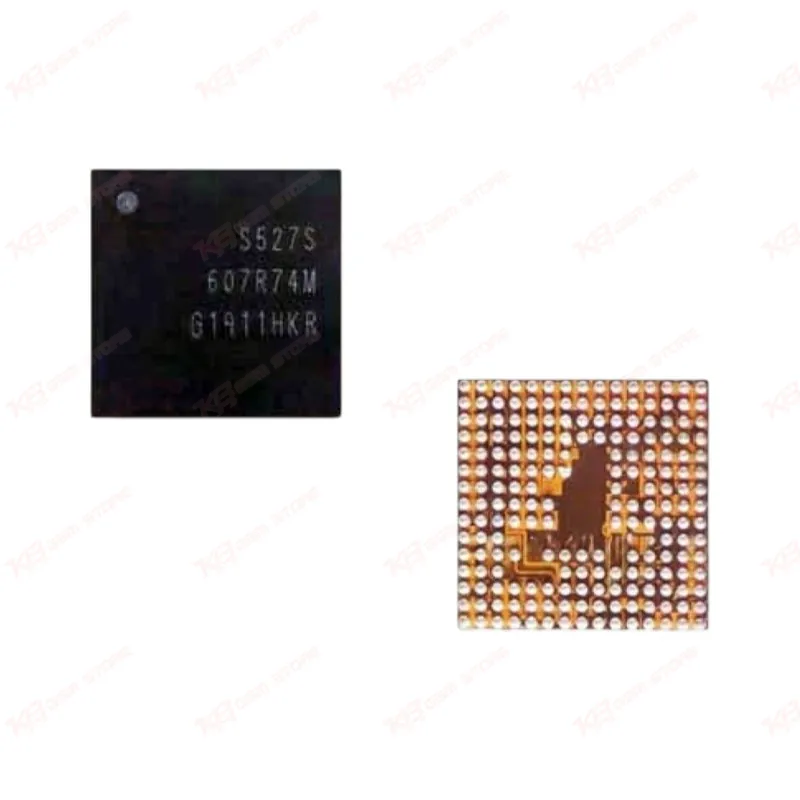
S527S Power IC
S527S Power IC
Regular price
Rs.350.00 PKR
Regular price
Sale price
Rs.350.00 PKR
Shipping calculated at checkout.
Quantity
Couldn't load pickup availability
The S527S Power IC is the power management chip found in Samsung Galaxy A10, A20, A30, A40, A50, and A70 boards. When a phone comes in dead, stuck on logo, or draining battery with no obvious cause, this IC is often the root fault. It handles voltage regulation and power distribution across the board, so a damaged unit can knock out charging, boot sequence, or full power entirely. This replacement chip gives you a direct swap option for board-level repair without hunting for a donor board. Test the board first, confirm the fault sits on the power rail, then move to reballing and placement. Keep static precautions in place throughout the job.
⚖️ Weight: 0.01 kg
SKU:
- Safe & Secure Payment
- Fast Delivery
- WhatsApp Support


Description
FAQ
What is the product name?
The product name is S527S Power IC.
What is the model of this product?
The model is S527S.
What is this product used for?
This IC manages power delivery on the board and is replaced when a phone shows dead phone, no power, or boot-related faults tied to the power rail.
Which devices are compatible with this product?
This chip is compatible with Samsung Galaxy A10, A20, A30, A40, A50, and A70.
Who should use this product?
This product is suitable for mobile repair technicians, repair shops, service centers, and professional GSM technicians.
Does this IC solve boot loop and hang-on-logo issues on A-series boards?
Yes, when the boot loop or hang-on-logo fault traces back to the power rail rather than software, replacing this IC resolves it.
Is reballing required before installing this IC?
Yes, this chip requires standard BGA reballing with a stencil matched to its ball pitch before reflow placement on the board.