


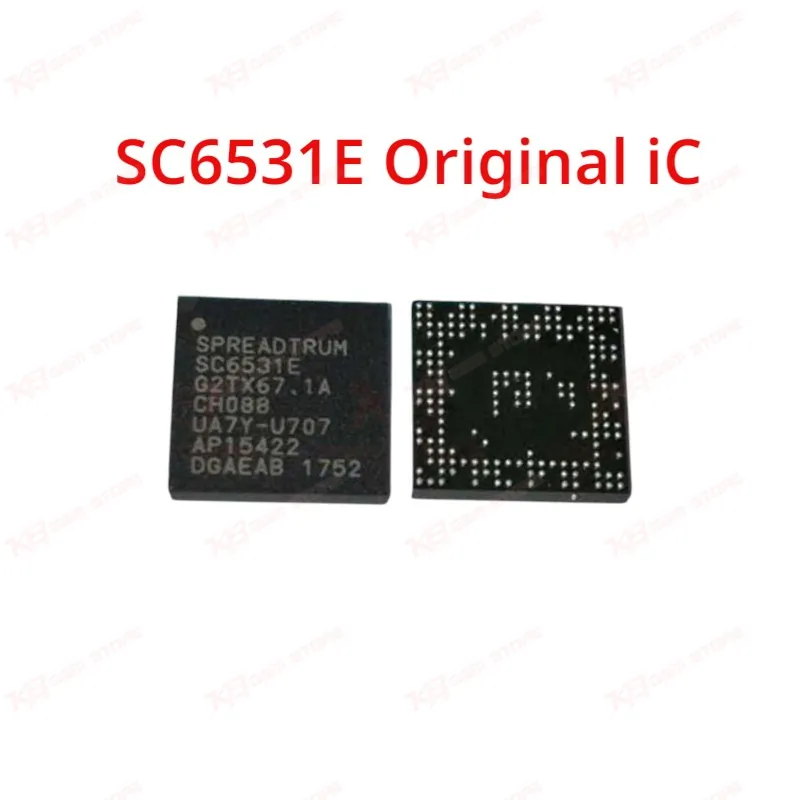
SC6531E Original iC
SC6531E Original iC
Regular price
Rs.450.00 PKR
Regular price
Sale price
Rs.450.00 PKR
Shipping calculated at checkout.
Quantity
Couldn't load pickup availability
The SC6531E Original iC is a genuine Spreadtrum BGA baseband CPU built for GSM/GPRS feature phones. Technicians use this chip to fix a dead phone, resolve a hang on logo fault, or rebuild a board that stopped responding after a bad flash. As a single-chip solution, it carries the baseband processor, PSRAM, and RF transceiver in one BGA package, so you get one reliable part instead of chasing multiple faulty components. Every unit ships tested and ready for reballing on your repair bench, giving Pakistani GSM shops a dependable replacement for SC6531E-based board repairs without guesswork.
⚖️ Weight: 0.01 kg
SKU:MST-IC-243
- Safe & Secure Payment
- Fast Delivery
- WhatsApp Support


Description
FAQ
What is the product name?
The product name is SC6531E Original iC.
What is the brand of this product?
The brand of this product is Spreadtrum (Unisoc).
What is the model of this product?
The model of this product is SC6531E.
What is this product used for?
This product is used to replace a faulty baseband CPU on GSM/GPRS feature phone boards, fixing dead phone, hang on logo, and boot loop issue faults.
Which devices are compatible with this product?
This product is compatible with GSM/GPRS feature phones built on the Spreadtrum SC6531E chipset, including generic and rebadged handsets using this platform.
Who should use this product?
This product is suitable for mobile repair technicians, GSM repair shops, service centers, and professional feature-phone repair businesses.
Does the SC6531E chip include the RF transceiver, or is a separate RF IC still needed?
The SC6531E integrates the GSM, Bluetooth, and FM RF transceiver functions inside the same BGA package, so a separate RF chip is not required for basic GSM/GPRS operation.
Can the SC6531E be replaced with a standard hot air station, or does it need special reballing tools?
Replacing the SC6531E requires BGA reballing with a matching 869-pin stencil, a hot air or infrared rework station, and reballing paste — a standard soldering iron cannot reflow this package.