


SDR425 100 Network/Frequency iC
SDR425 100 Network/Frequency iC
Regular price
Rs.200.00 PKR
Regular price
Sale price
Rs.200.00 PKR
Shipping calculated at checkout.
Quantity
Couldn't load pickup availability
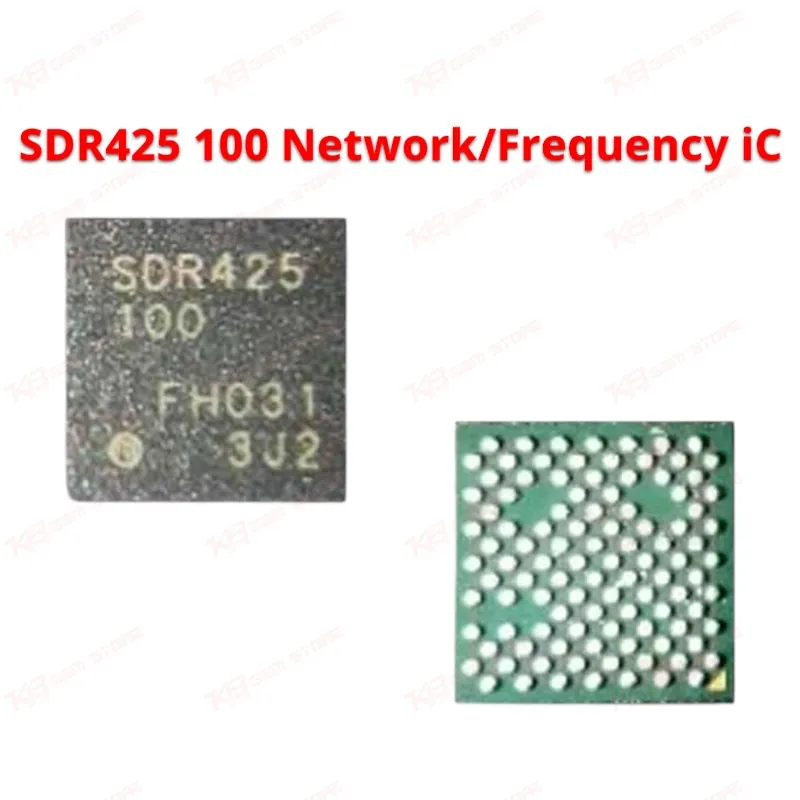
The SDR425-100 is an intermediate frequency and baseband IC used to resolve no signal and no service faults on supported Vivo, Oppo, and Huawei devices. Technicians reach for this IC when a phone shows no network bars, drops signal randomly, or fails to register on any carrier after a software check rules out a flashing issue. It handles the RF signal processing between the baseband and antenna circuit, so a faulty unit directly causes network dropouts. This part is commonly stocked by GSM repair shops in Lahore, Karachi, and Islamabad for board-level network repair jobs where reballing or a straight IC change resolves the fault permanently.
⚖️ Weight: 0.01 kg
SKU:MST-IC-148
- Safe & Secure Payment
- Fast Delivery
- WhatsApp Support


Description
FAQ
What is the product name?
The product name is SDR425-100 Network/Frequency IC.
What is the brand of this product?
The brand of this product is SDR.
What is the model of this product?
The model of this product is SDR425-100.
What is this product used for?
This product is used to repair no signal and no service network faults at the board level.
Which devices are compatible with this product?
This product is compatible with Huawei Glory V30 Pro, Vivo Y20i, and Oppo A53.
Who should use this product?
This product is suitable for mobile repair technicians, repair shops, service centers, and professional users.
Does the SDR425-100 fix no service issues on Vivo Y20i?
Yes, this IC is a known replacement part for no signal and no service faults on the Vivo Y20i.
Can a bad SDR425-100 cause network dropouts even after a flash?
Yes, since this is a hardware-level fault, network dropouts continue after flashing until the IC is replaced.