


SDR675 005 Power ic
SDR675 005 Power ic
Regular price
Rs.250.00 PKR
Regular price
Sale price
Rs.250.00 PKR
Shipping calculated at checkout.
Quantity
Couldn't load pickup availability
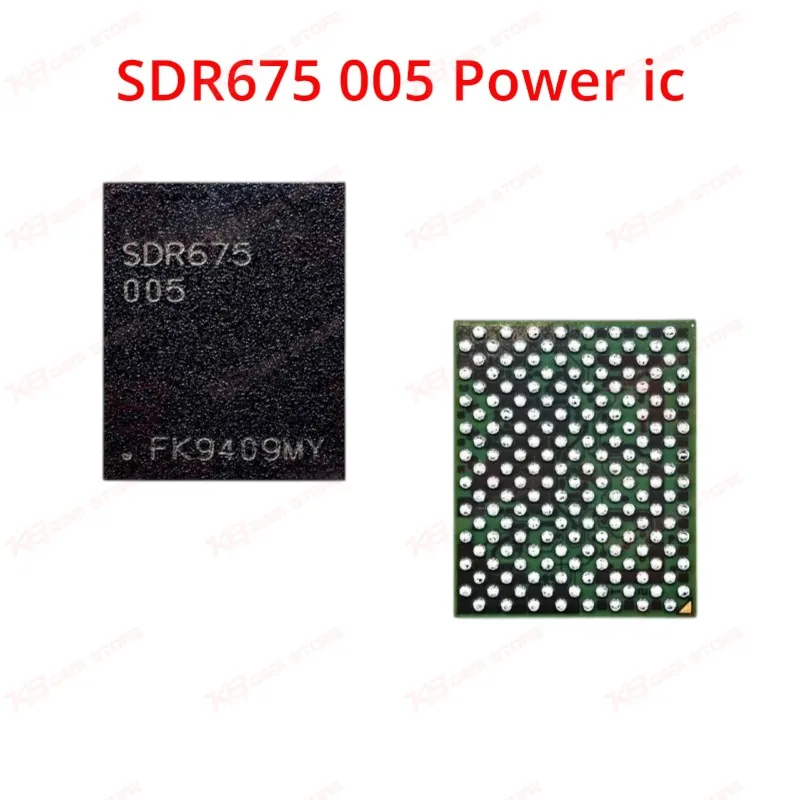
The SDR675-005 is a Qualcomm RF/Intermediate Frequency IC used in the signal processing stage of several Xiaomi, Samsung, and ZTE handsets. Technicians reach for this chip when a board shows no network, dropping signal, or weak reception that survives a software flash. Since it sits directly in the RF front end, reballing or IC change karna on this chip restores signal handling without touching unrelated circuits. Supplied new and tested, it fits straight onto the motherboard footprint for board-level repair work, giving your bench a reliable fix for signal-related complaints instead of swapping the whole board.
SKU:MST-IC-204
- Safe & Secure Payment
- Fast Delivery
- WhatsApp Support


Description
FAQ
What is the product name?
The product name is SDR675-005 Power IC.
What is the brand of this product?
The brand of this product is Qualcomm.
What is the model of this product?
The model of this product is SDR675-005.
What is this product used for?
This product is used to repair no-network, weak-signal, and intermittent carrier registration faults by replacing the RF/IF signal IC on the motherboard.
Which devices are compatible with this product?
This IC fits Xiaomi Redmi Note 9, Redmi Note 9s, and Mi 10 boards, and is also used as a compatible replacement on select Samsung and ZTE devices sharing the same RF platform.
Who should use this product?
This product is suitable for mobile repair technicians, repair shops, service centers, and professional users.
Is the SDR675-005 a power IC or a signal IC?
It's an RF/Intermediate Frequency transceiver chip, not a power management IC — the "Power IC" name is a category label used across the repair trade, not a description of its function.
Does replacing this IC fix a no-network issue after a software flash?
If the phone still shows no network or weak signal after a clean flash and the fault isn't in the antenna connector or flex, this IC is the next component to check and reball on the RF signal path.