


SM5109 LCD Display IC – New Original 15-Pin Chipset
SM5109 LCD Display IC – New Original 15-Pin Chipset
Regular price
Rs.300.00 PKR
Regular price
Sale price
Rs.300.00 PKR
Shipping calculated at checkout.
Quantity
Couldn't load pickup availability
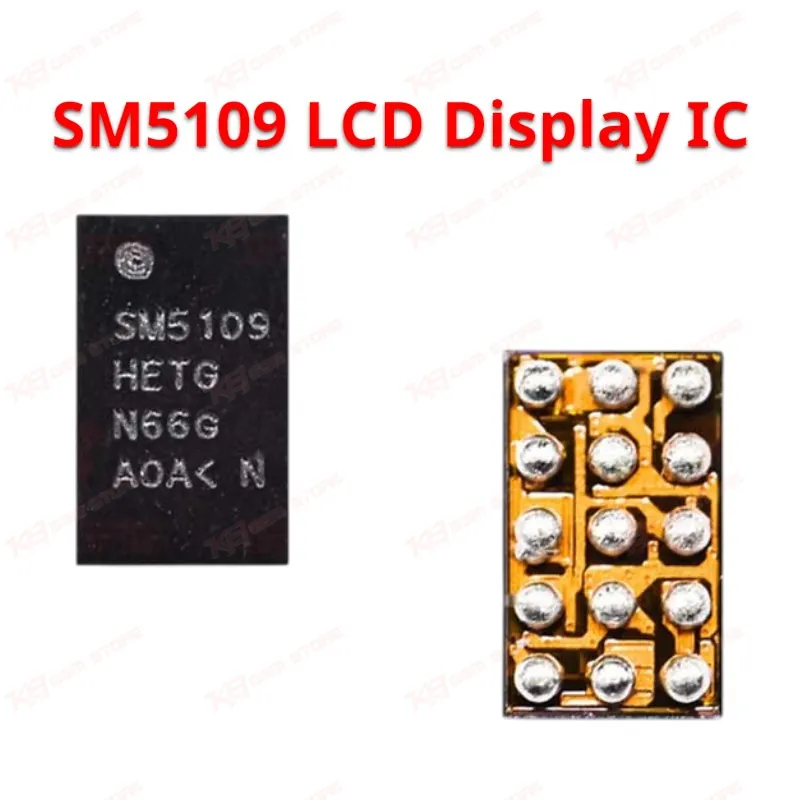
The SM5109 is an original 15-pin LCD bias power IC from Silicon Mitus, built as a low-Iq, single-inductor dual-output regulator for LCD panel bias supply. GSM technicians use it to restore display power rails after a dead-after-flash fault, a display problem, or a hang-on-logo issue traced back to a faulty bias IC. This replacement chip comes 100% new and tested, ready to fit directly onto the board footprint without any workaround or bypass wiring. If your bench is seeing panels that won't light up even after a fresh flash, this IC handles the dual bias rail that most LCD panels depend on to turn on.
⚖️ Weight: 0.01 kg
SKU:MST-IC-138
- Safe & Secure Payment
- Fast Delivery
- WhatsApp Support


Description
FAQ
What is the product name?
The product name is SM5109 LCD Display IC.
What is the brand of this product?
The brand of this product is Silicon Mitus, Inc.
What is the model of this product?
The model of this product is SM5109.
What is this product used for?
This product is used for restoring LCD panel bias power on mobile phone display boards.
Which devices are compatible with this product?
This IC is compatible with OPPO and VIVO smartphone boards that use an SM5109-based bias power circuit; confirm the marking against your board before installation.
Who should use this product?
This product is suitable for mobile repair technicians, repair shops, service centers, and professional users.
Does the SM5109 generate both positive and negative bias voltage for LCD panels?
Yes, the SM5109 is a single-inductor dual-output IC, meaning it produces both bias rails from one inductor for the LCD panel.
What pin configuration does the SM5109 LCD display IC use?
The SM5109 uses a 15-pin configuration, marked directly on the chip package for identification.