


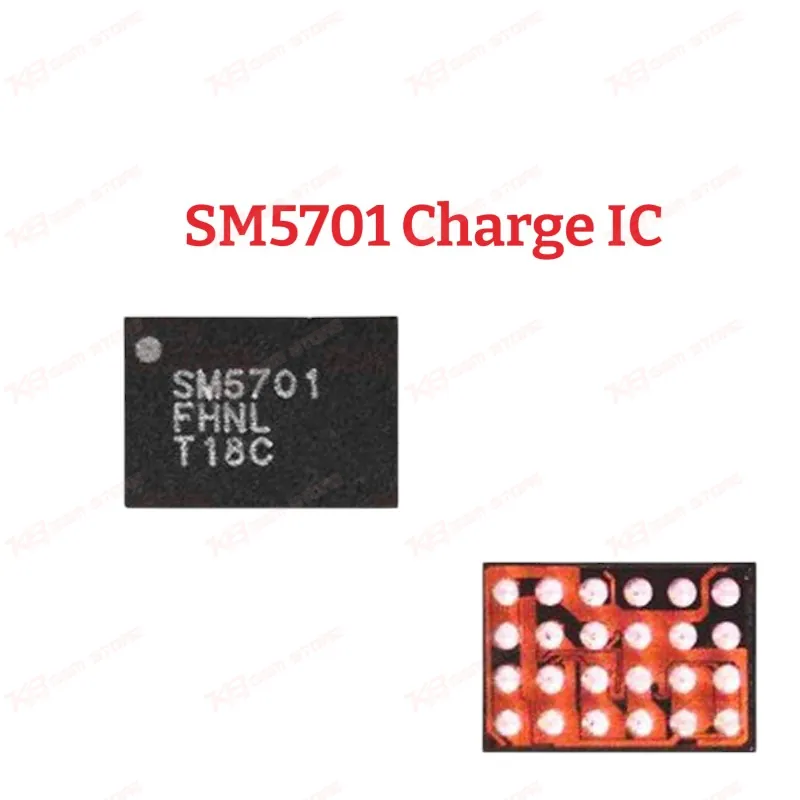
SM5701 Charging IC
SM5701 Charging IC
Regular price
Rs.300.00 PKR
Regular price
Sale price
Rs.300.00 PKR
Shipping calculated at checkout.
Quantity
Couldn't load pickup availability
The SM5701 charging IC handles charging control and USB data switching on several Samsung Galaxy boards. When a phone shows charging issue, dead after flash on the charging line, or the handset only charges at a slow trickle rate, this IC is one of the first components a GSM technician checks. It sits directly on the charging circuit next to the charge connector, so a bad solder joint or a damaged IC here shows up as no charging, charging port not detected, or unstable USB connection. Built for bench-level replacement work, it gives your repair shop a direct fix for board-side charging faults instead of swapping the full charging port assembly.
⚖️ Weight: 0.01 kg
SKU:MST-IC-91
- Safe & Secure Payment
- Fast Delivery
- WhatsApp Support


Description
FAQ
What is the product name?
The product name is SM5701 Charging IC.
What is the brand of this product?
The brand of this product is Silicon Mitus, from the SM charging IC series.
What is the model of this product?
The model of this product is SM5701.
What is this product used for?
This product is used to repair charging and USB detection faults on the charging control stage of supported Samsung Galaxy boards.
Which devices are compatible with this product?
This product is compatible with Samsung Galaxy J1 2016 (J120F/H), J3 2017, J5 2018, J7 2018, A6 2018, and Z130 boards.
Who should use this product?
This product is suitable for mobile repair technicians, repair shops, service centers, and professional users.
Can I fix a no-charging complaint without replacing the charge connector?
Yes, if diagnosis confirms the fault is at the IC and not the connector, replacing this IC alone resolves the charging fault without touching the port.
Does this IC require reballing during replacement?
Reballing is often needed if the BGA pads lift during removal, so keep solder balls and a stencil ready before starting the rework.