


SN2611A0 Charging IC for iPhone 11/11 Pro/11 Pro Max
SN2611A0 Charging IC for iPhone 11/11 Pro/11 Pro Max
Regular price
Rs.450.00 PKR
Regular price
Sale price
Rs.450.00 PKR
Shipping calculated at checkout.
Quantity
Couldn't load pickup availability
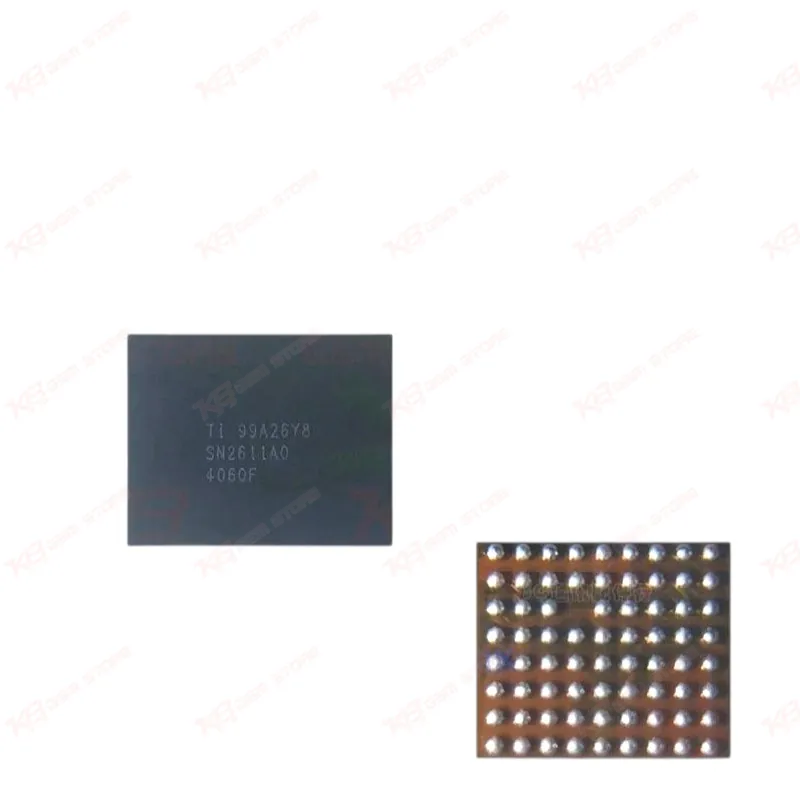
The SN2611A0, known on the board as U3300 and called the Tigris IC in the repair trade, is the USB charging controller for iPhone 11, 11 Pro, and 11 Pro Max. It manages power flow from the Lightning port to the battery and logic board. When this IC goes bad, you see slow charging, no charging at all, random restarts, or a phone that only charges in certain positions. This part gets your bench moving again on dead-after-liquid and no-charging jobs without touching the main power IC. Comes as a single chip, ready for reballing and hot air placement.
⚖️ Weight: 0.01 kg
SKU:MST-IC-80
- Safe & Secure Payment
- Fast Delivery
- WhatsApp Support


Description
FAQ
What is the product name?
The product name is the SN2611A0 Charging IC for iPhone 11, 11 Pro, and 11 Pro Max.
What is the brand of this product?
This is an aftermarket replacement IC built for the Apple iPhone 11 series charging circuit.
What is the model of this product?
The model is SN2611A0, positioned as U3300 on the board and known in the trade as the Tigris IC.
What is this product used for?
It controls USB charging power flow on the iPhone 11 series and gets replaced when a phone shows slow charging, no charging, or charging-related restarts.
Which devices are compatible with this product?
This IC is compatible with iPhone 11, iPhone 11 Pro, and iPhone 11 Pro Max.
Who should use this product?
This IC is meant for mobile repair technicians, repair shops, and service centers doing board-level charging repair, not for end users.
Does replacing this IC fix a dead phone after liquid damage?
It fixes charging failure caused specifically by damage to the U3300 IC, but you should check the full board for corrosion, since liquid damage often affects more than one component.
Do I need a stencil to reball this IC, or can I hand-ball it?
Both methods work — a stencil gives more consistent results for beginners, while experienced technicians often hand-ball this size of chip directly with a soldering iron or hot air.